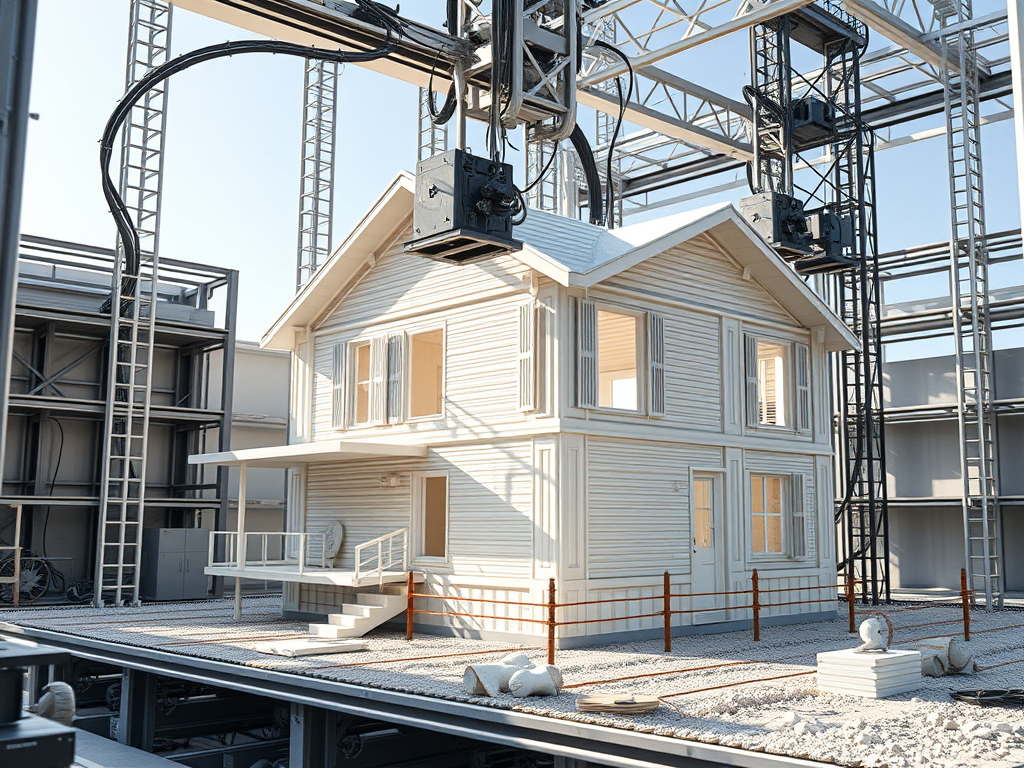
In an era where technology seems to touch every corner of our lives, the housing industry is undergoing a dramatic transformation. One of the most groundbreaking advancements is the rise of 3D printed houses—structures created layer by layer with giant printers and cutting-edge materials. What was once a sci-fi fantasy is quickly becoming a viable solution to global housing shortages, rising construction costs, and sustainability concerns.
But how exactly are these futuristic homes made, what innovations are propelling the industry forward, and where does fiberglass fit into the picture?
🏗️ How 3D Printed Houses Are Made
At the heart of a 3D printed house is a large-scale robotic arm or gantry-style printer that extrudes construction material—typically a specialized concrete or composite paste—through a nozzle to build walls from the ground up. These printers are programmed with a digital blueprint (CAD file), and they work autonomously to follow the design, printing the home’s shell layer by layer.
Key steps in the process:
- Site Preparation – A foundation is laid just like in traditional builds.
- Printer Setup – A massive 3D printer is set up and calibrated to cover the build area.
- Material Extrusion – Instead of plastic, most printers use a proprietary mix of concrete, polymers, or composite materials.
- Layered Construction – The printer builds up the walls, integrating ducts, insulation paths, and windows as needed.
- Finishing Touches – After the shell is complete, traditional methods are used for wiring, roofing, and interior finishes.
These homes can be printed in as little as 24–72 hours, depending on the complexity and size.
🚀 Innovations Driving the 3D Printed Housing Industry
The technology is advancing fast thanks to a few major breakthroughs:
- Advanced Materials – Companies are developing printable mixes that are stronger, faster-setting, and more sustainable than traditional concrete.
- Automation & Robotics – AI-driven printers and drones are now assisting with everything from layout mapping to inspection.
- Hybrid Construction Methods – Mixing 3D printed components with traditional methods to accelerate build times and reduce costs.
- Sustainability Focus – Some companies are experimenting with recycled materials, clay, or even locally sourced soil, reducing carbon emissions and material transport costs.
Leading innovators like ICON, COBOD, and Apis Cor are pushing boundaries by printing multi-story buildings, creating houses in disaster-prone regions, and partnering with NASA to explore extraterrestrial construction.
🧵 Where Fiberglass Fits In
Fiberglass might not be the first material that comes to mind in a concrete-dominated world, but it’s quietly becoming an important part of the 3D housing revolution.
Here’s how fiberglass is being used—or has the potential to be used—in 3D printed homes:
- Reinforcement: Fiberglass strands and mesh can be embedded into 3D printed walls to drastically improve tensile strength and flexibility, reducing the need for steel rebar.
- Hybrid Panels: Some companies are using fiberglass-reinforced panels or molds to create non-load-bearing sections that are light, durable, and weather-resistant.
- Formwork & Molds: For roofs, domes, and complex geometries that aren’t easy to print vertically, fiberglass molds provide a reusable, high-strength form that complements the 3D printing process.
- Insulated Wall Systems: Fiberglass mat can be part of composite sandwich panels that provide insulation and fire resistance when paired with 3D printed shells.
- Finishing & Aesthetic Panels: Lightweight fiberglass decorative cladding can be applied post-print for durability and design versatility without sacrificing the benefits of additive manufacturing.
In short, fiberglass enhances durability, thermal performance, and design freedom—all essential traits for the homes of tomorrow.
🏠 The Road Ahead
While 3D printed homes are still a relatively new concept, they are becoming more practical, scalable, and affordable by the day. As technology continues to improve, the integration of materials like fiberglass could lead to even more resilient, energy-efficient, and aesthetically flexible homes.
Whether it’s helping build homes on Mars or just making affordable housing on Earth more accessible, 3D printing and fiberglass are forming a powerful alliance in modern construction.
Interested in how fiberglass and 3D printing can enhance your next innovative project? Custom Fiberglass Products Inc. offers expertise in custom solutions for both fabrication methods that align with the future of building technology. Let’s build something groundbreaking together.
This post was created using Generative AI; information may be inaccurate.