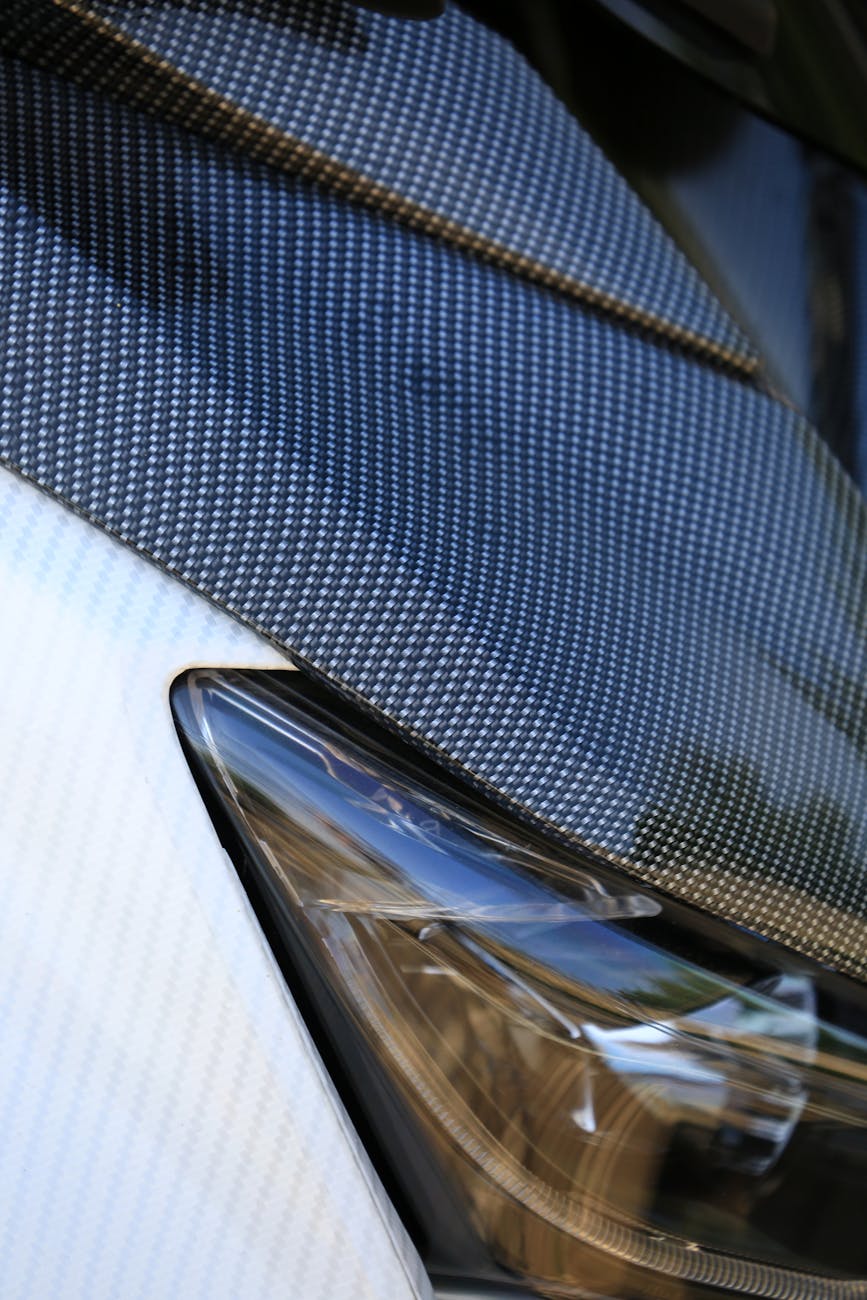
Carbon fiber is one of those materials that feels almost futuristic, even though its roots stretch back more than a century. It shows up in aerospace, race cars, sporting goods, robotics, marine parts, high-performance tooling, prosthetics, construction reinforcement, and even luxury consumer products. It is famous for being light, strong, stiff, and visually recognizable, but the material is more than just a black woven pattern under glossy resin.
At its core, carbon fiber is a material made from extremely thin fibers composed mostly of carbon atoms. Those fibers are usually bundled into tows, woven into fabrics, laid in one direction as tape, chopped into short reinforcement, or combined with a resin system to form a carbon fiber composite. Mitsubishi Chemical describes carbon fiber as a fiber consisting mainly of carbon, generally used with a resin or similar matrix as carbon fiber reinforced plastic, or CFRP.
That distinction matters: carbon fiber itself is the reinforcement, while carbon fiber composite is the finished engineered material made by combining the fiber with a matrix such as epoxy, vinyl ester, polyester, phenolic, thermoplastic resin, carbon, or ceramic. The fiber carries much of the load. The matrix holds the fibers in place, transfers stress between them, protects them from damage, and gives the part its final shape.
What Carbon Fiber Actually Is
Carbon fiber is not simply “plastic with black fibers in it,” and it is not the same thing as graphite in pencil lead. It is closer to a highly engineered form of carbon where the atoms are arranged into tiny, graphitic, sheet-like structures. These carbon sheets are not usually perfect single crystals. Instead, commercial carbon fibers contain regions of aligned carbon layers, defects, folds, pores, and microstructural variations that depend heavily on the precursor material and the manufacturing process.
The reason carbon fiber is so strong along its length comes from the way carbon atoms bond. In graphitic structures, carbon atoms form strong sp² covalent bonds in hexagonal networks. These networks resemble tiny sheets of chicken wire at the atomic scale. When those sheets become preferentially aligned along the length of the fiber, the result is a fiber that can resist pulling forces extremely well in that direction. The American Chemical Society’s history of high-performance carbon fibers describes Roger Bacon’s early graphite whiskers as graphite sheets rolled into scroll-like filaments, showing why alignment and graphitic structure were central to the material’s extraordinary stiffness and strength.
This also explains one of carbon fiber’s most important design truths: carbon fiber is anisotropic. It does not behave the same way in every direction. A unidirectional carbon fiber laminate may be incredibly strong along the fiber direction but much weaker across the fibers or between laminate layers. Engineers take advantage of this by placing fiber orientations exactly where the load paths demand them: 0°, 90°, ±45°, woven layers, braided forms, or tailored layups.
A Brief History of Carbon Fiber
The earliest carbon fibers were not made for airplanes or race cars. They were connected to the development of electric lighting. In the late 1800s, inventors such as Thomas Edison used carbonized cotton threads or bamboo slivers as filaments in incandescent light bulbs. The American Chemical Society notes that Edison’s early filaments were made by forming cotton or bamboo into shape and heating them until they carbonized, leaving an all-carbon fiber with the same general shape.
Modern high-performance carbon fiber began much later. In 1958, Roger Bacon at Union Carbide’s Parma Technical Center discovered extremely strong graphite whiskers while studying carbon under high-temperature conditions. Those whiskers were not commercially practical, but they proved that carbon in fiber form could have remarkable strength and stiffness for its weight.
The next major step was turning the idea into something manufacturable. Early commercial carbon fibers were made from rayon, but PAN-based fibers eventually became dominant because they offered better tensile strength and more practical processing. Toray states that it became the first company to commercially produce PAN-based carbon fibers in 1971, and PAN-based carbon fiber remains central to the industry today.
The Chemical Structure: Why Carbon Fiber Works
Most commercial carbon fiber is made from polyacrylonitrile, commonly called PAN. PAN is a polymer built from acrylonitrile monomer units. It contains carbon, hydrogen, and nitrogen. During carbon fiber production, PAN fibers are transformed through heat treatment into carbon-rich fibers.
The simplified chemical story looks like this:
PAN begins as a polymer fiber. During stabilization in air, the PAN chains undergo chemical changes, including cyclization and oxidation, turning the thermoplastic precursor into a more heat-resistant ladder-like structure. Then, during carbonization in an inert atmosphere, non-carbon atoms such as hydrogen, oxygen, and nitrogen are driven off as gases. What remains becomes increasingly carbon-rich. At higher temperatures, graphitic domains become more ordered and aligned.
A review of carbon fiber fabrication explains the general process as controlled pyrolysis of stabilized precursor fibers: stabilization in air, high-temperature carbonization in an inert atmosphere, optional graphitization at even higher temperatures, and surface treatment to improve bonding to the composite matrix.
The final fiber is not just “burned plastic.” It is a carefully converted, tension-controlled, heat-treated material whose mechanical properties depend on chemistry, temperature, time, stretching, atmosphere, microstructure, and surface treatment.
How Carbon Fiber Is Made
Although details vary by manufacturer and fiber grade, most PAN-based carbon fiber production follows a general sequence.
1. Precursor production
The process starts with a precursor fiber, most commonly PAN. The PAN polymer is spun into long fibers. Mitsubishi Chemical notes that carbon fiber precursors may come from PAN or pitch, with PAN and pitch then processed into carbon fiber through highly controlled heating and treatment.
2. Stabilization
The precursor fibers are heated in air, usually under tension. This step prevents the fibers from melting during later high-temperature treatment. In PAN-based fibers, stabilization changes the molecular structure so the fiber becomes thermally stable.
3. Carbonization
The stabilized fibers are heated to much higher temperatures in an inert atmosphere, meaning oxygen is excluded. This drives off many non-carbon elements and leaves behind a carbon-rich fiber. Commercial carbon fibers are commonly produced by thermal pyrolysis of PAN precursor, and cost factors include precursor cost, capital equipment, and energy use.
4. Graphitization, depending on grade
Some fibers are heat-treated even further to increase graphitic ordering. Higher-temperature treatment can increase modulus, or stiffness, but it may affect other properties. High-modulus fibers are often more expensive and more specialized.
5. Surface treatment
Carbon fiber surfaces can be chemically treated to improve adhesion to resin. Untreated carbon fiber is relatively inert, which can make bonding difficult. Surface treatment creates sites that help the resin grip the fiber.
6. Sizing
A thin protective coating, called sizing, is applied to protect the fiber during handling and improve compatibility with the intended resin system. Sizing matters because a fiber intended for epoxy may not behave the same way in a thermoplastic or vinyl ester system.
7. Conversion into usable forms
Carbon fiber may be sold as tow, woven fabric, stitched fabric, braided sleeves, unidirectional tape, prepreg, chopped fiber, milled fiber, pellets, or molded intermediate materials. Mitsubishi Chemical explains that carbon fiber is rarely used in final products without processing; it is commonly converted into intermediate forms and then molded into final products.
PAN-Based vs. Pitch-Based Carbon Fiber
Most people talking about carbon fiber are usually talking about PAN-based carbon fiber. PAN-based fibers are widely used because they offer a strong balance of tensile strength, stiffness, processability, and availability. A review on carbon fiber precursors reports that PAN-based carbon fibers occupy the majority of the carbon fiber market because of their strength and moderate modulus.
Pitch-based carbon fiber is different. It is made from pitch, a carbon-rich material derived from petroleum or coal processing. Pitch-based fibers can achieve very high modulus and excellent thermal conductivity, making them useful in specialized aerospace, satellite, thermal management, and high-stiffness applications. Mitsubishi Chemical highlights that PAN-based carbon fiber is especially useful for strength, while pitch-based carbon fiber is particularly good for elastic modulus.
In simple terms:
PAN-based carbon fiber is the common workhorse for strength-driven structural composites.
Pitch-based carbon fiber is often chosen when extreme stiffness, dimensional stability, or thermal conductivity is the priority.
Who Manufactures Carbon Fiber?
Carbon fiber manufacturing is technically demanding and capital-intensive, so the industry is led by specialized global producers. Some prominent manufacturers include Toray, Hexcel, Teijin, Mitsubishi Chemical, and SGL Carbon.
Toray describes its TORAYCA carbon fiber as globally recognized and states that it is the largest carbon fiber producer in the world, with production in the U.S., Japan, France, and South Korea. Hexcel manufactures HexTow continuous carbon fiber for aerospace and industrial applications and lists uses ranging from aircraft programs to high-performance recreational sports equipment. Teijin produces carbon fibers for composites and emphasizes properties such as low weight, high strength, fatigue resistance, rust prevention, and chemical resistance. Mitsubishi Chemical manufactures both PAN-based and pitch-based carbon fiber materials, including tow, chopped fiber, milled fiber, and carbon fiber pellets. SGL Carbon manufactures SIGRAFIL continuous carbon fiber tows and short carbon fibers, including chopped and milled forms used as reinforcing or functional additives.
What Carbon Fiber Is Used For
Carbon fiber is used wherever the performance benefits outweigh the cost and manufacturing complexity. Its most famous uses are in aerospace and motorsports, but the material has spread into many industries.
In aerospace, carbon fiber composites are used in aircraft structures, interior components, engine-related structures, satellite components, and defense applications. Weight reduction is extremely valuable in aerospace because every pound saved can improve efficiency, range, payload, or performance.
In automotive and motorsports, carbon fiber is used for body panels, monocoques, driveshafts, aerodynamic components, crash structures, and performance upgrades. Formula-style racing and supercars use carbon fiber because stiffness, low mass, and energy absorption can be engineered very precisely.
In sports and recreation, carbon fiber appears in bicycles, golf shafts, tennis racquets, fishing rods, hockey sticks, baseball bats, skis, snowboards, and paddles. Hexcel specifically lists many of these recreational applications for industrial carbon fiber.
In marine applications, carbon fiber can be used in racing boats, masts, panels, and lightweight structural elements. It is attractive where stiffness and weight reduction are important, though cost and impact considerations matter.
In construction and infrastructure, carbon fiber reinforced polymer strips, fabrics, and wraps can strengthen concrete, masonry, beams, columns, bridges, and other structures. The material can add reinforcement without the weight and corrosion issues associated with steel.
In industrial applications, carbon fiber can be used in rollers, robotic arms, tooling, pressure vessels, tanks, piping reinforcement, electrical shielding, thermal management, and specialty machine components.
In electronics and energy, carbon fiber and related carbon materials may be used for conductivity, stiffness, electromagnetic shielding, battery components, and lightweight housings. Short or milled carbon fibers are often added to thermoplastics and rubbers to improve mechanical properties, electrical conductivity, or thermal conductivity.
How Carbon Fiber Is Used in Composites
Carbon fiber’s performance depends heavily on how it is placed. A random chopped carbon fiber part is not the same as a carefully laid unidirectional aerospace laminate.
Common processing methods include:
Hand layup: Dry carbon fabric is placed in a mold and wet out with resin by hand. It is accessible but labor-dependent.
Vacuum bagging: A vacuum bag compresses the laminate, removes trapped air, and improves fiber-to-resin ratio.
Vacuum infusion: Dry reinforcement is placed in the mold, sealed, and resin is pulled through under vacuum. This can produce cleaner, more consistent parts than open wet layup.
Prepreg layup: Carbon fiber arrives pre-impregnated with controlled resin content. It is often cured under heat and pressure, sometimes in an autoclave. This is common in high-performance aerospace and motorsports parts.
Filament winding: Continuous carbon tow is wound around a rotating mandrel to make tubes, pressure vessels, shafts, and cylindrical structures.
Pultrusion: Fibers are pulled through resin and a heated die to make constant cross-section profiles.
Resin transfer molding: Dry fibers are placed in a closed mold and resin is injected. This can improve repeatability and surface finish.
Compression molding and carbon SMC: Chopped or sheet-form carbon fiber molding compounds can be pressed into complex parts. Mitsubishi Chemical notes that carbon fiber sheet molding-type materials can reduce molding time compared with conventional autoclave or oven molding.
Thermoplastic carbon fiber composites: Carbon fiber can be combined with thermoplastics for faster processing, toughness, and recyclability advantages in certain applications. Teijin, for example, has developed carbon fiber reinforced thermoplastic materials for automotive applications.
Why Carbon Fiber Is Used
The biggest reason carbon fiber is used is specific performance — performance relative to weight.
Steel is strong, but heavy. Aluminum is lighter, but often not as stiff. Fiberglass is economical and corrosion-resistant, but usually not as stiff as carbon fiber. Carbon fiber offers an unusual combination of low density, high tensile strength, high stiffness, fatigue resistance, corrosion resistance, low thermal expansion, and design flexibility. Hexcel summarizes carbon fiber’s appeal as high strength, light weight, superior stiffness, electrical conductivity, low thermal expansion, thermal conductivity, and corrosion resistance.
That combination makes carbon fiber especially valuable when weight savings produce a meaningful benefit. A lighter aircraft can save fuel. A lighter race car can accelerate, brake, and turn better. A lighter robotic arm can move faster with less motor load. A stiffer sporting good can transfer energy more efficiently. A corrosion-resistant reinforcement can last longer in environments where metal would degrade.
Carbon fiber also lets engineers “put strength where they want it.” Instead of relying on a uniform metal plate, a composite designer can orient fibers along the main stress paths. This is one reason composites can be so efficient: the material can be tailored to the job.
The Limitations of Carbon Fiber
Carbon fiber is impressive, but it is not magic. It has limitations.
The first is cost. The raw fiber, controlled processing, labor, tooling, curing, inspection, and finishing can all be expensive. ORNL notes that major cost factors in carbon fiber production include precursor cost, capital equipment cost, and energy cost.
The second is impact behavior. Carbon fiber composites can be very strong, but damage may be less obvious than denting in metal. Internal delamination can occur after impact, which is why inspection methods matter in critical structures.
The third is directionality. A carbon laminate is only as good as its design. Incorrect fiber orientation, poor resin wet-out, voids, bad cure, or weak bonding can severely reduce performance.
The fourth is galvanic corrosion risk. Carbon fiber is electrically conductive. When it contacts certain metals, especially aluminum, in the presence of an electrolyte, corrosion can accelerate unless properly isolated.
The fifth is repair complexity. A cracked carbon fiber component is not always repaired the same way as a fiberglass or metal part. Structural repairs often require controlled surface preparation, scarfing, matching fiber orientation, proper resin selection, and cure control.
The sixth is recyclability. Thermoset carbon fiber composites are more difficult to recycle than metals. Recycling methods exist, and the industry is improving, but it remains a real design and sustainability consideration.
Carbon Fiber vs. Fiberglass
Carbon fiber and fiberglass are often compared because both are fiber reinforcements used in composite materials. The best choice depends on the application.
Carbon fiber is usually chosen when stiffness, weight savings, and high-performance structural efficiency are the main goals. Fiberglass is often chosen when cost effectiveness, corrosion resistance, impact tolerance, electrical insulation, and practical fabrication are more important.
Fiberglass remains one of the most useful materials in industrial corrosion applications, including tanks, ducts, scrubbers, piping, covers, platforms, and chemical plant components. Carbon fiber may be stronger and stiffer by weight, but fiberglass is often the more practical material for large corrosion-resistant parts where stiffness-to-weight is not the only concern.
That is an important point: advanced materials are not automatically better in every situation. A good composite design starts with the environment, loads, temperature, chemicals, budget, fabrication method, inspection needs, and service life.
The Big Picture
Carbon fiber is a high-performance reinforcement made mostly from carbon atoms arranged into graphitic, highly engineered microstructures. It is typically made from PAN or pitch precursors through stabilization, carbonization, surface treatment, and sizing. It is used not because it is trendy, but because it solves difficult engineering problems where light weight, stiffness, strength, fatigue resistance, corrosion resistance, and dimensional stability matter.
Its story runs from carbonized light bulb filaments to aerospace structures, sports equipment, industrial components, and next-generation transportation. The familiar woven black surface is only the most visible part of the story. Underneath it is chemistry, heat treatment, microstructure, resin compatibility, fiber orientation, and careful manufacturing.
Need Carbon Fiber or Composite Help?
If your project requires carbon fiber, fiberglass, FRP, dual laminate, or another custom composite solution, Custom Fiberglass Products Inc. can help you think through the material choice, fabrication method, and practical design details. Carbon fiber is an excellent material when the application calls for it, but the best solution is the one that fits the actual job — whether that is carbon fiber, fiberglass, thermoplastic-lined FRP, or another composite system.
This post was created using Generative AI; information may be inaccurate.