
Posted on Leave a comment

The Hidden Role of Fiberglass Around the Kentucky Derby

horse race starting gate

The Kentucky Derby is best known for fast horses, bold hats, mint juleps, and the famous Garland of Roses. Held at Churchill Downs in Louisville, Kentucky, the race dates back to 1875 and is now run on the first Saturday in May as one of the most recognizable sporting traditions in the United States. The race itself only lasts about two minutes, but the event surrounding it is massive: horses, trainers, owners, media crews, food vendors, maintenance teams, guests, and temporary infrastructure all have to come together smoothly.

When people think about the Kentucky Derby, fiberglass probably is not the first material that comes to mind. Most people picture the horses, the track, the grandstands, and the roses. However, fiberglass and fiberglass-reinforced plastic, often called FRP, can show up in many of the supporting roles that make large horse racing events possible. Some of these uses are easy to imagine, while others are the kind of behind-the-scenes applications most people never notice.

Horse Trailers and Transportation

One of the more obvious horse-related uses is in trailers and transport equipment. Modern horse trailers may use composites, aluminum, steel, fiberglass, or a combination of materials. Fiberglass and other composite materials are valued because they can reduce weight and resist rust compared with older all-steel designs. For owners and trainers moving horses between farms, training facilities, and racetracks, weight, durability, ventilation, and ease of cleaning all matter.

A lighter trailer can be easier to tow and may reduce wear on the towing vehicle. Fiberglass also reflects heat rather than conducting it like metal, which can be helpful in trailer design when keeping animals comfortable is a priority. It is not always the right choice for every structural component, but it can be useful for roofs, panels, molded sections, and certain protective surfaces.

Signage, Displays, and Event Branding

The Derby is not just a horse race; it is a full event experience. Directional signs, branded displays, decorative panels, kiosks, booth fronts, and temporary event structures all have to survive weather, crowds, transportation, setup, and teardown.

Fiberglass is useful in this type of work because it can be molded into custom shapes while remaining relatively lightweight. That makes it a strong option for decorative pieces, branded displays, and custom event structures that need to look polished but still be practical to move and install. For an event with the visual identity of the Kentucky Derby, from roses to the Twin Spires, molded composite pieces can help create durable, repeatable displays.

Railings, Platforms, Steps, and Walkways

Large events need safe access points for workers and guests. Fiberglass grating, platforms, ladders, and handrail systems are common in industrial and commercial environments because FRP is strong, corrosion-resistant, and low-maintenance. FRP does not rust like steel or rot like wood, which makes it useful in wet or outdoor environments.

Around a racetrack or event venue, these types of materials could be useful in service areas, washdown zones, maintenance platforms, equipment access points, concession support areas, and utility spaces. These are not the glamorous parts of Derby Day, but they are the kinds of details that help keep a facility functioning.

Washdown Areas, Barns, and Stable Support

Here is one of the less obvious connections: horses require a lot of cleaning, water, and maintenance. Barn areas, wash racks, feed rooms, storage spaces, and veterinary support areas all deal with moisture, cleaning chemicals, waste, and constant wear.

Fiberglass panels, tanks, trench covers, grating, and wall liners can be useful in these environments because they handle moisture well and are easier to clean than many porous materials. In areas where corrosion, odor control, sanitation, and durability matter, fiberglass can offer a practical alternative to wood or metal.

Water, Wastewater, and Utility Infrastructure

A major event like the Kentucky Derby depends on much more than the track. There are restrooms, food service areas, beverage stations, temporary facilities, drainage systems, electrical utilities, and cleanup operations. Behind every public-facing event is a network of utility infrastructure that has to keep running.

Fiberglass tanks, piping, covers, ducting, and equipment housings can be useful in these settings because FRP is commonly selected for corrosion resistance, chemical resistance, and long service life. That makes it a good fit for environments involving water, cleaners, wastewater, and outdoor exposure.

Starting Gates and Safety Equipment

One place people might assume fiberglass is used is the starting gate. In reality, high-quality horse racing starting gates are typically built around strong metal structures because they have to handle serious safety demands. For example, Steriline describes its starting gates as being manufactured from high-grade steel, with safety padding used inside the stalls to help protect horses, jockeys, and handlers.

That does not mean fiberglass has no role around safety equipment. Fiberglass or composite materials can still be useful for covers, housings, panels, non-structural guards, weather-resistant enclosures, and custom accessories. The key is using the right material in the right place. For high-impact, load-bearing, safety-critical components, steel may be the better choice. For corrosion-resistant covers, lightweight panels, or custom molded parts, fiberglass can make a lot of sense.

Food, Beverage, and Hospitality Areas

The Derby is famous for hospitality. The Mint Julep became the official drink of the Kentucky Derby in 1939, and food and beverage service is a huge part of the event experience.

Fiberglass can support food and beverage operations in less visible ways. Smooth FRP wall panels, storage tanks, equipment covers, and washable surfaces can be useful where cleaning and moisture resistance matter. In food and drink environments, FRP is often valued for chemical resistance and cleanable surfaces.

Decorative Props and Themed Features

This is where fiberglass gets more fun. Large roses, horse statues, trophy-style displays, photo-op backdrops, decorative arches, and themed entrance pieces can all be made from fiberglass. Unlike flat signs, fiberglass can be molded into three-dimensional shapes, painted, repaired, and reused.

For an event built around tradition and pageantry, fiberglass can help create the physical pieces that make a space feel special. A giant rose display, a replica horse, a custom planter, or a branded entryway could all be built from fiberglass and reused year after year.

Why Fiberglass Fits Derby-Style Events

The Kentucky Derby is a great example of an event where appearance, durability, mobility, and maintenance all matter at the same time. Fiberglass fits that mix because it can be:

  • Lightweight compared with many traditional materials
  • Molded into custom shapes
  • Resistant to rust and rot
  • Useful in wet or chemical-exposed environments
  • Durable enough for repeated use
  • Repairable in many applications

Fiberglass will never replace every material used around horse racing. Steel, concrete, aluminum, wood, fabric, and rubber all have important roles. However, fiberglass fills a valuable middle ground: it is strong, versatile, weather-resistant, and highly customizable.

The Quiet Material Behind the Big Event

The Kentucky Derby may be known as the “Run for the Roses,” but events like it depend on far more than horses and flowers. Behind the scenes are trailers, barns, washdown areas, signs, platforms, tanks, covers, panels, displays, and utility systems. Some are seen by thousands of guests. Others are only noticed by the people who keep the event running.

That is where fiberglass often shines. It may not be the star of Derby Day, but it can play a quiet supporting role in the kind of infrastructure, transportation, sanitation, and visual presentation that large horse racing events require. From the obvious to the unexpected, fiberglass helps make demanding environments more durable, more practical, and easier to maintain.

This post was created using Generative AI; information may be inaccurate.

Posted on Leave a comment

Ceramic Composites: High-Temperature Materials Built for Extreme Conditions

photo of an aircraft engine

When most people hear the word “ceramic,” they may think of tile, pottery, or brittle materials that can crack if dropped. In advanced manufacturing, however, ceramics can be engineered into something far tougher and more useful: ceramic composites.

Ceramic composites, often called ceramic matrix composites or CMCs, combine a ceramic matrix with reinforcing fibers or particles. This reinforcement helps overcome one of the biggest weaknesses of traditional ceramics: brittleness. Instead of failing suddenly like a typical ceramic part, a ceramic composite can be designed to better resist cracking, thermal shock, and mechanical stress.

What Are Ceramic Composites?

A ceramic composite is made by combining ceramic materials with reinforcement, usually fibers such as silicon carbide, alumina, or carbon-based materials. The ceramic matrix provides heat resistance, hardness, and chemical stability, while the reinforcement helps improve toughness and strength.

This is similar in concept to fiberglass. In fiberglass-reinforced plastic, glass fibers strengthen a resin matrix. In ceramic composites, ceramic fibers or other reinforcements strengthen a ceramic matrix. The goal is the same: combine materials so the final product performs better than either material would on its own.

Why Ceramic Composites Matter

The biggest advantage of ceramic composites is their ability to perform in environments where many metals, plastics, and polymer composites would struggle. CMCs are especially valuable in high-temperature applications because they can help reduce cooling requirements and allow equipment to operate at higher temperatures. The U.S. Department of Energy has supported CMC development for turbine applications because higher operating temperatures can improve efficiency in combined-cycle gas turbines.

NASA has also studied ceramic matrix composites for high-temperature, high-stress environments, including gas turbines and aerospace systems. Some environmental barrier coating technologies for CMC components are designed for use in environments reaching up to 1,482°C.

That kind of performance makes ceramic composites useful in industries where heat, oxidation, wear, and chemical exposure are constant concerns.

Common Types of Ceramic Composites

There are several categories of ceramic composites, but a few of the most common include:

Silicon Carbide/Silicon Carbide Composites

SiC/SiC composites use silicon carbide fibers in a silicon carbide matrix. These are commonly discussed for aerospace engines, turbines, and other high-temperature systems because of their heat resistance and relatively low weight compared with many metal alternatives.

Oxide/Oxide Ceramic Composites

Oxide/oxide CMCs often use oxide ceramic fibers and matrices, such as alumina-based materials. These composites are useful in oxidizing environments and can offer good thermal stability.

Glass-Ceramic Matrix Composites

Glass-ceramic matrix composites are being explored for harsh-environment heat exchanger applications. A Department of Energy-supported project focused on glass-ceramic matrix composite heat exchangers designed for long operational life in harsh environments.

Carbon/Ceramic Composites

Some high-temperature systems use carbon fiber reinforcement combined with ceramic materials. These can be useful where lightweight construction and high heat resistance are important, although oxidation protection is often a major design consideration.

Applications of Ceramic Composites

Ceramic composites are not used everywhere because they can be expensive and difficult to manufacture. However, when the application is demanding enough, they can be worth the added complexity.

Common applications include:

Aerospace and jet engines: Ceramic composites can help reduce weight and handle higher temperatures in engine hot sections, thermal protection systems, and related components.

Power generation: Turbines and energy systems benefit from materials that can survive higher temperatures while reducing the need for cooling.

Heat exchangers: Ceramic and glass-ceramic composites are being researched for high-temperature heat exchangers in harsh operating environments.

Chemical and industrial processing: In certain severe-service applications, ceramic composites may be considered where corrosion, abrasion, and high heat occur together.

Braking systems: Some high-performance brake systems use ceramic composite materials because they can handle heat and wear better than many conventional materials.

Benefits of Ceramic Composites

Ceramic composites can offer several important advantages:

High-temperature performance: They can survive temperatures that would weaken or damage many metals and polymer composites.

Lower weight: In aerospace and turbine applications, reducing weight can improve performance and efficiency.

Improved toughness compared with traditional ceramics: Reinforcement helps reduce brittle failure and improves crack resistance.

Wear resistance: Ceramics are naturally hard, making them useful in abrasive environments.

Chemical and oxidation resistance: Many ceramic systems resist chemical attack better than conventional materials, though exact performance depends heavily on the specific chemistry and operating environment.

Limitations of Ceramic Composites

Ceramic composites are impressive, but they are not a universal replacement for metals, fiberglass, thermoplastics, or traditional ceramics.

Their biggest limitations include:

Cost: Raw materials and manufacturing processes can be expensive.

Complex fabrication: Many CMCs require specialized processing, high-temperature treatment, or controlled atmospheres.

Design sensitivity: Fiber type, matrix type, coatings, porosity, and operating environment all matter.

Repair complexity: Repairing ceramic composite parts can be more difficult than repairing fiberglass or metal parts.

Application specificity: A ceramic composite that performs well in one environment may not be ideal in another.

This is why material selection should always consider temperature, chemicals, pressure, abrasion, mechanical loading, cost, and repairability.

Ceramic Composites vs. Fiberglass Composites

Ceramic composites and fiberglass composites are both engineered materials, but they serve different roles.

Fiberglass-reinforced plastic is often a strong choice for corrosion-resistant tanks, piping, ductwork, scrubbers, hoods, and custom industrial parts. It is relatively lightweight, repairable, cost-effective, and well-suited for many chemical plant environments.

Ceramic composites are more specialized. They are usually chosen when temperatures are too high for polymer-based composites or when extreme wear and thermal demands justify the added cost.

In simple terms: fiberglass composites are often the practical choice for corrosion-resistant industrial equipment, while ceramic composites are used when extreme heat becomes the deciding factor.

Where Ceramic Composites Fit in Industrial Material Selection

For chemical plants and industrial facilities, material selection is rarely about choosing the “strongest” material on paper. It is about choosing the right material for the actual service conditions.

A fiberglass tank may be ideal for a corrosive liquid at moderate temperature. A thermoplastic-lined FRP pipe may be the right answer for a specific chemical service. Stainless steel may make sense where impact resistance, pressure, or cleanliness is the priority. A ceramic composite may only become practical when heat, abrasion, and chemical exposure push other materials beyond their limits.

That is why composites are so valuable as a category. Whether the matrix is polymer, ceramic, or another material, composites allow engineers and fabricators to tailor performance to the job.

Final Thoughts

Ceramic composites show how far composite technology has advanced. By reinforcing ceramic materials, manufacturers can create parts that handle extreme heat, stress, wear, and harsh operating conditions better than traditional ceramics alone.

They may not replace fiberglass, thermoplastics, or metals in most everyday industrial applications, but they play an important role in aerospace, energy, heat exchangers, and other severe-service environments. For companies working around chemical plants, piping systems, corrosion-resistant equipment, and custom fabrication, ceramic composites are another reminder that the best material is always the one matched to the conditions of the job.

This post was created using Generative AI; information may be inaccurate.

Posted on Leave a comment

Natural Fiber Composites: How Hemp, Flax, and Bio-Based Matrices Are Expanding Sustainable Materials

pile of linseeds in close up view

Sustainability has become a major driver in materials selection, and composites are part of that conversation. While traditional composite systems often rely on synthetic reinforcements and petroleum-based resins, a growing segment of the industry is exploring natural alternatives. That includes plant-derived fibers such as hemp and flax, as well as bio-based polymer matrices that can reduce reliance on fossil feedstocks. Reviews of the field describe natural fiber composites as systems built around renewable reinforcements like flax, hemp, jute, sisal, and similar fibers, often paired with polymer matrices that may also be partially derived from biomass.

At a basic level, these materials aim to keep the core advantage of composites—combining two materials to achieve a better balance of properties—while improving the sustainability profile. Hemp and flax are especially interesting because they offer low density, respectable specific mechanical properties, and strong appeal in markets looking for lower-weight, lower-carbon material options. They have also drawn attention for damping and acoustic performance, which helps explain their use in consumer products, transportation interiors, and architectural applications.

What makes these composites “more sustainable”?

The sustainability story usually comes from two places: the reinforcement and the matrix.

First, the reinforcement can come from renewable agricultural sources. Flax and hemp fibers are among the most discussed because they can deliver useful stiffness-to-weight performance while originating from crops rather than energy-intensive mineral or synthetic fiber systems. Recent reviews continue to highlight hemp and flax as some of the most promising natural fibers for value-added composite applications.

Second, the matrix can be shifted away from entirely fossil-derived chemistry. That might mean a partially bio-based epoxy, a PLA-type bioplastic, or another resin system with renewable feedstock content. One important point, though, is that bio-based does not automatically mean biodegradable or compostable. European Commission and European Bioplastics guidance both stress that a material can be bio-based, biodegradable, both, or neither in practical end-of-life conditions.

That distinction matters. A composite made with natural fibers may still use a conventional thermoset matrix and therefore not behave anything like a compostable material. Likewise, a bio-based resin may reduce fossil resource use without being designed to break down at the end of service. In other words, sustainability claims are strongest when they are tied to full life-cycle thinking rather than just one renewable ingredient.

Why hemp and flax get so much attention

Among natural fiber options, flax and hemp stand out because they offer a useful blend of mechanical performance, relatively low density, and growing commercial familiarity. Flax has been used in lightweight composite development for automotive and other engineered products, while hemp is frequently cited for its durability, thermal behavior, and potential in sustainable construction and bio-based materials.

These fibers also bring some practical advantages beyond simple strength numbers. Natural fiber composites are often noted for vibration damping and sound absorption, which can make them attractive for interior panels, covers, housings, and other parts where user comfort matters. That is one reason automotive interior applications are commonly discussed in the literature and industry coverage.

Another reason is appearance and brand value. As manufacturers look for more visible ways to communicate sustainability, natural fiber composites offer a material story that is easier for end users to recognize than many behind-the-scenes chemistry changes. Industry reporting over the past few years has pointed to rising commercial interest in flax- and hemp-based composites for higher-volume and higher-performance applications.

Where natural fiber composites are already being used

Today, the best fit for these materials is usually in applications where lightweighting, sustainability messaging, damping, and moderate structural performance matter more than extreme heat resistance or maximum mechanical strength. Automotive interior panels are a common example, with literature describing use cases such as door panels, seatback linings, floor components, and hidden interior parts.

Beyond transportation, natural fiber composites are also being explored in building products, architectural components, insulation-related systems, sports equipment, and other consumer-facing products. Recent coverage and reviews point to ongoing growth in construction and architecture, where flax and hemp are being paired with bio-based systems for lower-impact material concepts.

The biggest challenges

Natural fiber composites are promising, but they are not a drop-in replacement for every fiberglass or carbon fiber application. The same reviews that praise their sustainability benefits also repeatedly point to limitations such as moisture absorption, property variability, fiber-matrix adhesion issues, and durability concerns under demanding environmental exposure.

Moisture is one of the most important issues. Plant fibers are hydrophilic, so they tend to absorb water more readily than synthetic fibers. That can lead to swelling, changes in mechanical properties, and longer-term durability concerns if the composite is used in wet or highly variable environments.

Consistency is another challenge. Unlike highly engineered synthetic reinforcements, natural fibers can vary based on crop conditions, harvest year, processing method, and fiber treatment. That variability can make quality control more difficult and may require additional processing or hybrid design approaches to achieve repeatable performance.

Because of those factors, natural fiber composites often make the most sense when engineers design around their strengths rather than forcing them into applications built around synthetic-fiber expectations. In some cases, hybrid systems that combine natural and synthetic reinforcements can offer a more practical middle ground.

The future of bio-based composite design

The most exciting direction may not be just swapping glass fiber for hemp or flax. It may be designing composite systems from the ground up with sustainability in mind: renewable reinforcement, smarter surface treatments, improved fiber-matrix compatibility, and matrix chemistries that better balance performance with environmental goals. Recent research continues to focus on treatments and processing improvements that can help natural fibers perform more reliably in real composite systems.

Natural fiber composites are not a cure-all, and they will not replace conventional composites everywhere. But they are becoming a serious option in the right applications. For companies looking to reduce weight, incorporate renewable inputs, or align with sustainability goals without abandoning engineered materials altogether, hemp-, flax-, and other plant-based composite systems are worth watching closely.

This post was created using Generative AI; information may be inaccurate.
Posted on Leave a comment

Hybrid Composites: Common Types, Benefits, and Where They Make Sense

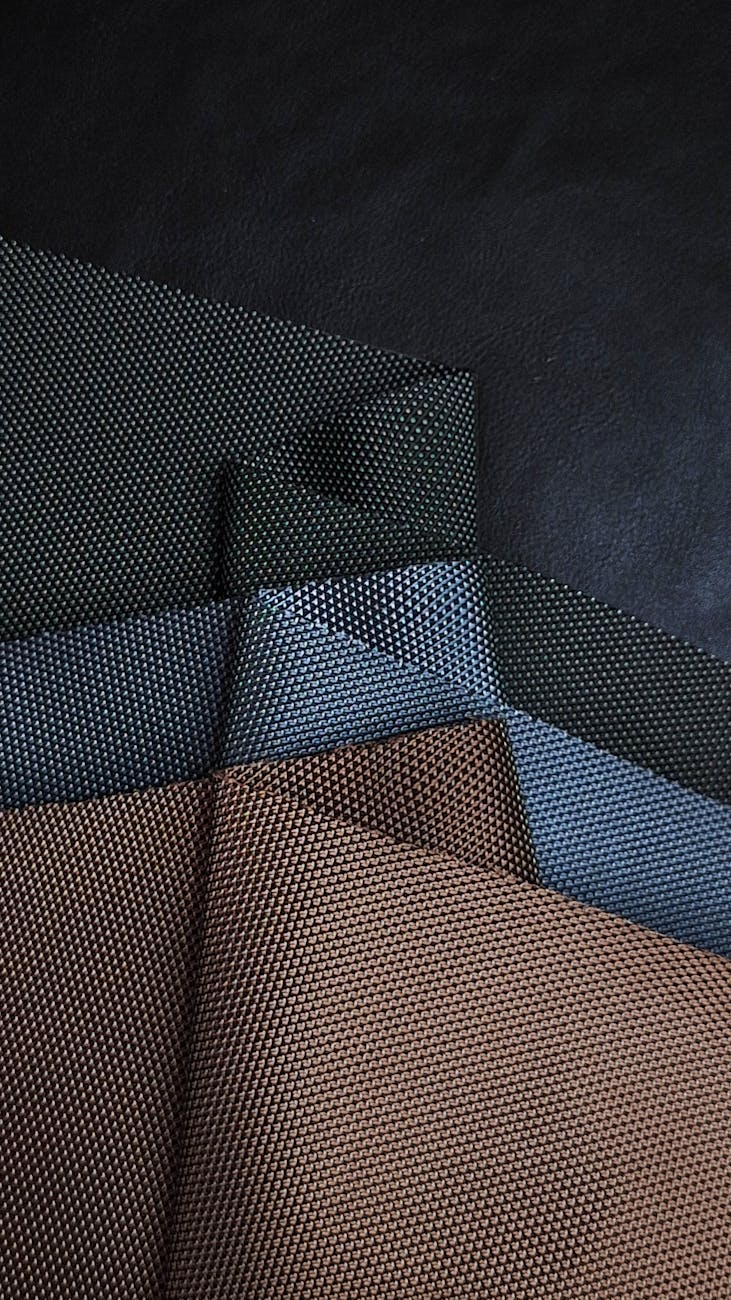
textured fabric swatches in dark tones

Hybrid composites are engineered materials that combine two or more reinforcement types within a single matrix system to achieve a better balance of performance, cost, weight, durability, or processability than a single-reinforcement composite alone. In many cases, the goal is simple: let one material contribute stiffness, another improve impact resistance, and another help control cost or weight. That ability to tailor performance is one of the main reasons hybrid composites continue to gain attention across multiple industries.

Hybrid Composites Types

One of the most common hybrid approaches is glass/carbon fiber. Glass fiber is often valued for its lower cost and solid corrosion resistance, while carbon fiber brings higher stiffness and reduced weight. When the two are combined thoughtfully, manufacturers can often create a laminate that performs better than a glass-only design without carrying the full cost of an all-carbon structure. Another familiar option is glass/aramid or carbon/aramid, where aramid fibers can help improve toughness and impact behavior. Basalt hybrids are also attracting interest as an alternative in some designs, and natural/synthetic hybrids—such as flax or hemp combined with glass or carbon—are increasingly studied for applications where sustainability, weight, and cost all matter.

Hybrid composites are not limited to one construction style, either. Some are built as interply laminates, where one layer may be carbon and the next glass or aramid. Others are intraply hybrids, where different fibers are mixed within the same layer or weave. The stacking sequence matters because it influences stiffness, impact response, failure behavior, vibration characteristics, and how damage progresses through the part. In other words, hybridization is not just about using multiple fibers—it is about arranging them in a way that matches the service conditions of the final component.

Hybrid Composites Benefits

The biggest benefit of hybrid composites is design flexibility. Instead of overbuilding a part with one expensive reinforcement, engineers can tune the laminate for the actual job. That can mean better strength-to-weight performance, improved fatigue behavior, better impact resistance, or a more practical balance between mechanical performance and budget. In some cases, hybridization also opens the door to using more sustainable materials while still maintaining acceptable structural properties. For manufacturers and end users alike, that flexibility can translate into longer service life, lower weight, more efficient material use, and smarter cost control.

Of course, hybrid composites are not a cure-all. Combining different reinforcements can create added complexity in fabrication, bonding, and quality control. Different fibers may behave differently under load, absorb moisture differently, or respond differently to heat and chemicals. That means the design, resin selection, layup strategy, and fabrication method all matter. A hybrid laminate that looks good on paper still has to be manufacturable, repeatable, and appropriate for the environment it will actually see in service.

Hybrid Composite Applications

As for applications, hybrid composites show up in a wide range of sectors. Aerospace and defense use them for lightweight structures and performance-driven components. Automotive manufacturers look to hybrids for weight savings and impact performance. Marine applications benefit from corrosion resistance and favorable strength-to-weight ratios. Sporting goods, wind energy, and construction materials also make use of hybrid laminates where tailored performance justifies the design effort. In industrial environments, the same underlying idea matters: match materials to the service demands instead of relying on a one-material-fits-all mindset.

For companies working in demanding service environments, hybrid composites are especially interesting because they reflect a practical engineering philosophy. The question is not simply, “What is the strongest material?” It is, “What material combination gives the best overall result for the temperature, chemistry, loading, maintenance expectations, and budget of the application?” In many cases, that is where hybrid design becomes valuable. It allows engineers and fabricators to solve for multiple priorities at once rather than optimizing only one property and sacrificing the rest.

Conclusion

As composite technology continues to advance, hybrid systems will likely become even more important. Manufacturers are looking for ways to reduce weight, manage cost, improve durability, and in some cases incorporate more sustainable materials without giving up structural performance. Hybrid composites offer a path toward that balance. When designed correctly, they are not just a blend of materials—they are a strategy for building smarter, more application-specific solutions.

This post was created using Generative AI; information may be inaccurate.

Posted on Leave a comment

World Quantum Day and Fiberglass: Turning Complex Science into Real-World Solutions

digital art in close up shot

Every year on April 14, World Quantum Day shines a spotlight on one of the most fascinating areas of science: the study of how the world works at its most fundamental level. Quantum science can feel distant from everyday life, living somewhere between research labs, advanced technology, and ideas too small to see. But in another way, it reflects something that applies far beyond physics: the belief that understanding materials deeply leads to better performance in the real world.

At Custom Fiberglass Products Inc., that idea is familiar.

No, we are not building quantum computers or running particle experiments. But we do believe in the power of material science, precision, and practical innovation. In many ways, that same mindset is what drives successful fiberglass and thermoplastic solutions in demanding industrial environments.

Quantum science teaches us that the smallest details matter. Tiny interactions can shape the behavior of an entire system. In industrial fabrication, the principle is not so different. The right resin system, the right reinforcement, the right liner, the right fabrication method, and the right attention to service conditions can make the difference between a component that struggles in the field and one that performs reliably for years.

That matters a lot in chemical processing and other harsh industrial settings.

Fiberglass is valued because it offers a strong combination of corrosion resistance, durability, and design flexibility. When paired with thermoplastics or tailored to a specific service environment, it becomes more than just a material choice. It becomes part of a smarter long-term solution. Whether the job involves relining a tank, fabricating a custom component, or helping solve a difficult plant maintenance problem, success often comes down to understanding how materials behave under real operating conditions.

That is where experience and craftsmanship meet science.

World Quantum Day is a reminder that innovation does not always start with something large and obvious. Sometimes it starts with paying attention to what is happening beneath the surface. In the world of fiberglass fabrication, that might mean understanding chemical compatibility, structural demands, temperature exposure, or the practical realities of installation and maintenance. Those details may not sound flashy, but they are often what determine whether a system performs the way it should.

At Custom Fiberglass Products Inc., we appreciate that kind of thinking. Our work is rooted in solving real problems with materials that need to stand up to real conditions. From fiberglass solutions to thermoplastics and custom fabrication support, the goal is not hype. The goal is performance, reliability, and helping customers find the right answer for the application in front of them.

So while World Quantum Day celebrates the science of the very small, it also offers a good excuse to appreciate the bigger picture: innovation happens when knowledge becomes useful. It happens when theory meets application. And it happens when the properties of materials are understood well enough to build something that lasts.

That is a principle worth celebrating in physics, in engineering, and in fiberglass fabrication.

This post was created using Generative AI; information may be inaccurate.