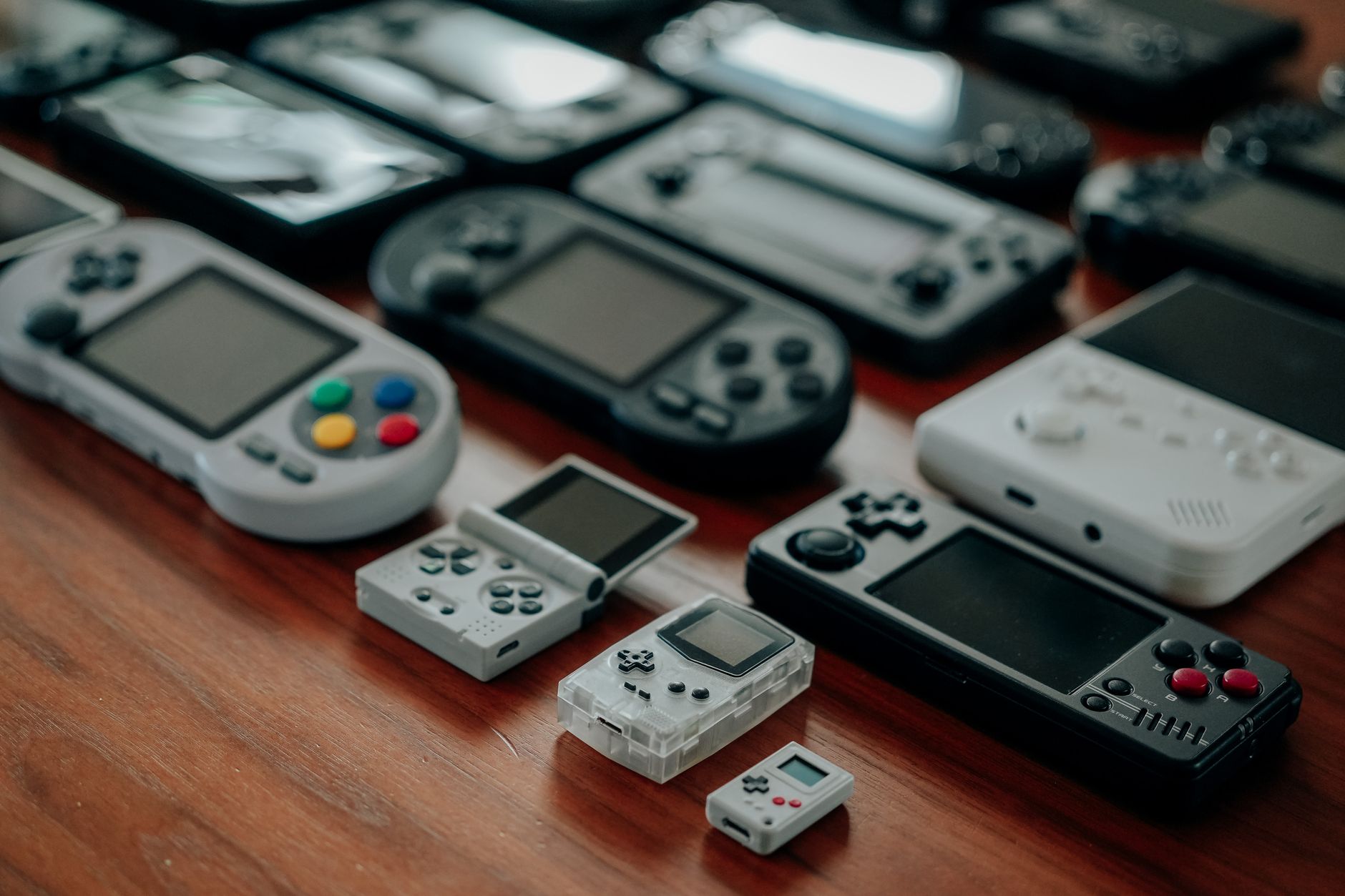
When you picture a video game console, fiberglass probably isn’t the first material that comes to mind. You are much more likely to think of molded plastic, metal heat sinks, silicon chips, and—if you’ve ever taken one apart—an intimidating collection of screws that somehow never all make it back in.
3D printing, on the other hand, might seem a little more at home in the gaming world. Hobbyists have used 3D printers to make everything from controller stands to complete retro gaming systems.
But both fiberglass and 3D printing have connections to console gaming, including some that are hiding in plain sight.
From the fiberglass-reinforced circuit boards buried inside modern electronics to 3D-printed prototypes and completely redesigned console cases, manufacturing technology has been helping shape gaming hardware for decades.
Fiberglass Has Been Hiding Inside Your Console
Let’s start with the less obvious one.
When people hear “fiberglass,” they often picture boats, tanks, pipes, automotive body panels, or other large molded products. Yet one of fiberglass’s most important applications is much smaller: printed circuit boards.
The familiar green circuit board inside a piece of electronics is commonly made using a material called FR-4. FR-4 is a composite consisting of woven fiberglass reinforcement held together with an epoxy resin. Copper circuitry is then incorporated into the board to create the pathways connecting processors, memory, power components, and other electronics. FR-4 has become one of the most widely used materials for rigid printed circuit boards because it combines electrical insulation, dimensional stability, strength, and relatively low cost.
In other words, fiberglass doesn’t necessarily need to form the outside of a PlayStation, Xbox, Nintendo system, or gaming handheld to be part of the machine.
It can literally be supporting the electronics that make the games run.
That may not be as flashy as a custom console shell, but it is arguably a much more important contribution.
Why Aren’t Consoles Made With Fiberglass Bodies?
If fiberglass is strong and useful, why don’t we see mass-produced fiberglass console cases?
Mostly because there are better tools for that particular job.
Millions of identical console housings can be produced very efficiently through processes such as plastic injection molding. Once the expensive tooling has been created, manufacturers can rapidly produce large numbers of parts with consistent dimensions, detailed surface features, mounting points, ventilation openings, and a finished appearance.
Traditional fiberglass fabrication is better suited to different production needs. It can be extremely useful for large parts, low-volume products, custom shapes, corrosion-resistant equipment, and structures where its strength-to-weight ratio and durability are especially valuable. But laying up and finishing a fiberglass console enclosure would generally involve more labor than makes sense when millions of identical consumer products are needed.
For a mass-market console shell, that is a major disadvantage.
For a one-off custom gaming enclosure, though?
Now things get more interesting.
Fiberglass cloth, mat, and resin can be shaped, reinforced, sanded, filled, and painted into forms that would be difficult to create from an existing plastic enclosure. Those same characteristics have long made composite fabrication attractive to custom builders and case modders who care more about creating something unique than producing a million identical copies.
And modern manufacturing gives builders another tool to combine with it.
Enter the 3D Printer
3D printing changes the equation because it is almost the opposite of mass-production molding.
Instead of spending heavily on tooling and then making thousands or millions of copies, a designer can create a digital model and manufacture one part.
Don’t like it?
Change the model and print another.
That is extremely useful during product development.
Panic’s development of the tiny yellow Playdate handheld is a good example. In the company’s account of the system’s creation, the designers describe producing numerous 3D-printed versions while refining the shape and feel of the device. Rather than committing immediately to expensive production tooling, physical prototypes could be created, handled, evaluated, modified, and printed again.
That iterative process is one of 3D printing’s biggest advantages.
A computer screen can tell you that a handheld is 76 millimeters wide. A physical prototype can tell you whether 76 millimeters actually feels good in your hands.
For controllers and handhelds especially, that difference matters.
OUYA Let Gamers Print Their Own Console Case
One of the more unusual examples came from the OUYA, the small Android-based console that launched following a highly successful Kickstarter campaign.
In 2013, OUYA partnered with MakerBot to release files that allowed owners to 3D print their own version of the console enclosure. The downloadable designs included the enclosure components and could be modified by users before printing.
That was an interesting idea for the time.
Instead of treating the console housing as something untouchable that could only come from the manufacturer, the project effectively said: Here’s the shape. Have fun with it.
Owners with access to a 3D printer could experiment with colors, designs, and modifications rather than being permanently limited to the enclosure that arrived in the box.
The OUYA itself may not have become a PlayStation-sized gaming platform, but the concept fits surprisingly well with where hardware customization has gone since.
Valve Took a Similar Approach With the Steam Deck
Fast-forward to the age of handheld PC gaming and you find an even bigger example.
Before the Steam Deck reached consumers in 2022, Valve released CAD data for the device’s external shell. The files included formats such as STL and STP, with Valve specifically calling out tinkerers, modders, accessory makers, and people who simply wanted to 3D print a Deck-shaped model to see how it felt.
That is a pretty significant change from the traditional attitude toward consumer electronics.
The company that designed the hardware was essentially giving the maker community accurate geometry to work from.
From there, 3D printing can help with things such as:
- Prototype accessories
- Stands and docks
- Ergonomic additions
- Mounting hardware
- Replacement or modified components
- Storage solutions
- Custom enclosures and experimental designs
Not every printed part is going to be as durable, heat-resistant, smooth, or precisely manufactured as the original injection-molded component. Material choice and print quality still matter.
But the barrier to experimenting with gaming hardware has become dramatically lower.
3D Printing Is Also Making Gaming More Accessible
Customization isn’t only about making a console look cool.
Sometimes changing the shape of a control can make gaming more usable for someone who would have difficulty with a standard controller.
Xbox, for example, has made 3D-printable adaptive thumbstick topper files available through Xbox Design Lab. The designs allow different shapes and dimensions to be produced for players who may benefit from a more customized control interface.
This may ultimately be one of the most meaningful applications of additive manufacturing in gaming.
Traditional manufacturing works exceptionally well when millions of people need the same part.
3D printing becomes especially interesting when one person needs a slightly different part.
A grip can be thicker.
A button can be easier to reach.
A thumbstick can have a different shape.
A mount can position a controller differently.
Instead of expecting every player’s hands and physical needs to conform to one mass-produced controller, manufacturing can begin adapting the controller to the player.
And Then There Are the Modders
Of course, gamers eventually look at any technology and ask, “Can I use this to build something ridiculous?”
The answer is usually yes.
Modern console modders are using 3D printing to rearrange, shrink, repair, and completely repackage gaming hardware.
One recent example is the Tiny PS5 Redux, an enthusiast project that repackaged PlayStation 5 hardware into a much smaller custom system. The project combined conventional materials and purchased hardware with custom 3D-printed components, including specialized mounting pieces.
At the more extreme end, custom builders have produced entirely new “consoles” around existing hardware. A 2024 project inspired by the fictional LX computer from the game UFO 50, for example, used a 3D-printed shell around a small PC to turn a machine that only existed within the game’s fictional history into a working physical system.
That is where 3D printing really shines for hobbyists.
You don’t have to convince Sony, Microsoft, or Nintendo that your idea deserves a production line.
You just have to convince your printer not to turn the first layer into spaghetti.
Fiberglass and 3D Printing Can Work Together, Too
These technologies do not necessarily have to compete.
One particularly interesting possibility is hybrid fabrication.
Imagine that you want to build a large, highly customized gaming enclosure—perhaps an elaborate racing simulator, arcade-style system, VR pod, promotional display, or sculpted console-inspired PC.
3D printing can be used to produce complex brackets, prototypes, forms, patterns, and tooling. Fiberglass can then provide a larger reinforced composite structure where printing the entire object might be slow, expensive, or impractical.
That opens several possible workflows:
3D print the complicated details. Fiberglass the larger structure.
Or:
3D print a pattern or mold. Use that tooling to produce a fiberglass part.
Manufacturing methods become less about choosing one “best” material and more about using each process for the job it handles well.
For low-volume gaming hardware and elaborate custom installations, that can allow shapes that would be difficult or prohibitively expensive to create with conventional mass-production tooling.
What Could the Next Generation Look Like?
3D printing probably isn’t going to replace injection molding for the next mass-market console.
If a manufacturer needs ten million identical housings, conventional high-volume manufacturing is still very difficult to beat.
The more interesting future may be everything surrounding that mass-produced core.
Imagine purchasing a standard gaming system but being able to download officially supported files for:
- Alternative ergonomic grips
- Replacement components
- Customized controller parts
- Different console feet or stands
- Wall mounts
- Cooling ducts
- Accessibility aids
- Desk and entertainment-center mounting systems
- Cosmetic components
- Limited-edition enclosure pieces
Valve’s release of Steam Deck geometry and Xbox’s printable adaptive components show that parts of this idea are already here.
As home printers become faster and engineering-grade materials become more accessible, the line between “manufacturer” and “owner” could become increasingly blurry.
Instead of replacing an entire console because one oddly shaped plastic component broke, perhaps you print the replacement.
Instead of manufacturers trying to produce an accessory suitable for everyone, they might provide a digital starting point and let users modify it themselves.
And instead of a limited-edition console being limited to whatever color the manufacturer chooses, hardware enthusiasts could create genuinely unique systems.
Okay, PC Gamers, You Can Come Back Into the Room
We know.
“Technically, my gaming PC can do more than a console.”
You may sit down now.
PC gaming might actually be the perfect playground for both of these technologies because the platform has always encouraged customization.
3D printing can produce GPU supports, fan ducts, cable-management pieces, drive mounts, front panels, brackets, controller holders, miniature cases, and components for completely custom enclosures. Fiberglass fabrication can go a step further when someone wants to build a large sculpted case instead of another rectangular metal box.
And the Steam Deck has blurred the line even further. It looks and feels like a handheld console, but underneath it is fundamentally a gaming PC—which also happens to be one of the best examples of a major gaming hardware company deliberately giving 3D-printing enthusiasts useful design data.
So yes, PC gamers get a point this time.
Just one.
Gaming Hardware Is Becoming More Personal
Video game consoles have traditionally been very standardized products. Millions of gamers buy essentially the same box, the same controller, and the same enclosure.
Fiberglass and 3D printing show two very different sides of how materials technology can change that hardware.
Fiberglass is the quiet workhorse. Through glass-reinforced materials such as FR-4, it helps provide the strong, electrically insulating foundation on which modern electronic circuitry is built.
3D printing is the experimenter. It allows engineers to test an idea before committing to production, lets companies share hardware geometry with their communities, gives players new accessibility options, and enables hobbyists to build systems that major manufacturers would never attempt.
And when composites, additive manufacturing, conventional plastics, metals, and electronics are all combined, the possibilities become much larger than any single manufacturing process.
The next game console you buy will probably still arrive in a mass-produced plastic enclosure.
But the prototype that came before it, the circuit board hidden inside it, the accessories surrounding it, and the wild custom version somebody builds afterward?
There is a good chance fiberglass or 3D printing will have something to do with it.
This post was created using Generative AI; information may be inaccurate.