Posted on Leave a comment

How Fiberglass Is Used in the Construction Industry

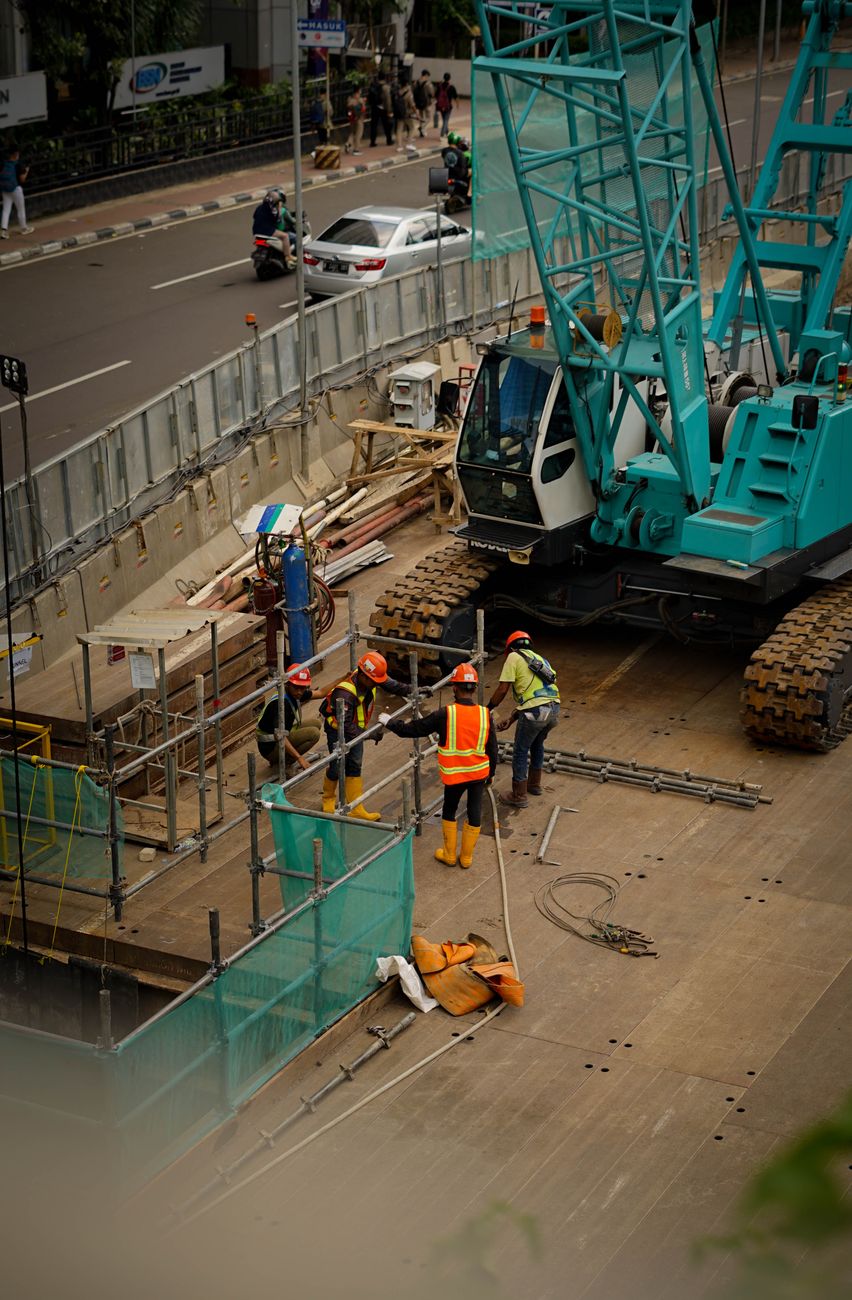
workers at construction site

When most people hear the word fiberglass, insulation is probably one of the first things that comes to mind. While fiberglass insulation is certainly common, the material’s role in construction extends far beyond what goes inside walls and attics.

Fiberglass-reinforced plastic, often called FRP, is used to manufacture everything from structural shapes and walkways to wall panels, ladders, doors, tanks, and custom components. For contractors, engineers, facility owners, and builders, these products can provide alternatives to traditional materials such as steel, aluminum, wood, and concrete—especially when corrosion, moisture, weight, or maintenance are concerns.

Here are some of the ways fiberglass is being used throughout the construction industry and why contractors may consider it for certain projects.

What Is Fiberglass-Reinforced Plastic?

Fiberglass-reinforced plastic combines glass fibers with a polymer resin. The glass provides reinforcement and strength, while the resin binds the fibers together, gives the finished product its shape, and helps protect it from the surrounding environment.

Different combinations of fibers, resins, manufacturing methods, and surface finishes can be used depending on the application.

This flexibility is one reason fiberglass products show up in such a wide variety of construction projects. A fiberglass component intended for an architectural application may be designed very differently from one intended for a chemical plant or wastewater facility.

Fiberglass Grating, Platforms, and Walkways

One of the most recognizable uses of FRP in industrial construction is fiberglass grating.

Grating can be used for:

  • Elevated walkways
  • Work platforms
  • Catwalks
  • Stair landings
  • Trench covers
  • Drainage areas
  • Equipment access platforms
  • Mezzanine flooring

Steel grating remains common, but fiberglass can be useful where corrosion is a persistent problem.

For example, a walkway exposed to chemicals, saltwater, wastewater, or frequent washdowns may require ongoing maintenance if it is constructed from conventional carbon steel. Properly selected FRP does not rust in the same way, potentially reducing the need for repeated painting, coating, or corrosion repairs.

Fiberglass grating is also relatively lightweight. That can make large panels easier to transport, lift, cut, and position on a jobsite.

Slip-resistant surfaces can also be incorporated into grating for locations where water, oils, or other liquids may be present.

Structural Fiberglass Shapes

Fiberglass is not limited to panels and grating. Structural FRP profiles can be manufactured in shapes similar to those used in steel construction.

Common profiles include:

  • I-beams
  • Channels
  • Angles
  • Square tubing
  • Round tubing
  • Flat bars
  • Rods

These profiles are commonly produced through a manufacturing process called pultrusion, where continuous fiberglass reinforcement is pulled through resin and then through a heated die that forms the final profile.

Structural FRP can be used to build equipment supports, platforms, frames, access structures, walkways, and other assemblies.

It is important, however, not to treat fiberglass as though it were simply lightweight steel. FRP has different stiffness, connection, loading, and design characteristics. Engineers and fabricators need to account for these differences when designing structural assemblies.

Handrails, Guardrails, and Stairs

Handrails and guardrails are another common construction application for fiberglass.

FRP railing systems are often found around:

  • Industrial equipment
  • Water treatment facilities
  • Chemical processing areas
  • Coastal structures
  • Platforms
  • Rooftop equipment
  • Access stairs
  • Pits and trenches

Along with corrosion resistance, fiberglass’s electrically nonconductive properties can be beneficial around certain electrical installations.

Entire stair assemblies can also incorporate fiberglass components, including structural supports, treads, landings, and handrails.

For contractors working at facilities where steel stairs and rails repeatedly rust or require repainting, FRP may be worth considering when evaluating lifecycle maintenance.

Fiberglass Ladders

Fiberglass ladders are familiar even outside industrial construction, particularly because they are commonly used around electrical work.

The same advantages can apply to permanently installed access ladders.

Fiberglass ladder systems can be used for access to:

  • Roofs
  • Tanks
  • Platforms
  • Equipment
  • Pits
  • Towers
  • Processing areas

Depending on the project, cages, safety systems, platforms, and custom mounting brackets can be incorporated into the assembly.

As with any access system, applicable building codes, OSHA requirements, loading requirements, and site-specific safety standards still need to be considered.

Wall and Ceiling Panels

FRP panels are widely used as interior wall and ceiling surfaces, particularly in environments where frequent cleaning or moisture exposure is expected.

Common locations include:

  • Commercial kitchens
  • Food processing facilities
  • Restrooms
  • Hospitals and healthcare facilities
  • Laboratories
  • Car washes
  • Agricultural buildings
  • Utility areas

Smooth FRP wall panels provide a washable surface and can handle moisture better than many conventional interior finishes.

Industrial fiberglass panels can also be manufactured for more demanding environments where greater strength or chemical resistance is required.

Roofing, Siding, and Translucent Panels

Fiberglass can also appear on the exterior envelope of a building.

FRP panels may be used for roofing, siding, canopies, shelters, and equipment enclosures.

One particularly useful option is translucent fiberglass paneling. These panels allow natural light into a structure while still providing a physical barrier.

They are commonly seen in applications such as:

  • Warehouses
  • Workshops
  • Agricultural buildings
  • Covered walkways
  • Equipment shelters

Using natural daylight can reduce the need for artificial lighting during portions of the day while avoiding the need for conventional windows in some applications.

Fiberglass Doors and Frames

Fiberglass doors have become common in both residential and commercial construction.

In residential applications, fiberglass entry doors can imitate the appearance of wood while resisting many of the moisture-related problems associated with natural wood.

Industrial fiberglass doors and frames can serve a somewhat different purpose. They may be selected for locations exposed to:

  • Moisture
  • Chemicals
  • Salt
  • Cleaning agents
  • High humidity

Wastewater plants, chemical facilities, food-processing operations, marine environments, and similar locations can be particularly demanding on conventional doors and frames.

A fiberglass system can help reduce corrosion-related maintenance in these areas.

Tanks, Sumps, and Process Equipment

Construction projects involving industrial facilities frequently require much more than the building itself.

Fiberglass is widely used for tanks, vessels, sumps, scrubbers, ductwork, piping, and other process equipment.

These products are especially common in industries dealing with corrosive liquids or gases.

Applications can include:

  • Water treatment
  • Wastewater treatment
  • Chemical processing
  • Mining
  • Pulp and paper
  • Power generation
  • Food processing
  • Manufacturing

For contractors, this can mean coordinating with specialized fiberglass fabricators when a project requires custom tanks, piping, ductwork, or process equipment.

Resin selection becomes especially important in these applications because different chemicals, concentrations, temperatures, and operating conditions may require different laminate systems.

Trench Covers and Custom Covers

Fiberglass can also solve some less obvious construction problems.

Custom FRP covers are frequently used over:

  • Trenches
  • Pits
  • Channels
  • Sumps
  • Equipment
  • Process openings

A steel cover large enough to support the required load can become extremely heavy. Fiberglass can sometimes provide a lighter alternative, making removable covers easier for maintenance personnel to handle.

Covers can also be fabricated in unusual sizes or shapes when standard products do not fit an existing structure.

Architectural and Decorative Fiberglass

Not every fiberglass construction product is industrial.

Fiberglass can be molded into complicated shapes, making it useful for architectural features and decorative components that would be difficult or expensive to produce using traditional materials.

Examples can include:

  • Columns
  • Cornices
  • Domes
  • Facades
  • Decorative trim
  • Canopies
  • Signs
  • Replicas of stone or carved features

Glass-fiber-reinforced products can provide the appearance of heavier traditional materials without requiring the same amount of structural support.

This ability to reproduce complicated shapes also makes fiberglass useful in restoration work where custom architectural pieces need to match existing designs.

Why Contractors Use Fiberglass

Fiberglass is not automatically the best material for every construction project. Steel, aluminum, concrete, and wood all have situations where they make more sense.

FRP becomes particularly interesting when a project involves one or more of the following challenges.

Corrosion

Perhaps the biggest advantage of fiberglass in industrial construction is its ability to resist many corrosive environments.

Steel structures may require galvanizing, painting, coatings, or regular maintenance. Properly designed FRP does not rely on a protective metal coating to prevent rust.

Weight

Fiberglass components are generally much lighter than comparable steel components.

For contractors, lighter materials can simplify:

  • Transportation
  • Material handling
  • Installation
  • Rooftop construction
  • Work in confined spaces

In certain projects, reduced weight can also lower loads placed on the supporting structure.

Electrical Conductivity

Fiberglass is electrically nonconductive, which can make it useful for platforms, ladders, railings, and structures located near electrical equipment.

Low Maintenance

The initial cost of an FRP component may sometimes be higher than that of a conventional material. However, project owners may also need to consider the cost of painting, recoating, corrosion repair, and eventual replacement.

For long-term installations, lifecycle cost can be just as important as the initial purchase price.

Fiberglass Still Has Design Considerations

The advantages of FRP do not mean it should simply replace every steel or aluminum component on a project.

Engineers and contractors need to consider factors such as:

  • Structural loads
  • Deflection
  • Temperature
  • Chemical exposure
  • Fire and smoke requirements
  • UV exposure
  • Connection methods
  • Fastener selection
  • Required resin system
  • Applicable building and safety codes

FRP behaves differently from metals. A design that works perfectly in steel cannot always be copied dimension-for-dimension in fiberglass.

This is particularly important for structural or chemical-service applications, where involving an experienced fiberglass manufacturer or fabricator early in the project can help avoid problems later.

Where Custom Fiberglass Fabrication Fits In

Many construction projects can use standard fiberglass grating, structural shapes, panels, and other commercially available products.

Others require something more specialized.

Contractors may encounter existing equipment, unusual dimensions, corrosive environments, or site constraints that require custom fiberglass fabrication. This could involve anything from a specially sized trench cover or platform to a complete tank, duct system, enclosure, or structural assembly.

In those situations, working with a fiberglass fabricator can allow the component to be designed around the actual conditions of the project rather than forcing a standard product to fit an unusual application.

Fiberglass Has a Much Bigger Role in Construction Than It May Seem

Fiberglass may not always be the most visible material on a construction site, but it is used in an impressive range of applications.

From grating under workers’ feet to handrails, structural supports, wall panels, doors, ladders, tanks, roofing, architectural features, and process equipment, FRP gives contractors another material option when traditional construction materials face limitations.

Its combination of corrosion resistance, relatively low weight, electrical nonconductivity, design flexibility, and low maintenance requirements makes fiberglass particularly valuable in demanding industrial and commercial environments.

The key is knowing where those advantages matter.

For contractors working on projects involving corrosive chemicals, wastewater, coastal exposure, electrical equipment, high moisture, or unusual fabrication requirements, fiberglass may be worth considering much earlier in the design and bidding process—not simply as a replacement material after conventional components begin to fail.

This post was created using Generative AI; information may be inaccurate.

Posted on Leave a comment

From Fiberglass to Filament: How Composites and 3D Printing Are Shaping Video Game Consoles

various retro portable gaming consoles on a wooden table

When you picture a video game console, fiberglass probably isn’t the first material that comes to mind. You are much more likely to think of molded plastic, metal heat sinks, silicon chips, and—if you’ve ever taken one apart—an intimidating collection of screws that somehow never all make it back in.

3D printing, on the other hand, might seem a little more at home in the gaming world. Hobbyists have used 3D printers to make everything from controller stands to complete retro gaming systems.

But both fiberglass and 3D printing have connections to console gaming, including some that are hiding in plain sight.

From the fiberglass-reinforced circuit boards buried inside modern electronics to 3D-printed prototypes and completely redesigned console cases, manufacturing technology has been helping shape gaming hardware for decades.

Fiberglass Has Been Hiding Inside Your Console

Let’s start with the less obvious one.

When people hear “fiberglass,” they often picture boats, tanks, pipes, automotive body panels, or other large molded products. Yet one of fiberglass’s most important applications is much smaller: printed circuit boards.

The familiar green circuit board inside a piece of electronics is commonly made using a material called FR-4. FR-4 is a composite consisting of woven fiberglass reinforcement held together with an epoxy resin. Copper circuitry is then incorporated into the board to create the pathways connecting processors, memory, power components, and other electronics. FR-4 has become one of the most widely used materials for rigid printed circuit boards because it combines electrical insulation, dimensional stability, strength, and relatively low cost.

In other words, fiberglass doesn’t necessarily need to form the outside of a PlayStation, Xbox, Nintendo system, or gaming handheld to be part of the machine.

It can literally be supporting the electronics that make the games run.

That may not be as flashy as a custom console shell, but it is arguably a much more important contribution.

Why Aren’t Consoles Made With Fiberglass Bodies?

If fiberglass is strong and useful, why don’t we see mass-produced fiberglass console cases?

Mostly because there are better tools for that particular job.

Millions of identical console housings can be produced very efficiently through processes such as plastic injection molding. Once the expensive tooling has been created, manufacturers can rapidly produce large numbers of parts with consistent dimensions, detailed surface features, mounting points, ventilation openings, and a finished appearance.

Traditional fiberglass fabrication is better suited to different production needs. It can be extremely useful for large parts, low-volume products, custom shapes, corrosion-resistant equipment, and structures where its strength-to-weight ratio and durability are especially valuable. But laying up and finishing a fiberglass console enclosure would generally involve more labor than makes sense when millions of identical consumer products are needed.

For a mass-market console shell, that is a major disadvantage.

For a one-off custom gaming enclosure, though?

Now things get more interesting.

Fiberglass cloth, mat, and resin can be shaped, reinforced, sanded, filled, and painted into forms that would be difficult to create from an existing plastic enclosure. Those same characteristics have long made composite fabrication attractive to custom builders and case modders who care more about creating something unique than producing a million identical copies.

And modern manufacturing gives builders another tool to combine with it.

Enter the 3D Printer

3D printing changes the equation because it is almost the opposite of mass-production molding.

Instead of spending heavily on tooling and then making thousands or millions of copies, a designer can create a digital model and manufacture one part.

Don’t like it?

Change the model and print another.

That is extremely useful during product development.

Panic’s development of the tiny yellow Playdate handheld is a good example. In the company’s account of the system’s creation, the designers describe producing numerous 3D-printed versions while refining the shape and feel of the device. Rather than committing immediately to expensive production tooling, physical prototypes could be created, handled, evaluated, modified, and printed again.

That iterative process is one of 3D printing’s biggest advantages.

A computer screen can tell you that a handheld is 76 millimeters wide. A physical prototype can tell you whether 76 millimeters actually feels good in your hands.

For controllers and handhelds especially, that difference matters.

OUYA Let Gamers Print Their Own Console Case

One of the more unusual examples came from the OUYA, the small Android-based console that launched following a highly successful Kickstarter campaign.

In 2013, OUYA partnered with MakerBot to release files that allowed owners to 3D print their own version of the console enclosure. The downloadable designs included the enclosure components and could be modified by users before printing.

That was an interesting idea for the time.

Instead of treating the console housing as something untouchable that could only come from the manufacturer, the project effectively said: Here’s the shape. Have fun with it.

Owners with access to a 3D printer could experiment with colors, designs, and modifications rather than being permanently limited to the enclosure that arrived in the box.

The OUYA itself may not have become a PlayStation-sized gaming platform, but the concept fits surprisingly well with where hardware customization has gone since.

Valve Took a Similar Approach With the Steam Deck

Fast-forward to the age of handheld PC gaming and you find an even bigger example.

Before the Steam Deck reached consumers in 2022, Valve released CAD data for the device’s external shell. The files included formats such as STL and STP, with Valve specifically calling out tinkerers, modders, accessory makers, and people who simply wanted to 3D print a Deck-shaped model to see how it felt.

That is a pretty significant change from the traditional attitude toward consumer electronics.

The company that designed the hardware was essentially giving the maker community accurate geometry to work from.

From there, 3D printing can help with things such as:

  • Prototype accessories
  • Stands and docks
  • Ergonomic additions
  • Mounting hardware
  • Replacement or modified components
  • Storage solutions
  • Custom enclosures and experimental designs

Not every printed part is going to be as durable, heat-resistant, smooth, or precisely manufactured as the original injection-molded component. Material choice and print quality still matter.

But the barrier to experimenting with gaming hardware has become dramatically lower.

3D Printing Is Also Making Gaming More Accessible

Customization isn’t only about making a console look cool.

Sometimes changing the shape of a control can make gaming more usable for someone who would have difficulty with a standard controller.

Xbox, for example, has made 3D-printable adaptive thumbstick topper files available through Xbox Design Lab. The designs allow different shapes and dimensions to be produced for players who may benefit from a more customized control interface.

This may ultimately be one of the most meaningful applications of additive manufacturing in gaming.

Traditional manufacturing works exceptionally well when millions of people need the same part.

3D printing becomes especially interesting when one person needs a slightly different part.

A grip can be thicker.

A button can be easier to reach.

A thumbstick can have a different shape.

A mount can position a controller differently.

Instead of expecting every player’s hands and physical needs to conform to one mass-produced controller, manufacturing can begin adapting the controller to the player.

And Then There Are the Modders

Of course, gamers eventually look at any technology and ask, “Can I use this to build something ridiculous?”

The answer is usually yes.

Modern console modders are using 3D printing to rearrange, shrink, repair, and completely repackage gaming hardware.

One recent example is the Tiny PS5 Redux, an enthusiast project that repackaged PlayStation 5 hardware into a much smaller custom system. The project combined conventional materials and purchased hardware with custom 3D-printed components, including specialized mounting pieces.

At the more extreme end, custom builders have produced entirely new “consoles” around existing hardware. A 2024 project inspired by the fictional LX computer from the game UFO 50, for example, used a 3D-printed shell around a small PC to turn a machine that only existed within the game’s fictional history into a working physical system.

That is where 3D printing really shines for hobbyists.

You don’t have to convince Sony, Microsoft, or Nintendo that your idea deserves a production line.

You just have to convince your printer not to turn the first layer into spaghetti.

Fiberglass and 3D Printing Can Work Together, Too

These technologies do not necessarily have to compete.

One particularly interesting possibility is hybrid fabrication.

Imagine that you want to build a large, highly customized gaming enclosure—perhaps an elaborate racing simulator, arcade-style system, VR pod, promotional display, or sculpted console-inspired PC.

3D printing can be used to produce complex brackets, prototypes, forms, patterns, and tooling. Fiberglass can then provide a larger reinforced composite structure where printing the entire object might be slow, expensive, or impractical.

That opens several possible workflows:

3D print the complicated details. Fiberglass the larger structure.

Or:

3D print a pattern or mold. Use that tooling to produce a fiberglass part.

Manufacturing methods become less about choosing one “best” material and more about using each process for the job it handles well.

For low-volume gaming hardware and elaborate custom installations, that can allow shapes that would be difficult or prohibitively expensive to create with conventional mass-production tooling.

What Could the Next Generation Look Like?

3D printing probably isn’t going to replace injection molding for the next mass-market console.

If a manufacturer needs ten million identical housings, conventional high-volume manufacturing is still very difficult to beat.

The more interesting future may be everything surrounding that mass-produced core.

Imagine purchasing a standard gaming system but being able to download officially supported files for:

  • Alternative ergonomic grips
  • Replacement components
  • Customized controller parts
  • Different console feet or stands
  • Wall mounts
  • Cooling ducts
  • Accessibility aids
  • Desk and entertainment-center mounting systems
  • Cosmetic components
  • Limited-edition enclosure pieces

Valve’s release of Steam Deck geometry and Xbox’s printable adaptive components show that parts of this idea are already here.

As home printers become faster and engineering-grade materials become more accessible, the line between “manufacturer” and “owner” could become increasingly blurry.

Instead of replacing an entire console because one oddly shaped plastic component broke, perhaps you print the replacement.

Instead of manufacturers trying to produce an accessory suitable for everyone, they might provide a digital starting point and let users modify it themselves.

And instead of a limited-edition console being limited to whatever color the manufacturer chooses, hardware enthusiasts could create genuinely unique systems.

Okay, PC Gamers, You Can Come Back Into the Room

We know.

“Technically, my gaming PC can do more than a console.”

You may sit down now.

PC gaming might actually be the perfect playground for both of these technologies because the platform has always encouraged customization.

3D printing can produce GPU supports, fan ducts, cable-management pieces, drive mounts, front panels, brackets, controller holders, miniature cases, and components for completely custom enclosures. Fiberglass fabrication can go a step further when someone wants to build a large sculpted case instead of another rectangular metal box.

And the Steam Deck has blurred the line even further. It looks and feels like a handheld console, but underneath it is fundamentally a gaming PC—which also happens to be one of the best examples of a major gaming hardware company deliberately giving 3D-printing enthusiasts useful design data.

So yes, PC gamers get a point this time.

Just one.

Gaming Hardware Is Becoming More Personal

Video game consoles have traditionally been very standardized products. Millions of gamers buy essentially the same box, the same controller, and the same enclosure.

Fiberglass and 3D printing show two very different sides of how materials technology can change that hardware.

Fiberglass is the quiet workhorse. Through glass-reinforced materials such as FR-4, it helps provide the strong, electrically insulating foundation on which modern electronic circuitry is built.

3D printing is the experimenter. It allows engineers to test an idea before committing to production, lets companies share hardware geometry with their communities, gives players new accessibility options, and enables hobbyists to build systems that major manufacturers would never attempt.

And when composites, additive manufacturing, conventional plastics, metals, and electronics are all combined, the possibilities become much larger than any single manufacturing process.

The next game console you buy will probably still arrive in a mass-produced plastic enclosure.

But the prototype that came before it, the circuit board hidden inside it, the accessories surrounding it, and the wild custom version somebody builds afterward?

There is a good chance fiberglass or 3D printing will have something to do with it.

This post was created using Generative AI; information may be inaccurate.

Posted on Leave a comment

Fiberglass in National Parks: Durable Solutions for the Great Outdoors

castle mountain reflection in banff national park

When most people picture a national park, they probably think of mountains, forests, hiking trails, wildlife, or scenic overlooks—not fiberglass.

Yet behind the natural beauty of parks is a considerable amount of infrastructure. Visitors need places to sit and eat, safe access to water, waste collection, signage, restrooms, walkways, and countless other facilities. Park employees also need equipment and structures that can withstand years of exposure to rain, sunlight, temperature changes, moisture, chemicals, wildlife, and heavy public use.

Fiberglass-reinforced plastic, commonly called FRP or fiberglass, can be a useful material for many of these applications. Its combination of durability, corrosion resistance, relatively low maintenance requirements, and design flexibility makes it particularly well suited for outdoor environments.

From water troughs and trash receptacles to picnic tables and utility structures, fiberglass can quietly help keep parks functioning while allowing visitors to focus on the scenery around them.

Why Fiberglass Makes Sense Outdoors

National parks and other public recreation areas can present difficult conditions for almost any material.

A park facility might experience intense summer sunlight, freezing winter temperatures, frequent rain, standing water, mud, humidity, insects, animals, and constant visitor traffic. Coastal parks add saltwater and salt air to the equation, while facilities around wastewater, drinking water, or chemical-treatment systems may face additional corrosion concerns.

Traditional materials such as wood and steel certainly have their place, but they can require periodic painting, sealing, corrosion treatment, or replacement.

Fiberglass offers another option.

A properly manufactured FRP component does not rust like carbon steel, and it does not rot in the same way as untreated wood. Fiberglass products can also be manufactured with resin systems, reinforcement, surface finishes, and colors selected for their intended environment.

For park operators, that can translate into fewer maintenance headaches over the service life of a product.

Water Troughs and Wildlife Watering Systems

One of the more practical uses for fiberglass in parks, wildlife areas, and other large outdoor properties is water storage and watering equipment.

Fiberglass troughs can be used for livestock, horses, wildlife-management programs, or other applications where water must remain available outdoors for extended periods.

This is an environment where corrosion resistance becomes especially useful. A trough is naturally exposed to water nearly all the time, and depending on its location, it may also encounter minerals, cleaning chemicals, mud, vegetation, and harsh weather.

Fiberglass can be formed into relatively large tanks or troughs while avoiding the rust issues associated with some metal alternatives.

FRP can also be used for associated equipment such as:

  • Water storage tanks
  • Tank covers
  • Equipment housings
  • Pump enclosures
  • Piping components
  • Access panels
  • Grating and platforms around water systems

The ability to fabricate components for a particular installation can be especially valuable in remote areas where standard equipment does not always fit the available space or operating requirements.

Trash Cans, Receptacles, and Protective Covers

Waste collection is probably not the first thing visitors notice when entering a park—which usually means it is doing its job.

Trash receptacles in heavily visited parks may be used hundreds of times per day. They are also exposed continuously to sun, rain, food residue, insects, animals, and cleaning.

Fiberglass can be used to manufacture trash cans, waste enclosures, lids, and decorative covers that protect an internal waste container while improving the appearance of the surrounding area.

A fiberglass exterior can also be shaped and finished in ways that help it blend into a particular setting. Rather than installing something that looks highly industrial, an enclosure could potentially use muted earth tones, textured surfaces, or designs that complement nearby buildings and park facilities.

The same basic concept can be used for recycling stations and multi-bin waste collection systems.

For areas where wildlife is a concern, fiberglass can also serve as part of a more substantial enclosure design incorporating appropriate hardware, doors, latches, and structural reinforcement.

Picnic Tables and Outdoor Furniture

Picnic tables endure a surprising amount of abuse.

They sit outside year-round, receive constant UV exposure, get soaked by rain, collect spilled drinks and food, and are regularly climbed on, moved, cleaned, and exposed to thousands of visitors.

Fiberglass can be incorporated into picnic tables, benches, seating, and similar outdoor furniture.

One potential advantage is that molded fiberglass allows designers to create smooth, repeatable shapes while incorporating reinforcement where it is needed. Depending on the application, fiberglass components can also reduce concerns about splinters, rot, or corrosion.

Color can often be incorporated into or applied to the surface as well, giving park operators options beyond the appearance of unfinished industrial materials.

Fiberglass furniture may make particular sense around:

  • Visitor centers
  • Campgrounds
  • Picnic areas
  • Trailheads
  • Rest stops
  • Boat launches
  • Beaches
  • Observation areas
  • Outdoor educational facilities

Covers and Enclosures for Park Equipment

Parks contain a surprising amount of mechanical and electrical equipment that visitors rarely notice.

Pumps, valves, electrical controls, instrumentation, irrigation equipment, communication systems, and water-treatment components may all need protection from weather and public access.

Fiberglass is commonly suited to equipment covers and enclosures because it combines weather resistance with electrical insulation properties and corrosion resistance.

Custom-fabricated covers can also be useful when the equipment being protected has an unusual shape or when maintenance personnel need specific access points.

Instead of designing the equipment around an available enclosure, an FRP fabricator can often design the enclosure around the equipment.

Walkways, Platforms, Stairs, and Grating

Not every fiberglass product in a park needs to be highly visible.

FRP structural products can be used for grating, walkways, stairs, platforms, handrail systems, and access structures, particularly in areas where moisture or corrosion is a recurring issue.

Possible locations include water-treatment facilities, pump stations, wetlands, docks, boardwalk-related infrastructure, maintenance areas, and utility installations.

Fiberglass grating is especially useful in environments where water needs to drain through the walking surface rather than collect on top.

Depending on the product and application, surfaces can also be designed with slip resistance in mind—an important consideration around water, mud, or frequently wet equipment.

Signs, Information Panels, and Display Structures

Visitors rely heavily on signage while exploring a park.

Trail information, maps, historical displays, safety warnings, interpretive exhibits, and directional signs all have to survive outside while remaining readable.

Fiberglass can be used as a structural panel, housing, sign substrate, or support component for outdoor displays.

Composite construction also provides considerable freedom in shape. Panels can be curved, molded, or fabricated into housings that would be more complicated to produce using some conventional materials.

For interpretive areas, fiberglass structures could even be molded to resemble natural textures or other decorative forms when appropriate.

Restroom and Sanitation Infrastructure

Public restrooms combine several conditions that can be hard on building materials: moisture, cleaning chemicals, frequent washing, constant use, and—in some locations—limited climate control.

Fiberglass can appear in a variety of sanitation-related applications, including:

  • Wall and liner panels
  • Tanks
  • Covers
  • Equipment housings
  • Wash-down areas
  • Wastewater components
  • Utility access panels

Smooth fiberglass surfaces can also be easier to clean than highly porous or deteriorated surfaces, depending on the construction and finish being used.

For remote park facilities where maintenance trips may require considerable time and travel, selecting materials that reduce routine upkeep can be particularly valuable.

Storage Boxes and Maintenance Equipment

Park employees need places to store tools, safety equipment, maintenance supplies, hoses, and other materials.

Fiberglass storage boxes and cabinets can provide weather-resistant storage without introducing the same corrosion concerns as ordinary steel boxes.

Custom fabrication can also allow a storage enclosure to fit a specific location, vehicle, dock, trailhead, or maintenance facility.

Similar fabrication techniques can be used for cart bodies, equipment panels, protective shields, and other specialized items that may not be readily available as standard products.

Coastal Parks and Other Corrosive Environments

Some of the strongest cases for fiberglass can be found in parks near oceans, marshes, lakes, and other bodies of water.

Saltwater environments are notoriously difficult on metals. Salt spray can accelerate corrosion, particularly when structures remain outdoors continuously.

FRP does not rely on a protective paint coating to prevent rust because the underlying material is nonferrous. That makes fiberglass worth considering for coastal applications such as:

  • Platforms and grating
  • Railings
  • Equipment enclosures
  • Utility structures
  • Tanks
  • Covers
  • Walkways
  • Waste receptacles
  • Outdoor furniture

Proper material selection is still important—especially when long-term UV exposure, structural loads, fire performance, or chemical contact are involved—but fiberglass gives designers another valuable tool for demanding environments.

Custom Fabrication Can Be Particularly Valuable for Parks

One of fiberglass’s biggest advantages may not be any individual product.

It is customizability.

Parks are rarely uniform environments. A standard trash enclosure that works perfectly beside a visitor center may be completely unsuitable for a remote trailhead. A tank that fits one utility building may not fit another. An equipment cover may need unusual dimensions, doors, ventilation, mounting points, or internal supports.

Fiberglass fabrication allows products to be designed around those requirements.

A custom FRP manufacturer can potentially adjust factors such as:

  • Dimensions
  • Shape
  • Wall thickness
  • Reinforcement
  • Resin system
  • Surface finish
  • Color
  • Hardware
  • Access doors
  • Mounting locations
  • Internal supports

That flexibility allows park managers, engineers, architects, contractors, and facility personnel to look beyond catalog products when an unusual problem needs to be solved.

Looking Beyond the Initial Purchase Price

Public infrastructure purchases are understandably influenced by budget.

However, the least expensive product on the day it is purchased is not necessarily the least expensive product over its entire service life.

Maintenance matters.

If a component regularly needs painting, corrosion repair, sealing, or replacement, those expenses accumulate. Maintenance also requires labor, equipment, transportation, and sometimes temporary closure of an area.

That becomes even more significant in a national park or remote recreational area, where reaching the equipment may itself be difficult.

Fiberglass will not be the right choice for every application, but situations involving corrosion, moisture, weather exposure, frequent maintenance, or unusual fabrication requirements are good places to consider it.

Fiberglass Behind the Scenery

Visitors may never stop to think about the material used for a water trough, picnic table, trash enclosure, equipment cover, or maintenance platform—and they probably shouldn’t have to.

The best park infrastructure tends to quietly perform its job while leaving the natural environment as the main attraction.

Fiberglass can help accomplish that.

Its durability, corrosion resistance, design flexibility, and relatively low maintenance requirements make FRP useful for everything from visitor amenities to behind-the-scenes utility infrastructure.

For park managers, contractors, engineers, municipalities, and organizations responsible for recreational facilities, fiberglass also opens the door to something particularly useful: products designed specifically for the environment in which they will actually be used.

Whether the need is a simple enclosure, a large water trough, outdoor furniture, a corrosion-resistant platform, or an entirely custom component, fiberglass provides a versatile option for helping outdoor spaces remain functional for years to come.

This post was created using Generative AI; information may be inaccurate.

Posted on Leave a comment

Beyond Plastic Trinkets: Some of the Coolest Things Being Made with 3D Printing

pexels-photo-31137471.jpeg

When many people hear “3D printing,” they picture a small desktop machine slowly producing a plastic figurine. Those printers are still popular—and they can make some surprisingly useful objects—but they represent only one corner of a much larger industry.

Today, 3D printers are being used to produce everything from custom shoes and medical implants to rocket-engine components and full-size buildings. Some machines melt plastic filament, while others fuse metal powder, cure liquid resin, deposit concrete, or even arrange living cells.

What connects these different technologies is the basic idea of additive manufacturing: instead of cutting material away from a larger block, an object is built one layer at a time from a digital design.

That approach gives engineers, manufacturers, artists, doctors, and ordinary hobbyists the freedom to create objects that would be difficult—or sometimes impossible—to make using conventional methods.

Useful Products Made at Home

Desktop 3D printers have become much more capable and accessible over the past several years. While decorative models and toys remain popular, many owners use their printers to solve everyday problems.

A home printer can produce custom drawer organizers, wall mounts, replacement knobs, cable holders, tool organizers, plant pots, tabletop gaming pieces, camera accessories, and brackets designed for a very specific space. Someone can measure a broken plastic component, recreate it in computer-aided design software, and print a replacement rather than discarding an otherwise usable product.

The real advantage is not necessarily that printing one object is cheaper than purchasing a mass-produced version. It is that the object can be adjusted to fit a particular person, appliance, room, or purpose.

A phone stand from a store must work for thousands of customers. A printed phone stand can be designed for one phone, one case, one charging cable, and one location on a desk.

That kind of small-scale customization is one of 3D printing’s greatest strengths.

Shoes Designed from Digital Data

Footwear companies have also explored 3D printing as a way to create complex midsoles that would be difficult to manufacture using ordinary foam-molding techniques.

Adidas, for example, introduced its Futurecraft 4D platform using a process called Digital Light Synthesis. The process forms a lattice-like midsole from liquid resin using controlled light and oxygen. The company later expanded the technology into commercially available 4D footwear.

These lattice structures are more than visual decoration. Their geometry can be adjusted to change how different parts of a shoe compress, flex, and return energy.

In the future, this type of manufacturing could allow products to be adapted more closely to an individual customer. Instead of choosing only a shoe size, a buyer might eventually receive footwear adjusted for foot shape, gait, weight distribution, or intended activity.

The technology is not yet the standard way that most shoes are manufactured, but it demonstrates how 3D printing can turn a product’s internal geometry into an important part of its performance.

Patient-Specific Medical Devices

Some of the most meaningful uses of 3D printing are taking place in medicine.

According to the U.S. Food and Drug Administration, 3D-printed medical products already include orthopedic and cranial implants, dental restorations, surgical instruments, anatomical models, prosthetics, and surgical guides. Some devices can be created using a patient’s medical imaging data, allowing the shape to match that individual’s anatomy.

A surgeon can use a printed model of a bone, blood vessel, or organ to study a difficult case before entering the operating room. A surgical guide can help position an instrument more precisely. An implant can include a complicated porous surface intended to support bone attachment while still maintaining the necessary strength.

This is where customization becomes much more than a convenience. A product designed around one patient may improve planning, fit, or function in ways that a standard-size device cannot.

Researchers are also developing bioprinting, which uses mixtures containing living cells and supporting biomaterials. Bioprinted tissues may eventually contribute to regenerative medicine, drug testing, and disease research.

However, claims that doctors can routinely print complete replacement organs are ahead of reality. Researchers still face major challenges involving blood-vessel networks, cell survival, suitable bioinks, mechanical performance, long-term function, and regulatory approval. Current research is promising, but fully functional printed organs suitable for routine transplantation remain a future goal rather than an everyday medical option.

Houses Printed with Giant Robots

At the opposite end of the size range, construction companies are using enormous machines to deposit cement-based materials in carefully controlled layers.

Rather than printing every component of a completed house, these systems typically create major structural or wall elements. Workers still install features such as doors, windows, electrical systems, plumbing, finishes, and roofing.

Even with those limitations, construction-scale printing can create curved walls and other shapes without requiring the extensive formwork that conventional concrete construction might need.

ICON has used large-scale printing systems for residential, commercial, military, and social-housing projects. Its listed projects include communities in Texas, housing connected with Community First! Village, and developments involving multistory homes. In March 2026, the company also announced a commercial rollout of a newer construction system intended for builders.

The long-term appeal is easy to understand. Automated construction may reduce certain labor-intensive steps, create less material waste, and allow architects to use forms that are difficult to produce conventionally.

Still, a printed wall does not automatically make an inexpensive or sustainable house. The final result also depends on material production, transportation, site preparation, reinforcement, building codes, insulation, labor, finishing, and the durability of the completed structure.

The technology is impressive, but its real value must be measured through completed buildings—not simply by how quickly a printer can deposit a wall.

Rockets and Spacecraft Components

Spaceflight provides an almost perfect use case for additive manufacturing. Rocket parts are often complicated, produced in relatively small quantities, and expected to survive extreme heat, pressure, vibration, and mechanical stress.

A 3D printer can combine features that might otherwise require several separately manufactured parts. Reducing the number of joints and welds can simplify assembly, while internal channels can be designed directly into a component.

NASA has used additive manufacturing to develop and test rocket-engine hardware, including increasingly large engine components. NASA has also supported the development of specialized alloys and high-temperature printed ceramics for aerospace applications.

In 2023, Relativity Space launched the Terran 1, a test rocket incorporating extensive 3D-printed construction. NASA described it as the first launch of a test rocket made entirely from 3D-printed parts.

Printing in space may be equally important. Carrying every possible replacement part from Earth is inefficient, especially on long missions. A spacecraft equipped with manufacturing equipment could carry digital files and raw material, then produce certain tools or replacement components when needed.

The European Space Agency has already examined metal parts printed aboard the International Space Station to determine how microgravity affects the process.

Eventually, similar technology could help crews manufacture equipment during missions or produce structures using material found on the Moon or Mars.

Industrial Molds, Tools, and Fixtures

Some of the most valuable 3D-printed products are not especially glamorous. They are the molds, fixtures, jigs, patterns, and tools used to manufacture other products.

Traditional tooling can be expensive and slow to produce, especially when a company needs a large mold for only a prototype or a limited production run. Large-format additive manufacturing offers another approach.

Oak Ridge National Laboratory has investigated printed tooling for composite manufacturing, including molds made with fiber-reinforced thermoplastics. Its work has included wind-turbine blade tooling, self-heating molds, watercraft molds, automotive tooling, and tools tested in an industrial autoclave.

A large mold may be printed close to its final shape and then machined to achieve the required surface and dimensional accuracy. This hybrid approach combines the speed and material efficiency of additive manufacturing with the precision of conventional machining.

For manufacturers, this may be more immediately useful than printing every final product. A company can use additive manufacturing where it provides the greatest advantage—rapidly producing complicated tooling—while continuing to manufacture the finished parts using proven processes such as molding, forming, casting, or composite layup.

Food with Carefully Controlled Shapes

Food can also be printed, although the process does not usually create a meal from nothing. Instead, printable ingredients are prepared as pastes, doughs, purées, gels, chocolate, or other materials that can be deposited through a nozzle.

The technology can produce decorative chocolates, intricate pastries, customized textures, or foods shaped for particular nutritional and dietary needs.

Researchers have also considered food printing for space missions. The European Space Agency has explored projects involving printed foods and printable ingredients that could provide greater variety during long-duration missions.

The most important applications may not involve novelty shapes. Precisely controlling texture could make food easier to eat for people who have difficulty chewing or swallowing. Digital recipes might also allow portions, ingredients, nutrients, and presentation to be adjusted for an individual.

Art, Costumes, and Objects That Could Not Exist Before

Artists and designers have embraced 3D printing because it allows a digital model to become a physical object without first developing expensive industrial tooling.

Detailed costume armor, masks, sculptures, jewelry patterns, architectural models, movie props, musical instruments, and museum replicas can all be produced from digital files.

A designer can also create objects with internal cavities, interlocking parts, organic curves, or lattice structures that would be extremely difficult to carve or machine. In some processes, moving assemblies can even be printed already connected.

This freedom is changing how people think about design. With conventional manufacturing, a designer may begin by asking, “How can this shape be manufactured?” With additive manufacturing, the better question may be, “What shape would work best?”

The answer still has to account for material strength, print direction, tolerances, surface finish, cost, and safety. However, the range of realistic possibilities is much wider than it once was.

Why 3D Printing Is More Than a Novelty

3D printing will not replace every manufacturing process. Injection molding remains highly efficient for producing millions of identical plastic parts. Machining can deliver excellent precision and material properties. Casting, forming, welding, and composite fabrication each have applications where they remain the better choice.

Additive manufacturing becomes especially valuable when a product is:

  • Customized for a person or location
  • Needed in relatively small quantities
  • Difficult to manufacture conventionally
  • Frequently redesigned
  • Made with complex internal geometry
  • Needed faster than conventional tooling can be produced

That is why the future of 3D printing is unlikely to involve a printer replacing every factory. Instead, the technology will become another important manufacturing tool—sometimes producing the finished object and sometimes producing the mold, fixture, prototype, or component that makes the final product possible.

From a replacement clip printed in a home workshop to a patient-specific implant or a rocket-engine component, the underlying benefit is the same: a digital idea can be transformed into a highly specialized physical object.

The coolest thing being made with 3D printing may not be one particular house, shoe, implant, or rocket. It may be an entirely new way of deciding what is practical to manufacture.

This post was created using Generative AI; information may be inaccurate.

Posted on Leave a comment

Fiberglass Mat, Roving, and Weaves: How Reinforcement Choices Affect the Finished Product

abstract soft gray fabric texture with waves

When people hear the word fiberglass, they may picture a single type of material. In reality, fiberglass reinforcement comes in many forms, including chopped strand mat, woven roving, cloth, stitched fabrics, and continuous strands. Each option places the glass fibers in a different arrangement, and that arrangement has a major effect on how the finished fiberglass-reinforced plastic, or FRP, performs.

Fiberglass reinforcement provides much of an FRP part’s strength and stiffness, while the surrounding resin holds the fibers in position, distributes loads, and helps protect the reinforcement from the surrounding environment. Changing the reinforcement can affect the part’s strength, weight, surface appearance, corrosion resistance, material cost, and ease of fabrication.

That is why a well-designed fiberglass laminate usually contains more than one reinforcement type. A fabricator may combine a smooth surface layer, a conformable mat, and a heavier structural fabric to obtain the right balance of appearance, durability, and mechanical performance.

Chopped Strand Mat: Conformable and Cost-Effective

Chopped strand mat, commonly called CSM, is made from short glass fibers distributed in different directions and held together in a sheet. During fabrication, resin wets the mat and allows it to conform to the shape of the mold or underlying laminate.

Because the fibers are not concentrated in only one direction, chopped strand mat provides relatively uniform reinforcement across the plane of the laminate. It is especially useful for covering curves, filling transitions, and creating a consistent layer between heavier reinforcements. Modern CSM products are used in both open- and closed-molding processes, including hand lay-up, continuous lamination, and some filament-winding applications.

From a fabrication standpoint, chopped strand mat offers several advantages:

  • It conforms reasonably well to curved and irregular surfaces.
  • Individual pieces can be torn or cut to fit complicated areas.
  • The random fibers help create a more uniform transition between structural layers.
  • It is generally economical and widely available.
  • It can help reduce the appearance of a coarse woven pattern beneath a finished surface.

The tradeoff is that chopped strand mat normally requires more resin relative to its amount of glass than an efficiently consolidated woven or stitched reinforcement. It can therefore produce a thicker, heavier, and more resin-rich laminate. Although CSM contributes useful strength, it is usually less structurally efficient than continuous fibers placed directly in the primary load directions.

For this reason, mat is often used alongside stronger continuous-fiber reinforcement rather than serving as the only reinforcement in a heavily loaded part.

Resin compatibility also matters. Some chopped strand mats use binders designed primarily for polyester or vinyl ester resin, while other products are formulated or stitched for use with epoxy. The reinforcement and resin system should always be checked for compatibility instead of assuming that every fiberglass mat can be used with every resin.

Continuous Filament Mat: Mat With Unbroken Fibers

Continuous filament mat may look somewhat similar to chopped strand mat, but its fibers remain continuous. Long strands are arranged in a loose, swirling pattern to form a conformable sheet.

The continuous fibers can provide better tensile and flexural performance than a comparable reinforcement made entirely from short strands. The open structure can also help resin flow through the laminate, which makes certain continuous filament mats useful in resin-transfer molding, infusion, compression molding, and pultrusion.

Continuous filament mat is often selected when a manufacturer needs:

  • Good reinforcement around complex contours
  • Resin permeability in a closed-molding process
  • Strength in directions not fully covered by straight rovings
  • Improved surface consistency
  • Better transverse properties in a pultruded profile

For example, pultruded structural shapes may use continuous rovings to provide strength along the length of the profile, while continuous filament mat helps reinforce the profile across its width and around corners.

Roving: The Building Block of Many Fiberglass Products

Roving consists of bundles of continuous glass filaments gathered together without being woven into a finished cloth. It can be used directly in a manufacturing process or converted into products such as woven roving and multiaxial fabric.

Because the strands are continuous, roving can be highly efficient when it is placed in the direction that a part will carry a load. Single-end and multi-end rovings are manufactured for processes such as filament winding, pultrusion, spray-up, weaving, and knitting.

Spray-Up Roving

In spray-up fabrication, a chopper gun cuts continuous roving into shorter fibers and sprays them into a mold along with resin. This allows fabricators to cover large or complicated surfaces relatively quickly.

Spray-up can reduce the labor required to cut and place individual sheets of reinforcement. It is commonly associated with large molded parts, including tanks, covers, tubs, showers, vehicle panels, and marine components.

However, spray-up depends heavily on operator technique. Fiber length, glass-to-resin ratio, rolling, thickness control, and air removal all affect the quality of the finished laminate. The fibers are also less precisely oriented than they would be in a woven, stitched, wound, or pultruded structure.

Filament-Winding Roving

During filament winding, continuous resin-wet fibers are wrapped around a rotating mandrel at controlled angles. Adjusting the winding angle allows engineers to place reinforcement in the directions needed to resist internal pressure, axial loading, or a combination of forces.

This makes filament winding especially useful for cylindrical products such as pipe, tanks, pressure vessels, and ducting. The process can produce high glass content, repeatable fiber placement, and strong structural performance with relatively little waste.

Its main limitation is geometric: filament winding is best suited to shapes that can be formed around and later removed from a mandrel.

Pultrusion Roving

Pultrusion pulls continuous fibers through resin and then through a heated die, producing a constant cross-sectional profile. Because most of the roving runs along the length of the part, pultruded products can provide excellent longitudinal strength and stiffness.

This is well suited to items such as structural angles, channels, beams, ladder rails, grating components, and other continuous profiles. Additional mats or stitched fabrics may be included to improve transverse strength, surface quality, and resistance to splitting.

Woven Roving: Fast Thickness and Strong 0/90 Reinforcement

Woven roving is made by weaving heavy bundles of continuous glass fibers over and under one another. Most traditional woven roving places fibers in two primary directions: 0 degrees and 90 degrees.

Compared with chopped strand mat, woven roving can add substantial thickness and structural reinforcement with fewer layers. Its continuous fibers make it effective for carrying loads in the warp and weft directions.

Woven roving is frequently used in larger laminates where rapid thickness buildup and economical structural reinforcement are important. It can be found in products such as tanks, boats, panels, covers, and industrial equipment.

Its heavier construction also creates several tradeoffs:

  • It may not conform easily around tight corners or small details.
  • The coarse weave can leave a visible pattern through the surface.
  • Air can become trapped around fiber intersections if the material is not thoroughly rolled and wetted.
  • The fibers repeatedly bend over and under one another, creating crimp rather than remaining perfectly straight.

Woven roving is therefore often paired with chopped strand mat. The mat creates a transition between the coarse layers, while the woven roving provides much of the directional structural strength. Combination products are also available in which woven roving and mat are joined into a single reinforcement, allowing both functions to be placed during one fabrication step.

Fiberglass Cloth and Common Weave Patterns

Fiberglass cloth is generally finer and more tightly controlled than heavy woven roving. Woven fabrics interlace fibers in the warp and weft directions, but the exact weave determines how often each bundle passes over and under the crossing bundles.

Plain, twill, and satin are among the most common weave styles used for composite reinforcement. The weave affects handling stability, drape, fiber crimp, surface texture, and the ability of the fabric to follow a complex mold.

Plain Weave

Plain weave uses a simple over-one, under-one pattern. The large number of intersections keeps the fabric stable, making it easier to handle without pulling the fibers far out of alignment.

Plain weave is a practical choice for:

  • Flat or gently curved parts
  • Thin laminates
  • Repairs and overlays
  • Applications where dimensional stability during lay-up is important
  • Surface layers requiring a fine, consistent fiber pattern

Its stability comes with reduced drape. Plain weave may resist conforming around compound curves, and the frequent over-and-under pattern introduces more fiber crimp than less tightly interlaced weaves.

Twill Weave

Twill weave creates a recognizable diagonal pattern. A common example is 2×2 twill, in which a fiber bundle passes over two crossing bundles and then under two.

With fewer intersections than plain weave, twill can shift and drape more easily over curves. It also tends to create a visually attractive pattern when the reinforcement will remain visible through a clear or translucent resin system.

Twill offers a useful middle ground: it is generally more conformable than plain weave while remaining easier to control than many satin fabrics.

The tradeoff is that twill can distort more easily during cutting and placement. Keeping the weave straight may require additional care, especially when appearance is important.

Satin Weave

Satin weaves allow fiber bundles to pass over several crossing bundles before going under one. Four-harness and eight-harness satin are common examples.

Because satin has fewer interlacing points, it is highly pliable and can conform well to compound curves and complex mold shapes. The straighter fiber paths can also reduce some of the crimp associated with tightly woven fabric.

However, satin weave is less stable before resin is applied. Cut edges may fray, and the fabric can distort if it is pulled or handled carelessly. These handling requirements can increase fabrication time and make satin less attractive for straightforward parts where its added conformability is unnecessary.

Multiaxial and Non-Crimp Fabrics

Not every fiberglass fabric is woven. In multiaxial or non-crimp fabric, layers of straight fibers are placed at selected angles and stitched together. Common orientations include:

  • 0/90 biaxial: Reinforcement along the length and width
  • ±45 biaxial: Reinforcement along two diagonal directions
  • Triaxial: Three fiber orientations
  • Quadaxial: Four fiber orientations
  • Unidirectional: Most fibers concentrated in one primary direction

Because the main fibers are laid relatively straight instead of repeatedly woven over and under one another, non-crimp fabrics can provide efficient directional reinforcement. Manufacturers can select the fiber angles to match the expected loading of the part.

For example, ±45-degree fibers can help resist shear and twisting, while 0-degree fibers can carry loads along the length of a beam, pipe, or panel. Multiple orientations can be combined to produce a more balanced structure.

Multiaxial fabrics can also build laminate thickness quickly and are widely used in larger structural components. They may cost more per unit of material than basic mat or woven roving, but the higher material price can be offset by improved structural efficiency, faster placement, fewer individual layers, and reduced labor.

Surface Veils: Improving the Outer Layer

A surfacing veil is an extremely thin, lightweight mat placed near the surface of a laminate. It is not intended to replace the main structural reinforcement.

Instead, a veil helps create a smooth, resin-rich outer layer. This can reduce the visible pattern of heavier reinforcement, improve the finish of pultruded or molded parts, and add protection in chemically corrosive applications.

Surface veils are especially useful in FRP tanks, piping, ductwork, and other industrial equipment where the laminate surface may be exposed to chemicals or weathering. The type of veil—such as glass or synthetic material—must be selected to suit the resin and service environment.

Strength Is About Direction, Not Just Thickness

One of the most important ideas in fiberglass design is that adding more material does not automatically place strength where it is needed.

A laminate made mainly from randomly oriented chopped fibers may be thick, but it may not carry a specific directional load as efficiently as a thinner laminate containing properly oriented continuous fibers. Likewise, a laminate with strong 0/90 reinforcement may still need ±45-degree layers to resist shear or torsion.

The reinforcement should therefore be selected according to the actual demands on the part:

  • Where will the load come from?
  • Does the part experience bending, tension, pressure, impact, or twisting?
  • Does it contain tight corners or compound curves?
  • How smooth must the finished surface be?
  • Will it be exposed to chemicals, moisture, sunlight, or abrasion?
  • Is the part being made by hand lay-up, spray-up, infusion, filament winding, or pultrusion?
  • How much fabrication labor will each reinforcement require?

Material Cost Is Only Part of the Total Cost

A low-cost reinforcement does not always produce the least expensive finished part.

Chopped strand mat may have an attractive purchase price, but it can require more resin and labor to reach a specified thickness. A stitched multiaxial fabric may cost more per square foot but could provide greater strength per layer and reduce placement time. A highly drapable fabric may also reduce wrinkles, bridging, rework, and finishing on complicated molds.

Surface quality has its own cost implications. Using only heavy woven reinforcement near the mold surface may save a material step initially but create additional sanding, filling, or cosmetic work later.

The best reinforcement is therefore not necessarily the least expensive roll on the shelf. It is the material—or more commonly, the combination of materials—that provides the required performance with the most efficient overall manufacturing process.

Choosing the Right Fiberglass Reinforcement

Fiberglass mat, roving, woven cloth, and multiaxial fabrics are not interchangeable. Each one provides a different balance of strength, conformability, appearance, resin demand, labor, and cost.

Chopped strand mat is useful for conformability and uniform buildup. Woven roving adds economical 0/90 strength and thickness. Fine woven cloth improves control and surface quality. Twill and satin weaves follow curves more easily, while multiaxial fabrics place straighter fibers in carefully selected load directions. Rovings used in filament winding and pultrusion offer highly efficient reinforcement for products suited to those manufacturing processes.

In many successful FRP products, these materials work together. A smooth veil or mat may protect the surface, heavier fabrics may carry structural loads, and directional rovings may reinforce the areas experiencing the greatest stress.

Selecting the right reinforcement begins with understanding how the product will be manufactured, what loads it must withstand, what environment it will face, and what level of finish the customer expects. Once those requirements are clear, the laminate can be designed to place the right type of fiberglass in the right location—without adding unnecessary weight, resin, labor, or cost.

This post was created using Generative AI; information may be inaccurate.

Posted on Leave a comment

Aramid Fiber-Reinforced Plastic: Lightweight Strength for Demanding Applications

close up of textured orange fabric folds

When a composite component must be lightweight, strong, and capable of surviving sudden impacts, conventional fiberglass is not always the only option. Aramid fiber-reinforced plastic, commonly abbreviated as AFRP, combines a polymer resin with high-performance aramid fibers to create a material known for its toughness, tensile strength, and ability to absorb energy.

Aramid composites are used in applications ranging from aircraft components and protective equipment to pressure vessels, reinforced pipes, marine structures, and infrastructure repairs. However, AFRP is not simply a stronger version of fiberglass, nor is it an automatic replacement for carbon fiber. Each reinforcement has different strengths, limitations, and costs.

Understanding those differences is essential when choosing the right composite material for an industrial application.

What Is Aramid Fiber-Reinforced Plastic?

Aramid fibers are synthetic fibers made from highly organized aromatic polyamide chains. The structure of these chains gives the fibers an unusual combination of low weight, high tensile strength, heat resistance, and impact resistance.

Kevlar® and Twaron® are well-known examples of para-aramid fibers, but the word aramid refers to the broader material category rather than a single brand.

In an AFRP component, the aramid fibers act as the primary reinforcement, while a polymer matrix surrounds and supports them. The resin maintains the shape of the component, transfers loads between fibers, and helps protect the reinforcement from moisture, chemicals, abrasion, and environmental exposure. Epoxy is commonly used in high-performance AFRP systems, although thermoplastic matrices and other thermoset resins may also be selected depending on the application.

Aramid reinforcement may be incorporated into a composite as:

  • Woven fabric
  • Unidirectional reinforcement
  • Braided material
  • Chopped fibers
  • Filament-wound reinforcement
  • Honeycomb cores or specialized preforms

The selected fiber orientation, resin, manufacturing method, and laminate design all influence the final properties. As with any FRP system, the performance of the finished component cannot be determined from the fiber alone.

Why Use Aramid Reinforcement?

The most important advantage of AFRP is not that it dominates every mechanical property. Its value comes from combining low weight, toughness, tensile performance, and resistance to impact damage.

High Strength Without Excessive Weight

Aramid fibers have very low density compared with many conventional structural materials. AFRP can therefore provide substantial tensile strength without adding the weight associated with steel or other metals.

This can be particularly valuable in vehicles, rotating equipment, aerospace systems, portable structures, and other applications where reducing weight can improve efficiency, handling, or overall performance. Recent comparisons place typical aramid-fiber density below that of both carbon and glass fibers.

Excellent Impact Resistance

Carbon fiber is widely known for its strength and stiffness, but it can fail in a relatively brittle manner when subjected to impact. Aramid fibers tend to deform and absorb energy rather than fracture as suddenly.

This makes AFRP especially useful for components exposed to:

  • Flying debris
  • Repeated impacts
  • Sudden shock loading
  • Abrasion
  • Puncture hazards
  • Ballistic or blast-related forces
  • Equipment failure containment

The ability to absorb energy is one reason aramid materials are used in protective panels, engine containment systems, aerospace structures, helmets, and other impact-sensitive products.

Strong Tensile and Fatigue Performance

Aramid fibers perform especially well when loads pull along the direction of the fibers. Properly designed AFRP laminates can withstand substantial tensile loading while maintaining a low overall weight.

Aramid reinforcement can also perform well under repeated cyclic loading, making it useful in components that bend, vibrate, flex, or experience recurring tension. The exact fatigue performance depends heavily on the resin system, fiber orientation, interface quality, environment, and manufacturing quality.

Corrosion Resistance

Like other FRP materials, AFRP does not rust in the same way as steel. This can make it useful in marine, chemical-processing, infrastructure, and outdoor applications.

However, corrosion resistance should not be treated as a property of the aramid fiber alone. The resin matrix, coating system, temperature, chemical concentration, exposure time, and manufacturing quality must all be considered when evaluating a composite for a corrosive environment.

Low Electrical Conductivity

Aramid fibers are electrically nonconductive, unlike carbon fibers. This can be beneficial for electrical insulation, communication equipment, radomes, utility structures, and components located near sensitive electronics.

AFRP vs. GFRP vs. CFRP

Aramid, glass, and carbon fibers each provide a different performance profile. The best reinforcement depends on what the component must withstand.

PropertyAramid FRPGlass FRPCarbon FRP
WeightVery lowModerateLow
Tensile performanceExcellentGoodExcellent
StiffnessModerate to highModerateExcellent
Impact resistanceExcellentGoodFair to moderate
Compressive performanceLimited compared with tensionGoodVery good
Electrical conductivityLowLowConductive
Material costHighGenerally lowestHigh
Machining difficultyHighModerateModerate to high
Typical advantageToughness and energy absorptionCost-effective all-around performanceMaximum stiffness and dimensional stability

These comparisons are general. Actual performance varies considerably with fiber grade, resin chemistry, fiber volume, laminate orientation, processing method, and service conditions. Recent research reviews consistently describe carbon composites as the strongest option for stiffness-sensitive designs, glass composites as a practical and economical general-purpose choice, and aramid composites as particularly valuable where low weight and toughness are more important than maximum compressive strength.

When Fiberglass May Be the Better Choice

Glass fiber-reinforced plastic is often the most practical choice for tanks, ductwork, piping, scrubbers, equipment housings, structural shapes, platforms, and corrosion-resistant industrial components.

GFRP usually offers a favorable balance of:

  • Strength
  • Chemical resistance
  • Manufacturability
  • Availability
  • Repairability
  • Cost

When impact resistance and minimum weight are not dominant design requirements, fiberglass may provide the necessary performance at a significantly lower cost.

When Carbon Fiber May Be the Better Choice

Carbon fiber is often preferred when stiffness, dimensional stability, and maximum structural performance are the primary goals. Examples include precision equipment, aerospace structures, robotic arms, high-performance vehicles, and components that must resist bending while remaining extremely light.

Carbon fiber is also electrically conductive and can experience galvanic interactions when placed against certain metals. These properties must be considered during material selection.

When Aramid Fiber Stands Out

Aramid reinforcement becomes especially attractive when a component must remain light while resisting impact, tearing, puncture, or repeated tensile loading.

Instead of selecting AFRP solely because it is considered a premium material, designers should ask whether the application genuinely benefits from its toughness and energy-absorption capabilities.

Industrial Applications of AFRP

Aerospace and Transportation

Aramid composites are used in aircraft interiors, honeycomb structures, pressure vessels, rotor components, engine containment systems, and impact-resistant panels. Their combination of low density and damage tolerance can help reduce weight while protecting critical systems.

In automotive and other transportation applications, aramid materials may be used in reinforced hoses, tires, belts, body panels, friction materials, protective structures, and hybrid composite components.

Reinforced Pipe and Pressure Systems

Aramid fibers can serve as tensile reinforcement in lightweight reinforced thermoplastic pipes and other pressure-containing systems. Because pressure loading creates substantial hoop and axial tension, the high tensile performance of aramid can be valuable when properly aligned around the pipe.

Material compatibility, permeation, end connections, temperature, cyclic loading, and damage tolerance must still be evaluated as part of the complete system design.

Marine Applications

Marine components can benefit from AFRP’s low weight and resistance to impact. Aramid may be used in boat hulls, protective panels, ropes, reinforcement layers, and hybrid laminates.

Aramid is frequently combined with fiberglass or carbon fiber rather than used alone. In these hybrid structures, aramid can provide toughness while glass or carbon reinforcement contributes stiffness, compression resistance, or cost control.

Infrastructure Strengthening

AFRP sheets, fabrics, rods, and tendons can be used to strengthen or repair concrete and masonry structures. Potential applications include column wrapping, seismic reinforcement, rock anchoring, bridge components, and impact-resistant upgrades.

Recent research has highlighted AFRP’s potential for specialized civil-engineering applications in which seismic behavior, corrosion resistance, impact protection, or blast resistance is especially important.

Protective and Containment Components

Aramid’s energy absorption makes it useful for protective structures designed to reduce damage from fragments, debris, puncture, equipment failures, or sudden impacts.

Industrial examples can include:

  • Machine guards
  • Equipment enclosures
  • Containment wraps
  • Protective panels
  • Pressure-vessel reinforcement
  • Engine or turbine containment components
  • Cut- and puncture-resistant structures

The design of protective components requires more than adding a layer of aramid fabric. Fiber orientation, number of plies, resin toughness, bonding, edge treatment, expected projectile or impact type, and support conditions must all be considered.

Important Limitations of Aramid Composites

AFRP offers impressive performance, but it also presents several challenges.

Lower Compressive Strength

Aramid fibers are much stronger in tension than in compression. Under compressive loading, the aligned molecular structure can be vulnerable to fiber buckling and kinking.

This means AFRP may not be the best standalone reinforcement for columns, compression-dominated beams, or other components where stiffness and compressive strength are the primary requirements. Hybridizing aramid with glass or carbon fibers can sometimes create a more balanced laminate.

Difficult Machining and Finishing

Aramid fibers are extremely tough and resist clean cutting. Drilling, trimming, and machining can produce fuzzy edges, fiber pullout, and delamination when improper tools or parameters are used.

Specialized cutting tools, controlled processing methods, and experienced fabrication are often necessary to produce clean, reliable parts.

Fiber-to-Resin Bonding

The chemically stable surface of aramid fibers can make it difficult to create strong adhesion between the fiber and polymer matrix. Weak interfacial bonding can reduce transverse strength, shear performance, and resistance to delamination.

Manufacturers address this through fiber sizing, surface treatments, resin selection, plasma treatment, chemical modification, and carefully controlled processing. Improving the fiber–matrix interface remains one of the most active areas of AFRP research.

Moisture and Ultraviolet Exposure

Unprotected aramid fibers can be affected by moisture and ultraviolet radiation. Outdoor AFRP components therefore require appropriate resin coverage, coatings, pigments, protective surface layers, and inspection practices.

Environmental exposure does not automatically disqualify AFRP, but it must be considered during laminate and surface-protection design.

Higher Cost

Aramid reinforcement generally costs more than conventional glass fiber. Manufacturing can also be more demanding due to cutting, machining, wet-out, consolidation, and quality-control requirements.

For this reason, AFRP is usually most economical when its specialized properties solve a specific problem that fiberglass alone cannot address.

The Growing Role of Hybrid Composites

One of the most promising approaches is not choosing between aramid, glass, and carbon fiber, but combining them.

A hybrid laminate might use:

  • Carbon fiber for stiffness
  • Aramid fiber for impact resistance
  • Fiberglass for corrosion resistance, electrical insulation, and cost control

By placing each material where its properties are most useful, engineers can create a component with more balanced performance than a single-fiber laminate.

Current AFRP development also includes improved fiber-surface treatments, advanced thermoplastic matrices, automated placement methods, nanomaterial-enhanced interfaces, and more recyclable composite systems. These technologies are intended to improve bonding, durability, processing speed, fatigue resistance, and end-of-life options.

Is AFRP Right for Your Application?

Aramid fiber-reinforced plastic is a specialized material rather than a universal replacement for fiberglass, carbon fiber, or metal.

It may be an excellent candidate when the project requires:

  • High impact or puncture resistance
  • Strong tensile performance
  • Low component weight
  • Energy absorption
  • Fatigue resistance
  • Electrical insulation
  • Corrosion-resistant reinforcement
  • Improved toughness in a hybrid laminate

Fiberglass may remain the better choice when cost, chemical service, broad manufacturability, and general structural performance are the main concerns. Carbon fiber may be preferable when maximum stiffness and dimensional stability are required.

The most reliable material decision comes from evaluating the complete operating environment—including loads, temperature, chemicals, impact hazards, expected service life, fabrication method, inspection requirements, and budget.

By matching the reinforcement and resin system to those real operating conditions, manufacturers can determine whether AFRP, GFRP, CFRP, or a hybrid design provides the best long-term value.

This post was created using Generative AI; information may be inaccurate.

Posted on Leave a comment

Fiberglass Deer Stands: A Durable, Low-Maintenance Option for Hunters

close up portrait of a deer in natural habitat

A good deer stand needs to do more than provide a clear view of the woods. It also needs to protect you from the weather, remain dependable throughout hunting season, and hold up year after year without becoming another maintenance project.

That is where fiberglass deer stands can offer some real advantages.

While traditional wooden box blinds and metal stands remain common, fiberglass stands provide a combination of durability, weather resistance, comfort, and customization that makes them worth considering for private landowners, hunting clubs, outfitters, and serious hunters.

What Is a Fiberglass Deer Stand?

A fiberglass deer stand is usually an enclosed hunting blind or elevated box stand made with fiber-reinforced plastic, commonly called FRP. Fiberglass reinforcement gives the structure strength, while the resin surrounding the fibers creates a solid surface that resists moisture and many forms of environmental wear.

The stand may be installed directly on the ground, mounted on a platform, or raised on a properly designed tower. Depending on the design, it can include windows, a locking door, shelving, seating, insulation, ventilation, and other features intended to make long hunting sessions more comfortable.

Why Use Fiberglass for a Deer Stand?

Fiberglass Handles Wet Weather Well

Wooden deer stands can provide years of service when they are built and maintained properly, but moisture is always a concern. Rain, humidity, condensation, and ground contact can eventually contribute to swelling, warping, rot, or mold.

Fiberglass does not rot like untreated wood. It also does not absorb water in the same way many traditional building materials do. This makes it especially useful in humid regions, wooded areas, and properties where a blind may remain outdoors throughout the year.

You still need to inspect seals, windows, hardware, and mounting points, but the main fiberglass enclosure generally requires less routine weatherproofing than a wooden structure.

It Does Not Rust

Metal stands can be strong, but exposed steel may eventually rust if protective coatings are scratched or damaged. Fiberglass itself does not rust or corrode.

Metal fasteners, hinges, tower components, and support frames may still require inspection, so a fiberglass enclosure does not eliminate every maintenance concern. However, it can reduce the amount of exposed metal used in the body of the blind.

Fiberglass Can Be Surprisingly Strong

Fiberglass is used in boats, industrial equipment, tanks, piping, vehicle components, and outdoor structures because it provides useful strength without requiring the weight of a comparable solid material.

A properly designed fiberglass deer stand can withstand repeated outdoor exposure and everyday use while remaining easier to transport than some heavy steel enclosures.

Of course, material alone does not guarantee safety. The stand must still be designed with appropriate reinforcement, securely supported, and installed according to its intended use.

Maintenance Is Usually Simple

Most fiberglass surfaces can be cleaned using water, mild soap, and a soft brush or cloth. Unlike wood, fiberglass does not normally require repeated staining or painting simply to prevent rot.

Occasional maintenance may include:

  • Cleaning dirt, mud, leaves, and insect nests
  • Checking the roof, windows, and door seals
  • Tightening or replacing worn hardware
  • Inspecting the exterior for cracks or impact damage
  • Repairing damaged coatings before moisture reaches exposed reinforcement
  • Inspecting the platform, tower, ladder, and anchors

For many landowners, lower maintenance is one of the biggest reasons to consider fiberglass.

Fiberglass vs. Wooden Deer Stands

Wood is familiar, widely available, and relatively easy for many people to work with. It can also be a practical choice for a homemade blind.

However, wooden stands often require more upkeep. Paint, stain, roofing materials, fasteners, and exposed edges may need periodic attention. If water becomes trapped inside the structure, deterioration may go unnoticed until the wood has already weakened.

Fiberglass generally offers better resistance to moisture, insects, and rot. It can also provide a cleaner interior without as many exposed seams or rough surfaces.

The tradeoff is that fiberglass stands are normally manufactured rather than built from inexpensive lumber on-site. Their upfront price may therefore be higher than that of a basic homemade wooden blind.

Fiberglass vs. Metal Deer Stands

Metal can be an excellent material for towers, frames, and structural supports. It is strong and commonly used for ladders and elevated platforms.

For the enclosed portion of the stand, however, metal can create a few challenges. Uninsulated panels may transfer heat and cold quickly, and loose panels can produce noise when bumped or affected by the wind. Condensation may also form on interior metal surfaces under certain weather conditions.

Fiberglass does not conduct heat as readily as metal and can provide a quieter, more comfortable enclosure. Additional insulation can improve comfort even further.

A hybrid design is often practical: a fiberglass blind mounted on an engineered metal platform or tower.

Comfort During Long Hunts

A deer stand can look good from the outside and still be uncomfortable after several hours. When comparing models, consider more than just the exterior material.

Important comfort features may include:

Interior Space

The blind should provide enough room for the intended number of hunters, their equipment, and any necessary movement. A stand that feels roomy during a short inspection can become cramped during a full morning hunt.

Window Placement

Windows should provide useful visibility while allowing hunters to remain concealed. Their height and size should also work with the intended seating arrangement and shooting method.

Quiet latches and seals can help prevent sudden noises when opening a window.

Ventilation

Even in cool weather, an enclosed stand can become stuffy. Proper ventilation helps manage heat, odors, and condensation.

Openings should be designed so they do not allow excessive water intrusion or create unnecessary drafts.

Insulation

Fiberglass alone can provide some separation from outside conditions, but an insulated blind may be much more comfortable during cold, windy, or unusually hot weather.

Insulation can also help reduce sound from movement inside the stand.

Seating

A comfortable, stable, and quiet chair can make a major difference. Make sure the floor is strong enough for the intended occupants and equipment, and avoid seating that squeaks whenever you shift your weight.

Concealment and Exterior Appearance

Fiberglass surfaces can be produced with different colors, textures, and finishes. Earth tones can help the blind blend into the surrounding area, while camouflage patterns may provide additional visual breakup.

However, concealment is not only about color. The shape, location, background, height, and surrounding vegetation also affect how noticeable a stand is.

Placing the blind well before hunting season can give wildlife time to become accustomed to it. In some cases, using natural vegetation around the base can help it blend into the property, provided the vegetation does not block safe access or damage the structure.

Can Fiberglass Deer Stands Be Customized?

One of the benefits of fiberglass manufacturing is the ability to produce a stand for a specific application rather than relying entirely on a standard box shape.

Possible custom features include:

  • Different blind dimensions
  • One-person or multi-person layouts
  • Rifle, crossbow, or archery window arrangements
  • Insulated walls or ceilings
  • Shelves and equipment storage
  • Ventilation openings
  • Locking doors
  • Carpeted or padded interior surfaces
  • Custom exterior colors
  • Ground-level accessibility
  • Mounting provisions for a platform or tower

Customization can be especially valuable for hunting clubs, outfitters, landowners with permanent hunting locations, and hunters who need a more accessible layout.

What Should You Look for Before Buying?

Not every fiberglass product is built the same way. Before purchasing a stand, ask the manufacturer or seller about its construction and intended installation.

Important questions include:

  • How is the fiberglass shell reinforced?
  • How many occupants is the stand designed to hold?
  • Is it intended for ground use, elevated use, or both?
  • What type of platform or tower is required?
  • Are the windows and doors weather-sealed?
  • Is the interior insulated?
  • What hardware is included?
  • How should the stand be anchored?
  • What maintenance does the manufacturer recommend?
  • Are repairs available if the fiberglass becomes damaged?
  • How will the stand be transported and installed?

You should also look closely at corners, seams, mounting areas, door openings, and window frames. These areas often experience more stress than broad wall panels and may require additional reinforcement.

Safety Comes First

Any elevated deer stand can be dangerous if it is poorly designed, incorrectly installed, damaged, or used without proper fall protection.

A fiberglass enclosure should only be placed on a tower or platform designed to support the combined weight of the blind, occupants, equipment, wind forces, and other expected loads. The foundation and anchoring system must also be suitable for the soil and installation site.

Before each season:

  • Inspect the blind and its supporting structure
  • Check ladders, steps, railings, bolts, welds, and anchors
  • Look for cracks, loose panels, corrosion, or storm damage
  • Clear branches and debris from the access route
  • Follow applicable manufacturer instructions
  • Use an appropriate fall-arrest system when climbing or using elevated stands

Do not assume a stand is safe simply because it appears stable from the ground.

Are Fiberglass Deer Stands Worth the Cost?

For someone who only needs a temporary blind for occasional use, a basic portable or homemade option may be enough.

Fiberglass becomes especially attractive when the stand will remain in place for several seasons and the owner values durability, comfort, and reduced maintenance. The higher initial cost may be easier to justify when compared with repeatedly repairing, repainting, or replacing a less weather-resistant structure.

A well-made fiberglass deer stand can provide:

  • Strong resistance to rain and humidity
  • No rotting or rusting of the fiberglass shell
  • Easier cleaning
  • A comfortable enclosed hunting space
  • Flexible sizes and layouts
  • A long potential service life with proper care

A Long-Term Option for the Hunting Property

Fiberglass deer stands are not the cheapest option in every situation, and they are not automatically better simply because they are made from a modern material. Design quality, reinforcement, installation, and maintenance still matter.

When properly built and installed, however, a fiberglass deer stand can provide a quiet, weather-resistant, and comfortable hunting space that requires relatively little upkeep. For hunters and landowners who want a more permanent solution, it can be a practical investment that remains useful across many hunting seasons.

Before choosing a stand, think carefully about where it will be placed, how many people will use it, what type of hunting it must accommodate, and whether the manufacturer can tailor the design to the property. The right stand should not only help you hunt more comfortably—it should also become a dependable part of the land for years to come.

This post was created using Generative AI; information may be inaccurate.