When it comes to industrial safety, there’s one word that strikes both fear and respect into the hearts of business owners and manufacturers: OSHA (Occupational Safety and Health Administration). With its labyrinth of regulations and requirements, compliance is not just encouraged—it’s essential. Fail to meet OSHA standards, and you could face hefty fines, shutdowns, or worse, a workplace accident.
But what if we told you that fiberglass—yes, that same composite material used in everything from boats to circuit boards—plays a critical role in meeting OSHA’s grueling safety regulations? At Custom Fiberglass Products Inc., we take pride in ensuring that our fiberglass solutions don’t just meet OSHA’s standards—they exceed them.
Why Fiberglass? Strength, Durability, and Safety
Fiberglass is renowned for its strength-to-weight ratio, corrosion resistance, and electrical insulation properties. In environments where metal rusts, wood warps, and plastics degrade, fiberglass stands firm. But how does this tie into OSHA compliance? Let’s break it down.
1. OSHA Regulations and Fiberglass in Industrial Safety
Fiberglass is used extensively in workplaces to ensure compliance with several key OSHA regulations. Below are some of the most relevant standards where fiberglass plays a major role:
Fall Protection and Walking Surfaces (OSHA 29 CFR 1910.22 & 1910.23)
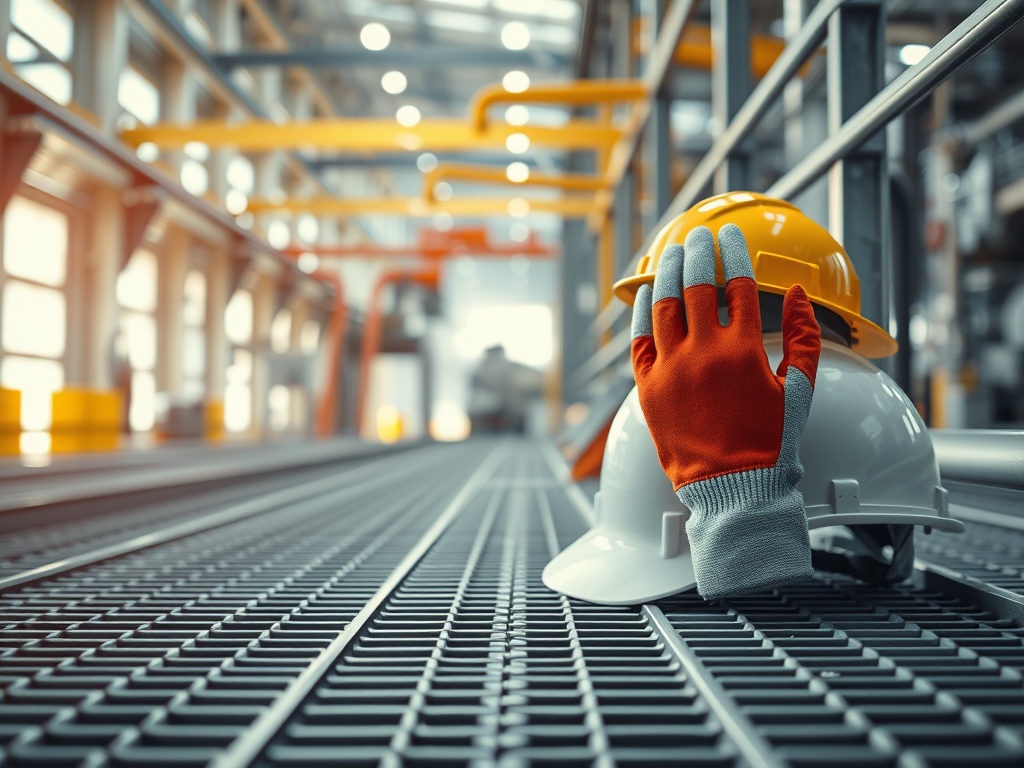
- OSHA mandates that walking surfaces must be structurally sound and slip-resistant. Fiberglass grating, often used in industrial settings, offers a non-slip, lightweight alternative to metal and wood platforms, reducing the risk of workplace falls.
- Fiberglass stair treads and handrails provide safe, durable solutions for high-traffic areas where corrosion and wear could lead to structural failures.
Personal Protective Equipment (PPE) (OSHA 29 CFR 1910.132-1910.138)
- Fiberglass is used in the manufacturing of cut-resistant gloves, hard hats, and face shields, protecting workers from impact, heat, and chemical exposure.
- PPE made from fiberglass composites meets ANSI and ASTM standards, which align with OSHA requirements for head, eye, and hand protection.
Hazardous Energy Control (Lockout/Tagout – OSHA 29 CFR 1910.147)
- Fiberglass insulates against electricity, making it an excellent material for non-conductive lockout/tagout devices, preventing unintended energy discharge during equipment maintenance.
- Fiberglass ladders and tools meet ANSI Type 1A and 1AA ratings, ensuring compliance with electrical safety standards in OSHA’s regulations.
Corrosion Resistance and Chemical Safety (OSHA 29 CFR 1910.120 & 1910.1000-1910.1450)
- Chemical plants, wastewater treatment facilities, and refineries rely on fiberglass piping systems because they withstand harsh chemicals better than metal alternatives.
- OSHA’s hazardous chemical exposure regulations require that piping and storage materials resist corrosion to prevent leaks, contamination, and catastrophic failures. Fiberglass-reinforced plastics (FRP) are often the top choice for chemical handling systems.
Fire Safety (OSHA 29 CFR 1910.155-1910.165)
- Fiberglass products can be made fire-retardant to comply with OSHA’s fire safety codes and NFPA (National Fire Protection Association) standards.
- Many FRP materials meet ASTM E84 Class 1 flame spread requirements, meaning they slow the spread of fire and protect workers in hazardous environments.
2. Why OSHA Prefers Fiberglass Over Other Materials
OSHA prioritizes materials that minimize hazards while ensuring efficiency. Here’s why fiberglass consistently makes the cut:
- Non-conductive – Unlike metal, fiberglass does not conduct electricity, making it ideal for power plants, utility stations, and electrical substations.
- Corrosion-resistant – OSHA requires regular maintenance and inspections of workplace structures; fiberglass reduces the need for frequent replacements and costly downtime.
- Lightweight yet durable – OSHA standards often require materials that are strong yet easy to install and maintain. Fiberglass structures can be assembled without heavy machinery, cutting down on labor risks.
3. How Custom Fiberglass Products Inc. Helps Businesses Stay OSHA-Compliant
At Custom Fiberglass Products Inc., we design, manufacture, and install fiberglass solutions tailored to meet OSHA’s toughest requirements. Whether it’s non-slip platforms, corrosion-resistant piping, or high-strength safety barriers, we provide OSHA-approved solutions that keep businesses running safely and efficiently.
The Bottom Line: Stay Safe, Stay Compliant with Fiberglass
OSHA compliance isn’t optional—it’s a necessity. By integrating fiberglass into workplace safety measures, businesses can reduce hazards, lower maintenance costs, and ensure long-term compliance with OSHA regulations.
Want to learn more about how fiberglass can make your facility safer and OSHA-compliant? Visit customfrp.com or contact us today!
This post was created using Generative AI; information may be inaccurate.