Posted on Leave a comment

Kynar® (PVDF): Benefits and Uses in Chemical Processing

In industries where corrosion resistance, chemical compatibility, and long service life are non-negotiable, Kynar®—also known as PVDF (polyvinylidene fluoride)—has become one of the most trusted thermoplastic materials available. From chemical plants to water treatment facilities, PVDF plays a critical role in keeping systems safe, reliable, and efficient.

At Custom Fiberglass Products Inc., we regularly work with Kynar/PVDF in demanding environments where other materials simply don’t hold up. Here’s a closer look at what makes this material so valuable and when it’s the right choice for your application.


What Is Kynar® (PVDF)?

Kynar® is Arkema’s trade name for PVDF, a high-performance fluoropolymer known for its exceptional resistance to chemicals, heat, and UV exposure. Unlike many plastics, PVDF maintains its mechanical strength and chemical stability over long periods of time—even in harsh industrial environments.

Because of these properties, Kynar/PVDF is widely used in:

  • Chemical processing plants
  • Semiconductor manufacturing
  • Water and wastewater treatment
  • Industrial exhaust and scrubber systems
  • Corrosive fluid handling applications

Key Benefits of Kynar® (PVDF)

1. Outstanding Chemical Resistance

PVDF is resistant to a wide range of aggressive chemicals, including:

  • Acids and bases
  • Halogens
  • Oxidizers
  • Chlorinated compounds

This makes it an excellent choice for applications where corrosion is a constant concern.

2. High Temperature Performance

Kynar/PVDF performs reliably at elevated temperatures, typically up to 300°F (150°C) depending on the application. It maintains strength and dimensional stability better than many other thermoplastics.

3. UV and Weather Resistance

Unlike many plastics that degrade in outdoor environments, PVDF has excellent UV resistance, making it suitable for outdoor piping, ducting, and equipment exposed to sunlight.

4. Long Service Life

When properly designed and installed, PVDF systems can provide decades of service, reducing downtime, maintenance costs, and replacement frequency.

5. Clean and Pure Material

PVDF has very low extractables, which makes it ideal for high-purity applications where contamination must be minimized.


Common Kynar®/PVDF Applications

At Custom Fiberglass Products Inc., we commonly see Kynar/PVDF used in:

  • Pipes and fittings
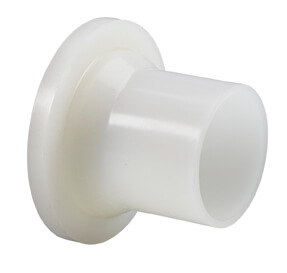
  • Flanges
  • Ducting and exhaust systems
  • Scrubber components
  • Dual-laminate systems (PVDF liner with FRP structural backing)
  • Custom fabricated parts

In many cases, PVDF is paired with fiberglass reinforcement to create dual laminate systems that combine the chemical resistance of PVDF with the structural strength of FRP.


When Should You Choose PVDF Over Other Materials?

PVDF is typically chosen when:

  • Chemical exposure is too aggressive for PVC or CPVC
  • Higher temperatures rule out standard thermoplastics
  • Long-term durability is critical
  • Maintenance access is limited
  • Failure could lead to safety or environmental risks

While PVDF has a higher upfront cost than some plastics, its longevity and reliability often result in lower lifetime costs.


Custom PVDF Solutions at Custom Fiberglass Products Inc.

At Custom Fiberglass Products Inc., we don’t just supply parts—we build custom solutions. Our team works closely with customers to design and fabricate PVDF and dual-laminate components tailored to real-world operating conditions.

Whether you need:

  • A custom PVDF pipe or flange
  • A dual-laminate component for corrosive service
  • Repairs or modifications to existing PVDF systems

—we have the experience, tooling, and material knowledge to deliver reliable results.


Have Questions About PVDF or Kynar®?

If you’re unsure whether Kynar/PVDF is the right material for your application, our team is happy to help. Contact Custom Fiberglass Products Inc. to discuss your project, operating conditions, and performance requirements.

The right material choice today can prevent costly failures tomorrow.

Posted on Leave a comment

Football season is back—let’s build your best gameday yet

Football is here again, and around the Ark-La-Tex that means tailgates, cookouts, and living rooms that feel like mini stadiums. At Custom Fiberglass Products Inc., we turn ideas into durable, good-looking gear using three things we’re great at: hand-layup fiberglass, thermoplastic fabrication, and 3D printing. If you can sketch it on a napkin, we can likely design it, prototype it, and make it ready for kickoff.

Below are practical, on-brand projects we can deliver—no gimmicks, just sturdy, weather-tough builds made for real use.


Football tailgate gear that survives the season

Fiberglass Cornhole Boards (upgrade from wood)

  • Rigid, weatherproof boards with gelcoat finishes (team colors, metallics, or marble looks).
  • Non-slip adjustable legs; rubber feet that won’t chew up a driveway.
  • Optional 3D-printed score tracker, drink rail clips, and snap-in bag holders.

Fold-Down Hitch Table / Prep Station

  • Thermoplastic (HDPE/PP) worktop with molded utensil slots and towel hooks.
  • Folds flat for transport; resists spills, sun, and repeated wipe-downs.

Slide-Out Cooler Deck for Truck Beds

  • Fiberglass tray with low-friction guides; keeps coolers and bins accessible.
  • Add thermoplastic dividers so ice, drinks, and food stay organized.

Canopy & Shade Brackets

  • 3D-printed or machined brackets with thermoplastic clamp pads that won’t scratch paint.
  • Quick-pin hardware for fast setup/tear-down.

Portable Bar / Beverage Caddy

  • Lightweight fiberglass tub with integrated ice well and bottle pockets.
  • Optional vinyl-ester build for higher chemical/cleaner resistance.

Sound & Storage Add-Ons

  • 3D-printed phone mounts, cupholders, speaker spacers, and cable pass-throughs that actually fit your rig.
  • Thermoplastic bin liners and drawer organizers that rinse clean.

Tailgate modifications we can custom-fit to your truck/SUV

  • Fiberglass bed caps and trim panels with inset logos or recessed lighting channels.
  • Thermoplastic fender liners and splash guards sized to your exact wheel/tire setup.
  • Under-tailgate fold-out tray (snacks, cutting board, or laptop on rainy days).
  • Weatherproof equipment enclosures (power stations, routers, stream gear).
  • Quick-mount flag poles with reinforced sockets and safety caps.

Football Watch-party upgrades for home (indoors & outdoors)

Outdoor TV / Projector Enclosures

  • Thermoplastic housings with gasketed doors and filtered vents.
  • Clear, UV-stable face panels; lockable latches to keep everything safe and dry.

Acoustic & Aesthetic Panels

  • Fabric-wrapped fiberglass acoustic tiles to tame echo in lively living rooms.
  • Thermoplastic cable raceways that actually match your wall or media console.

Snack & Remote Organization

  • 3D-printed armrest caddies, controller docks, and coaster sets.
  • Slim fiberglass sofa-back ledges—perfect for plates and drinks behind seating.

Patio-Proof Furniture Tops

  • Fiberglass table skins that resist heat rings and wipe clean after the final whistle.
  • Custom shapes to fit existing tables (round, oval, L-shaped sectional corners).

Football Team spirit, displays, and gifts

  • Football helmet and ball display stands (clear thermoplastic cradles, LED options).
  • 3D-printed logos and lettering for walls, cornhole boards, and bars.
  • Lightweight mascot props (3D printed cores skinned in fiberglass for durability).
  • Trophy bases and risers—clean, professional, and built to last.

Why our materials make sense for gameday

  • Hand-layup fiberglass: strong, rigid, weather-resistant, great paint/gelcoat finish, perfect for boards, trays, panels, and shells.
  • Thermoplastics (HDPE/PP/PVC): food-contact friendly options, excellent impact resistance, easy to clean, ideal for tables, coolers, dividers, and enclosures.
  • 3D printing: fast custom parts—mounts, brackets, organizers, logos—dialed to your exact gear and dimensions.

How we work (fast, clean, and custom)

  1. Tell us the use-case (tailgate setup, truck model, patio layout, room pics).
  2. We design & prototype (CAD + 3D prints for fit; fiberglass/thermoplastic samples for finish).
  3. Build & brand (colors, textures, inlays, and logos).
  4. Delivery & install guidance (or we can fabricate to your installer’s specs).

Ready to kick off?

Whether you want weatherproof cornhole boards, a slide-out cooler system, an outdoor TV enclosure, or a fully coordinated tailgate station, we’ll build it to look sharp in September and still be going strong come the playoffs.

Have an idea we didn’t list? That’s our favorite kind. Reach out to Custom Fiberglass Products Inc. and let’s turn your gameday into an every-weekend highlight.

This post was created using Generative AI; information may be inaccurate.

Posted on Leave a comment

Lights, Camera… Layer by Layer: How 3D Printing is Taking the Film Industry by Storm

clapper board in green surface

The Plot Twist No One Saw Coming

For decades, movie magic relied on armies of sculptors, prop makers, and model builders to bring directors’ visions to life. While those crafts are still alive and well, a new co-star in the film industry has taken the spotlight: 3D printing.

Once confined to engineering labs and hobbyist garages, additive manufacturing has become a blockbuster tool in the entertainment industry—capable of turning digital dreams into physical reality faster than you can say “Action!”


Why the Film Industry is Falling for 3D Printing

Here’s why the technology has become such a scene-stealer:

  • 🎬 Speed to Screen – Props and set pieces that once took weeks to sculpt can now be printed in hours or days.
  • 💰 Budget-Friendly – Cuts down on costly labor, material waste, and the need for multiple prototype iterations.
  • 🎨 Creative Freedom – If it can be designed digitally, it can be printed—no matter how impossible it would be to carve, weld, or mold traditionally.
  • 📏 Perfect Replication – Need ten identical alien blasters? Just hit “Print” again.

Examples from the Big Screen

1. Marvel’s Iron Man Armor

Marvel Studios has famously embraced 3D printing for creating Tony Stark’s iconic suits. Printing allowed for precise, wearable, and lightweight components—perfect for quick costume changes and action scenes.

Fun fact: Robert Downey Jr. has said the suits were so comfortable compared to earlier versions, it was almost like wearing “high-tech pajamas” (well, armored pajamas).


2. Star Wars: The Force Awakens & The Mandalorian

Lucasfilm’s prop department used 3D printing extensively to create blasters, lightsaber hilts, and even parts of droid characters. This wasn’t just for looks—the props needed to be functional for stunt work and survive multiple takes.

BB-8? Many of his on-screen versions have 3D printed shells and components for quick swapping between hero shots and stunt rigs.


3. Jurassic World Dinosaurs

The dinosaurs were mostly CGI, but the animatronic heads, claws, and smaller creatures were often 3D printed for close-up shots where actors interact physically with them.

This kept performances more natural while saving money compared to sculpting every detail by hand.


4. Stop-Motion Magic

Studios like Laika (Coraline, Kubo and the Two Strings) use 3D printing to create thousands of interchangeable facial expressions for their characters. This lets animators swap faces quickly while keeping expressions perfectly consistent.


5. The Batman (2022)

For Matt Reeves’ The Batman, the Batsuit cowl and armor were prototyped and refined using 3D printing. This made it easier to integrate custom fit for Robert Pattinson while accommodating microphones, stunt padding, and camera needs.


Beyond Props: Set Design & Special Effects

3D printing isn’t just for costumes and weapons—it’s reshaping entire production pipelines:

  • Set Dressing: Intricate architectural elements, control panels, and alien landscapes can be printed in modular sections for quick assembly on set.
  • Special Effects Rigs: Custom camera mounts, lighting fixtures, and even underwater housings are now 3D printed in-house.
  • Miniatures & Models: Physical models for spaceship shots or location planning can be printed in high detail for use with practical effects or pre-visualization.

The Real Benefits for the Film Industry

  • Faster Turnaround = Filmmakers can keep up with demanding production schedules.
  • Iterative Design = Directors and designers can see, hold, and tweak props before committing to final versions.
  • Lightweight Materials = Makes stunt work safer and easier for actors.
  • Global Collaboration = Designs can be sent digitally to print anywhere in the world—perfect for international productions.

A Peek Into the Future for the Film Industry

As printers become faster and materials become more advanced (think flexible polymers for wearable costumes or carbon fiber composites for lightweight structural props), 3D printing could eventually allow filmmakers to print entire set pieces or vehicles on location.

Imagine a sci-fi epic where the alien cityscape is printed overnight on a soundstage—ready for cameras in the morning.


Final Cut: A Star Is Born in the Film Industry

3D printing isn’t replacing traditional craftsmanship—it’s enhancing it. The best results still come from combining digital design, additive manufacturing, and skilled finishing work.

In the end, this technology is giving filmmakers the speed, flexibility, and creative freedom to bring visions to life that would’ve been impossible—or impossibly expensive—a decade ago.

At Custom Fiberglass Products, we see the same benefits in our own industry: rapid prototyping, custom components, and merging traditional fabrication with cutting-edge printing. Whether you’re building for the screen or the shop floor, layer-by-layer magic is here to stay.

This post was created using Generative AI; information may be inaccurate.

Posted on Leave a comment

What Is Polyether Ether Ketone (PEEK)? The High-Performance Plastic Built for Extremes

Introduction: PEEK at a Glance

Polyether Ether Ketone (PEEK) is an ultra-high-performance thermoplastic in the polyaryletherketone (PAEK) family. It’s known for its exceptional mechanical strength, thermal stability, and chemical resistance, making it one of the most desirable—and expensive—materials in the world of engineering plastics.

Whether it’s flying through space, implanted in the human body, or resisting corrosion deep in a chemical plant, PEEK delivers where most plastics would fail.


Core Properties of PEEK

PropertyDescription
🔥 High Temperature ResistanceContinuous use temperature up to 250°C (482°F), short-term exposure over 300°C
⚙️ Exceptional Mechanical StrengthTensile strength ~90–100 MPa; retains strength at high temperatures
🧪 Outstanding Chemical ResistanceResists acids, bases, solvents, fuels—even at elevated temperatures
🌊 Hydrolysis ResistanceStable in hot water, steam, and autoclave conditions
🔩 Excellent Dimensional StabilityMinimal thermal expansion, ideal for precision applications
🔧 Creep & Fatigue ResistanceGreat for long-term mechanical loading
Electrical InsulatorMaintains insulation even in harsh or humid conditions
💉 Biocompatibility (Medical Grades)Can be used in implants, surgical instruments, and dental devices

Fabrication Methods

Despite its strength and heat resistance, PEEK is still thermoplastic, meaning it can be shaped with the right tools and processes.

1. Injection Molding

  • Common for high-precision industrial or medical components
  • Requires special high-temperature molds (above 350°C)
  • Used for:
    • Bearings
    • Gears
    • Bushings
    • Medical implants

2. CNC Machining

  • Stock shapes (rods, sheets, tubes) can be machined using carbide tools.
  • Used in:
    • Aerospace brackets
    • Fluid-handling components
    • High-performance custom parts

3. 3D Printing

  • PEEK filament is used in FDM (Fused Deposition Modeling), but requires:
    • Nozzle temps ~400°C
    • Heated bed
    • Heated chamber
  • Ideal for aerospace, defense, and rapid prototyping in harsh environments

4. Compression Molding / Extrusion

  • For larger parts or continuous profiles.
  • Also used to make tubing, sheeting, and films.

Applications Across Industries

🛫 Aerospace

  • Brackets, insulation, high-load bearing parts
  • Replaces metal components to save weight without sacrificing strength

🏥 Medical

  • Spinal implants, bone screws, surgical tools
  • Biocompatible, radiolucent (invisible to X-rays), and sterilizable

⚗️ Chemical Processing

  • Valve components, seals, pump housings
  • Unmatched chemical resistance and durability under pressure

🚗 Automotive

  • Transmission components, electrical insulation, fuel system parts

🔬 Electronics

  • Semiconductor wafer handling, insulation for wires and connectors

PEEK vs Other Plastics

PropertyPEEKNylon (PA)PTFE (Teflon)PEEK + Carbon/Glass Fiber
Temp ResistanceUp to 250°C~120°C~260°CUp to 280°C
StrengthVery HighModerateLowExtremely High
Chemical ResistanceExcellentModerateExcellentExcellent
CostVery HighLowModerateVery High
MachinabilityExcellentGoodPoorGood
StiffnessHighModerateVery LowVery High

Reinforced PEEK: Taking Performance to the Next Level

PEEK can be filled with glass or carbon fibers to enhance its mechanical properties:

  • Glass-Filled (30%)
    • Boosts dimensional stability and stiffness
    • Often used in structural applications
  • Carbon-Filled (30%)
    • Increases thermal conductivity and wear resistance
    • Ideal for bearings, seals, and electrical components

Limitations of PEEK

  • 💰 Cost – It is significantly more expensive than standard plastics.
  • 🔥 Processing Requirements – Needs high-temp equipment for molding or printing.
  • 🧊 Brittleness (in some conditions) – Certain PEEK grades can become brittle in cold or dry environments.
  • ⚖️ Weight – Heavier than many other engineering plastics (though still far lighter than metals)

PEEK at Custom Fiberglass Products

While PEEK is not our daily material like FRP or thermoplastics like PP and PVDF, we’re fully prepared to make PEEK components when performance demands it.

We may be able to assist customers with:

  • Custom chemical-resistant bushings
  • Wear plates for extreme industrial environments
  • Specialty 3D printed jigs that hold up to high heat
  • Hybrid assemblies incorporating PEEK, fiberglass, and stainless steel

If your application demands no compromises, PEEK might be your perfect match.


Conclusion: A Pinnacle of Polymer Engineering

PEEK is the Ferrari of thermoplastics—not for every project, but unmatched when performance, precision, and endurance are non-negotiable.

Whether you’re building the next aerospace innovation, an advanced surgical device, or chemical processing equipment that needs to last for years in a corrosive environment, Polyether Ether Ketone delivers.


Looking to prototype with PEEK or explore a carbon-filled variant for ultra-high-performance parts? Contact Custom Fiberglass Products today and let us help engineer the perfect solution.

This post was created using Generative AI; information may be inaccurate.

Posted on Leave a comment

What Is Polycarbonate (PC)? The Transparent, Impact-Resistant Thermoplastic That Does It All

Introduction: What Is Polycarbonate?

Polycarbonate (PC) is a high-performance thermoplastic known for its exceptional impact resistance, optical clarity, and dimensional stability. It’s often chosen when glass is too brittle, and metal is too heavy. PC is a favorite across industries—from bulletproof windows and eyewear lenses to machine guards and medical devices.

Lightweight, strong, and incredibly versatile, polycarbonate blends the transparency of acrylic with the strength of engineering plastics, making it one of the most dynamic materials in manufacturing today.


Key Properties of Polycarbonate

  • 🔍 Transparent: Up to 90% light transmission, like glass
  • 🛡️ Extremely Impact Resistant: ~250x stronger than glass
  • 🌡️ High Heat Resistance: Can withstand temps up to 120–140°C (248–284°F)
  • Good Electrical Insulator
  • 🔄 Dimensional Stability: Holds shape under load and temperature
  • 🔧 Tough, Yet Machinable: Can be CNC milled, drilled, and even cold-formed
  • 🔬 FDA-Approved Grades Available

Popular Fabrication Methods for Polycarbonate

1. Injection Molding

  • The most common way to mass-produce polycarbonate parts.
  • Great for:
    • Electronic housings
    • Medical device casings
    • Protective helmets
  • PC flows well into complex molds but requires higher processing temperatures (~280–320°C).

2. Sheet Forming (Thermoforming / Cold Bending)

  • PC sheets can be heated and formed into curves, domes, shields, etc.
  • In thinner gauges, PC can be cold-bent without cracking, ideal for on-site installations like machine guards.

3. CNC Machining

  • Polycarbonate machines well with CNC routers, mills, and lathes.
  • Used for:
    • Custom enclosures
    • Optical-grade parts
    • Precision mechanical components

4. 3D Printing

  • Can be 3D printed using FDM with the right setup:
    • Enclosed chamber
    • Heated bed (~100–120°C)
    • High temp nozzle (~260–300°C)
  • Challenges:
    • Warping and layer adhesion
    • Requires tuned settings
  • Benefits:
    • Excellent strength-to-weight ratio
    • Useful for functional prototypes, tooling, and impact-resistant parts

5. Laser Cutting (with caution)

  • While PC can be laser cut, it tends to discolor (yellowing) or emit fumes—CNC routing is often preferred.

Common Applications of Polycarbonate

IndustryUse Cases
ConstructionGlazing, skylights, greenhouses, bulletproof panels
AutomotiveHeadlight lenses, instrument panels, internal brackets
AerospaceCabin windows, lighting panels, structural housings
ElectronicsConnectors, displays, bezels, LED housings
MedicalSterilizable trays, oxygen masks, blood filter housings
IndustrialMachine guards, viewing windows, electrical enclosures
Consumer ProductsSafety glasses, water bottles, CDs/DVDs, phone cases
3D Printing / PrototypingFunctional parts, transparent test pieces, rugged components

Polycarbonate vs. Other Plastics

PropertyPolycarbonate (PC)Acrylic (PMMA)ABS
Impact ResistanceExcellentModerateGood
TransparencyHigh (~90%)Very High (~92%)Opaque
Heat ResistanceExcellentModerateModerate
MachinabilityGoodExcellentGood
CostModerate-HighModerateLow-Moderate

Polycarbonate stands out when you need clear materials that won’t shatter under stress.


Drawbacks of Polycarbonate

  • Scratch-Prone (can be mitigated with hard coatings)
  • Expensive compared to commodity plastics like polypropylene or polyethylene
  • UV Sensitive (unless UV-stabilized grade is used)
  • Can absorb moisture, so drying before molding is often necessary

Polycarbonate at Custom Fiberglass Products

At Custom Fiberglass Products, we can use polycarbonate for custom viewing windows, machine guards, and safety panels in harsh industrial environments.

We fabricate and can incorporate PC into fiberglass-reinforced or dual-laminate systems where visibility and strength are critical.


Conclusion: Why Polycarbonate Is Worth Considering

Polycarbonate is a powerful engineering thermoplastic that offers impact resistance, clarity, and heat stability in one versatile package. It bridges the gap between fragile transparent materials and strong, opaque plastics.

Whether you’re designing a bullet-resistant shield, a robust lighting lens, or a clear enclosure for equipment, polycarbonate might be the perfect solution.

If you’re exploring custom thermoplastic or composite projects, get in touch with us today. Our team can help you determine whether PC—or another advanced material—is the right fit.

This post was created using Generative AI; information may be inaccurate.

Posted on Leave a comment

What Is Polypropylene (PP)? The Thermoplastic Powerhouse

Introduction: What Is Polypropylene?

Polypropylene (PP) is one of the most commonly used thermoplastics in the world. First polymerized in the 1950s, it’s part of the polyolefin family and is known for being lightweight, chemical-resistant, fatigue-tolerant, and cost-effective.

It’s everywhere—from your Tupperware and car battery casing to pipes in chemical plants and components in medical devices.

Whether you’re in the world of industrial fabrication or household goods, polypropylene is a go-to material for countless applications.


Key Properties of Polypropylene

  • 🔹 Lightweight: Density of ~0.90 g/cm³ (lighter than water)
  • 🔹 Excellent Chemical Resistance: Particularly against acids, alkalis, and solvents
  • 🔹 Toughness & Impact Resistance: Even at low temperatures (depending on grade)
  • 🔹 Fatigue Resistance: Maintains shape under repeated stress (e.g., “living hinges”)
  • 🔹 Good Insulator: Both electrically and thermally
  • 🔹 Moisture Resistant: Won’t absorb water
  • 🔹 Food Safe: Non-toxic and FDA-approved for many applications

Types of Polypropylene

There are a few common variants of PP, each with slightly different properties:

TypeDescriptionCommon Uses
HomopolymerHigh stiffness, good clarityFood containers, textiles, chemical tanks
Random CopolymerBetter impact resistance and clarityPackaging, labware
Block CopolymerTougher, more impact-resistant at low tempsAutomotive, industrial parts
Glass- or Mineral-FilledEnhanced stiffness and heat resistanceStructural components, automotive panels

Fabrication Methods for Polypropylene

1. Injection Molding

  • Most common method for mass-producing PP parts.
  • Great for containers, caps, consumer goods, and automotive components.
  • Advantages: fast, cost-effective, scalable.

2. Welding

  • Hot air welding or extrusion welding is used for joining sheets and pipes.
  • Popular in chemical processing, ventilation systems, and plating tanks.

3. CNC Machining

  • PP sheets and blocks can be milled, turned, or drilled into custom parts, gaskets, and flanges.
  • Its low hardness makes it easy to machine but can lead to burrs.

4. 3D Printing

  • FDM 3D printing of PP is possible but tricky:
    • Warping and poor bed adhesion are common.
    • Specialized build surfaces and enclosures improve success.
  • Useful for prototype fittings, hinges, and flexible containers.

5. Extrusion

  • Used to make pipes, sheets, rods, and profiles.
  • Widely used in chemical processing and water systems.

6. Blow Molding


Common Applications of Polypropylene

IndustryApplications
PackagingBottles, caps, food containers, labels
AutomotiveBattery cases, bumpers, interior trim, under-hood components
Chemical ProcessingPipes, fittings, tanks, scrubbers, ventilation ducting
MedicalSyringes, medical trays, pill bottles, lab equipment
Consumer GoodsChairs, toys, reusable shopping bags, appliances
TextilesCarpets, ropes, nonwoven fabrics (e.g., face masks, diapers)
ConstructionProtective barriers, composite boards, wall panels

Advantages of Polypropylene

  • Affordable: Low-cost material with excellent performance-to-price ratio
  • Corrosion-Resistant: Stands up to acids, alkalis, and moisture
  • Durable: Good impact strength, even in rugged environments
  • Thermoplastic Recyclability: Easy to melt and reshape
  • Thermoformable: Can be vacuum-formed into custom shapes

Limitations of Polypropylene

  • UV Degradation: Breaks down with prolonged sun exposure (unless stabilized)
  • Flammable: Burns unless flame-retardants are added
  • Not Bondable: Difficult to glue or paint due to low surface energy
  • Limited High-Temperature Use: Softens above ~100°C (212°F)

Polypropylene in Composite Fabrication

At Custom Fiberglass Products, polypropylene is a go-to thermoplastic for chemical-resistant components like:

  • FRP-lined PP pipes and fittings
  • Thermoplastic flanges
  • Vent hoods and ductwork
  • Polypropylene tank liners
  • Dual-laminate systems for harsh environments

We use a combination of welding, CNC machining, and mold-based forming to deliver strong, reliable PP parts tailored to your project.


Conclusion: The Jack-of-All-Trades Thermoplastic

Polypropylene is an unsung hero of modern industry—a versatile, durable, and affordable material that thrives in everything from food packaging to chemical tanks. Its unique balance of toughness, chemical resistance, and machinability makes it an ideal choice for many projects across industries.

At Custom Fiberglass Products, we incorporate polypropylene into our thermoplastic fabrication and dual-laminate systems, ensuring your equipment can stand up to the harshest conditions.

📞 Looking for a reliable PP solution for your system or next custom project? Get in touch with us today.

This post was created using Generative AI; information may be inaccurate.

Posted on Leave a comment

What Is Teflon (PTFE)? The Ultra-Slick, High-Performance Plastic

green and orange vegetables on black frying pan

Introduction: What Is Teflon?

Teflon is the brand name for PTFE (Polytetrafluoroethylene)—a high-performance, fluoropolymer plastic that has become famous for its exceptional chemical resistance, extreme temperature stability, and ultra-low friction surface.

Discovered by accident in 1938 by Dr. Roy Plunkett at DuPont, PTFE revolutionized material science. Today, it’s widely used in chemical processing, aerospace, electronics, cookware, medical devices, and more.

If you’ve ever cooked with a nonstick pan, you’ve used Teflon—but that’s only scratching the surface of what this remarkable material can do.


Chemical Structure and Properties of PTFE

PTFE is made from the polymerization of tetrafluoroethylene (C₂F₄). Its molecular structure consists of a carbon backbone fully surrounded by fluorine atoms, forming one of the strongest chemical bonds in nature (C-F bond).

Key Properties:

  • 🔥 Thermal Resistance: Operational range from -200°C to +260°C
  • 🧪 Chemical Resistance: Resistant to virtually all chemicals including acids, bases, solvents
  • ❄️ Low Friction: Coefficient of friction ~0.05 (one of the lowest of any solid)
  • 💧 Non-stick Surface: Doesn’t absorb water or oil; virtually nothing adheres to it
  • Electrical Insulation: Excellent dielectric properties across a wide frequency range
  • 🚫 Non-reactive & Non-toxic: Safe for use in food and medical applications

Teflon vs PTFE vs FEP vs PFA

While Teflon is the common brand name, there are variations of fluoropolymers used in industry:

MaterialDescriptionKey Use Cases
PTFE (Teflon)Original, most commonCookware, gaskets, chemical tanks
FEP (Fluorinated Ethylene Propylene)Melt-processable, clearWire insulation, medical tubing
PFA (Perfluoroalkoxy)Tougher, higher thermal stability than FEPSemiconductor, chemical processing
ETFE (Ethylene Tetrafluoroethylene)More impact-resistantArchitectural films, aerospace

Fabrication Methods for PTFE (Teflon)

PTFE is not melt-processable like most thermoplastics. Instead, it’s fabricated through compression molding, machining, or extrusion with sintering due to its high melt viscosity and decomposition temperature.

1. Compression Molding & Sintering

  • PTFE powder is compacted into a mold
  • Heated in a sintering oven to fuse particles (350°C+)
  • Common for sheets, rods, bushings, billets

2. CNC Machining

  • PTFE blocks or rods are easily machined into parts like:
    • Gaskets and seals
    • Valve seats
    • Wear strips
    • Custom fittings

Its soft, slippery nature makes it ideal for tight sealing components and wear-resistant applications.

3. Paste Extrusion

  • Fine PTFE powder + lubricant extruded under pressure
  • Lubricant evaporated and remaining PTFE is sintered
  • Used for tubing, wire insulation, catheters

4. Coating (Spray or Dip)

  • PTFE suspensions can be sprayed onto metals
  • Common in nonstick cookware, bakeware, tools
  • Industrial coatings for anti-corrosion, anti-galling surfaces

5. Film & Membrane Manufacturing

  • Skived from large PTFE billets into ultra-thin sheets
  • Used in gaskets, diaphragms, filters, cable wraps

Common Applications of Teflon (PTFE)

IndustryApplications
Chemical ProcessingPipe linings, gaskets, seals, pump housings
Food & BeverageNonstick cookware, food-safe seals, mixers
Medical & PharmaCatheters, tubing, stents, lab equipment
ElectronicsHigh-frequency cable insulation, PCBs
Aerospace & AutomotiveBearings, bushings, fuel line linings
Textiles & ArchitectureETFE-coated membranes for stadium roofs
Oil & GasValve seats, packings, downhole seals

Benefits of Using Teflon

  • Outstanding chemical inertness
  • Safe for food contact (FDA compliant)
  • Excellent wear and friction properties
  • No water absorption or swelling
  • Stable under harsh UV and weathering
  • Excellent dielectric strength

Limitations to Consider

  • Not suitable for load-bearing applications (very soft material)
  • Can creep under stress
  • Difficult to bond without surface etching
  • More expensive than common plastics like PE or PP
  • Requires special handling during fabrication

3D Printing with Teflon: Is It Possible?

Direct 3D printing with pure PTFE is not commercially viable due to its non-melt-processable nature. However:

  • FEP and PFA (variants of Teflon) are 3D printable using high-temperature extrusion systems
  • PTFE composites and PTFE-coated filaments are under research
  • Some companies are developing granule-based sintering techniques for PTFE additive manufacturing

For now, most PTFE parts are CNC-machined or formed from sintered billets.


Environmental & Safety Considerations

  • Teflon is inert and non-toxic at normal use temperatures
  • At extreme temperatures (above 300°C), PTFE can decompose and release fluorinated gases
  • Production of PTFE historically involved PFOA (Perfluorooctanoic acid)—now largely phased out in favor of safer alternatives
  • PTFE is non-biodegradable, but recyclable through specialized channels

Conclusion: The Power of PTFE

Teflon (PTFE) is more than just a nonstick coating—it’s a cornerstone of modern materials science. From gaskets that resist acid baths to catheters that glide through arteries, Teflon’s unique blend of chemical stability, thermal endurance, and frictionless behavior makes it indispensable.

Whether you’re lining tanks, sealing chemicals, coating cookware, or insulating wiring, Teflon delivers unmatched reliability.

At Custom Fiberglass Products, we work with Teflon-lined pipes and dual-laminate systems to give customers the best of both worlds: chemical resistance and structural strength. If your application demands the highest performance, PTFE might just be your material of choice.

🔬 Want to explore Teflon solutions for your project? Contact us—we’d love to help you engineer something that lasts.

This post was created using Generative AI; information may be inaccurate.

Posted on Leave a comment

What is Polyvinyl Chloride (PVC)? A Complete Guide

Introduction: What is PVC?

Polyvinyl Chloride (PVC) is a thermoplastic polymer made from the polymerization of vinyl chloride monomers. Discovered in the 19th century and commercially produced since the early 20th, PVC is now one of the most versatile and widely used plastics in the world—second only to polyethylene in global production volume.

PVC is favored for its durability, affordability, chemical resistance, and adaptability. It can be made rigid or flexible, clear or colored, and engineered for indoor or outdoor applications.


Chemical Composition & Structure

PVC’s backbone is built from repeating vinyl chloride monomer units (CH₂=CHCl). The chlorine atoms bonded to the carbon chain give PVC its fire-retardant properties and chemical resistance—making it stand out among commodity plastics.


Types of PVC

PVC is typically classified into two main types, each with unique uses:

1. Rigid PVC (uPVC or Unplasticized PVC)

  • Hard and stiff
  • Used in pipes, window frames, siding, panels, and enclosures
  • Resistant to UV, moisture, and most chemicals

2. Flexible PVC (Plasticized PVC)

  • Modified with plasticizers (commonly phthalates) to enhance flexibility
  • Used in wire insulation, inflatable products, flexible tubing, and flooring
  • Softer and more elastic than rigid PVC

Key Properties of PVC

  • Density: ~1.38 g/cm³ (denser than most thermoplastics)
  • Tensile Strength: 34–62 MPa (depending on formulation)
  • Thermal Resistance: Softens at ~80–85°C
  • Flame Retardant: Due to chlorine content
  • Chemical Resistance: Excellent resistance to acids, bases, and salts
  • UV Resistance: Good in rigid formulations with stabilizers
  • Electrical Insulation: Widely used in wiring and cabling

Fabrication Methods for PVC

1. Extrusion

PVC is the king of extrusion processing. Melted PVC is pushed through a die to form continuous profiles like:

  • Pipes and conduit
  • Window and door frames
  • Edge trims and channels
  • Siding and roofing sheets

Advantages:

  • Cost-effective for high-volume products
  • Consistent dimensions
  • Easily cut, drilled, or joined

2. Injection Molding

Used to produce complex, high-volume parts like:

  • Pipe fittings
  • Electrical boxes
  • Valve bodies
  • Consumer product housings

Benefits:

  • Tight tolerances
  • Smooth surface finishes
  • Rapid production once tooled

3. Calendering

PVC sheets and films are made by rolling the molten resin through heated rollers to achieve a uniform thickness.

Used For:

  • Vinyl flooring
  • Shower curtains
  • Faux leather
  • Wall coverings

4. Thermoforming

Rigid PVC sheets are heated and vacuum-formed into 3D shapes:

  • Blister packaging
  • Signage
  • Custom trays and displays

5. Coating and Dipping

Flexible PVC can be used as a dip coating for tool handles, grips, or protective sheaths.

It’s also spread-coated onto fabrics for rainwear, tents, and inflatable structures.


6. 3D Printing

Though less common than materials like PLA or ABS, PVC-based filaments do exist for FDM/FFF 3D printing, but they require specialized equipment due to toxic fumes (HCl gas) during heating.

Safer alternatives: TPU and PETG are often used in similar applications when PVC is not suitable for 3D printing.


Additives in PVC Formulations

PVC is rarely used in pure form. It is typically compounded with various additives to enhance its performance:

  • Plasticizers – Add flexibility
  • Stabilizers – Prevent degradation from heat/UV
  • Fillers – Lower cost and enhance strength (e.g., calcium carbonate)
  • Lubricants – Aid in processing
  • Pigments – Provide coloration
  • Impact Modifiers – Improve toughness and durability

Applications of PVC

PVC’s adaptability has made it a staple across industries:

IndustryApplications
ConstructionPiping, window frames, siding, gutters, electrical conduit
HealthcareIV bags, tubing, medical gloves, blood storage containers
AutomotiveWire harnesses, door panels, dashboards, underbody coatings
Consumer GoodsToys, credit cards, packaging, shoes, rainwear
ElectricalWire insulation, cable jackets, enclosures
Signage & DisplaysWeatherproof signs, display boards, exhibition structures

PVC vs. Other Plastics

PropertyPVCPolyethylene (PE)Polypropylene (PP)ABS
RigidityHigh (in rigid form)LowModerateModerate
Chemical ResistanceExcellentExcellentExcellentGood
Flame RetardanceVery goodPoorPoorFair
Thermal ResistanceModerateLowModerateModerate
Ease of FabricationExcellentGoodGoodExcellent
CostLowLowLowModerate

Environmental & Safety Considerations

  • Recyclability: PVC is recyclable (Resin ID #3), but collection and sorting are limited in some regions.
  • Health Concerns: Flexible PVC has historically used phthalate plasticizers, which are being replaced by safer alternatives.
  • Toxic Fumes: Burning PVC releases hydrogen chloride (HCl) gas, which is corrosive and potentially dangerous. Proper ventilation is critical during processing.

Innovations in PVC Technology

  • Phthalate-Free Formulations: Safer flexible PVC for toys, medical, and food-contact applications
  • Bio-Based PVC: Developed using renewable feedstocks to reduce environmental footprint
  • Foamed PVC (e.g., Sintra, Celtec): Lightweight, rigid, and ideal for signage and displays
  • Antimicrobial PVC: For medical and public-facing surfaces in hygiene-sensitive environments

Conclusion: PVC’s Place in the Modern World

Polyvinyl Chloride (PVC) is one of the most important plastics in modern industry—durable, affordable, versatile, and available in a vast array of formulations. Whether you need a rigid structural profile or a soft flexible hose, there’s a PVC compound that can meet your needs.

Its ability to be extruded, molded, formed, and coated makes it a key material in construction, healthcare, consumer goods, and beyond.

At Custom Fiberglass Products, we often work with PVC for piping systems, fittings, chemical-resistant components, and protective housings—especially in dual-laminate composites with fiberglass reinforcement.

🔧 Have a project that could benefit from PVC? Reach out today and let’s build something strong, affordable, and long-lasting.

This post was created using Generative AI; information may be inaccurate.

Posted on Leave a comment

ABS Plastic: A Modern Powerhouse in Plastics

bmw car with abs dash

What is ABS Plastic?

Acrylonitrile Butadiene Styrene (ABS) is a widely used thermoplastic polymer known for its strength, toughness, and ease of processing. It’s part of the amorphous family of plastics, meaning it has no true melting point and softens gradually when heated, making it perfect for injection molding, extrusion, and 3D printing.

ABS is a terpolymer composed of:

  • Acrylonitrile – Provides chemical resistance and thermal stability
  • Butadiene – Offers toughness and impact resistance
  • Styrene – Contributes gloss, rigidity, and processability

This combination gives ABS a well-rounded profile, making it one of the most commonly used engineering plastics in the world.


Key Properties of ABS

  • Excellent Impact Resistance – Strong enough to take hits without cracking
  • Good Dimensional Stability – Maintains shape under stress and temperature changes
  • High Surface Gloss – A smooth, shiny finish for aesthetic applications
  • Chemical Resistance – Withstands acids, alkalis, and oils reasonably well
  • Electrical Insulation – Common in enclosures and electrical housings
  • Lightweight – Easier to transport and handle than metal components

Thermal range: –20°C to 80°C (can vary depending on formulation)
Density: ~1.04 g/cm³
Hardness: Shore D ~100
Tensile Strength: 40–50 MPa


ABS Fabrication Methods

ABS is thermoplastic, meaning it softens with heat and can be reshaped multiple times—ideal for various forming techniques.

1. Injection Molding

✅ Most common method of manufacturing ABS products.

  • How it works: ABS pellets are melted and injected into a steel mold under high pressure.
  • Advantages:
    • High throughput and efficiency
    • Complex geometries and tight tolerances
    • Reusable molds for mass production

Applications:
LEGO bricks, automotive dashboards, enclosures, tool housings, toys


2. Extrusion

ABS can be extruded into sheets, rods, pipes, and profiles.

  • Method: Melted ABS is pushed through a die to create continuous shapes.
  • Benefits: Fast and cost-effective for large quantities

Applications:
Tubing, structural profiles, refrigerator liners, protective edge guards


3. Thermoforming (Vacuum Forming)

ABS sheets can be heated and formed over molds using vacuum or pressure.

  • Advantages:
    • Good for large, thin-walled parts
    • Lower tooling costs than injection molding

Applications:
Luggage shells, car interior panels, packaging trays, signage


4. CNC Machining

Machinable ABS blocks or sheets are cut and shaped using CNC routers or mills.

  • Great for: Prototypes, custom enclosures, low-volume parts

5. 3D Printing (FDM/FFF)

ABS is a popular filament for FDM (Fused Deposition Modeling) 3D printers.

  • Why it’s used:
    • Good balance of strength and detail
    • Slight flexibility prevents brittleness
    • Accepts post-processing like sanding, acetone vapor smoothing, and painting

⚠️ Challenges with 3D Printing ABS:

  • Prone to warping and layer separation if not printed in an enclosed chamber
  • Requires bed adhesion techniques (like heated beds, brim/raft, adhesives)

ABS vs. Other Thermoplastics

PropertyABSPLAPolycarbonate (PC)Nylon
StrengthModerateBrittleHighHigh (especially tensile)
Impact ResistanceExcellentPoorExcellentExcellent
Temperature ResistanceModerateLowHighHigh
PrintabilityModerate (needs tuning)EasyDifficultModerate
Surface FinishGlossyMatteTransparentMatte
CostLowLowModerate-HighModerate

Common Uses of ABS

ABS is everywhere, thanks to its mix of aesthetics and performance:

  • Consumer Products: LEGO bricks, computer keyboards, game console shells
  • Automotive: Interior trims, dashboards, bumper parts
  • Electronics: Remote control housings, TV frames, phone accessories
  • Industrial: Piping, panels, protective covers
  • Medical Devices: Enclosures, instrument housings (non-implantable)
  • Prototyping: 3D printed models, product design mockups

Modifications and Blends

ABS can be blended with other polymers for tailored performance:

  • ABS-PC: Blends rigidity with higher temperature resistance (automotive and aerospace)
  • ABS-TPU: Adds flexibility for impact-resistant parts
  • Flame-Retardant ABS: Meets UL 94 V-0 or V-1 standards for electrical safety
  • Glass-Filled ABS: Enhances stiffness and dimensional stability

Environmental Considerations

  • Recyclability: ABS is recyclable (Category #7), but not as widely accepted as PET or HDPE.
  • Not biodegradable – Can persist in landfills if not recycled.
  • Safe to handle: Low toxicity in solid form, but avoid inhaling fumes during 3D printing or machining.

Conclusion: Why ABS Remains a Go-To Material

Acrylonitrile Butadiene Styrene (ABS) offers an unbeatable combination of strength, processability, and cost-efficiency. Whether you’re molding parts by the million, prototyping with a 3D printer, or building rugged enclosures, ABS delivers solid performance across the board.

Its ability to adapt to various fabrication methods—from injection molding to extrusion and additive manufacturing—makes it a favorite among engineers, manufacturers, and makers alike.

At Custom Fiberglass Products, we also work with thermoplastics like ABS for custom panels, enclosures, components, and prototyping. Whether you’re designing a product or refining a manufacturing process, we’re here to help you make it better—faster and smarter.

🧱 Need help working with ABS or other performance plastics? Contact us today.

This post was created using Generative AI; information may be inaccurate.

Posted on Leave a comment

What is Thermoplastic Polyurethane (TPU)?

What is TPU?

Thermoplastic Polyurethane (TPU) is a highly versatile polymer that bridges the gap between rubber and plastic. It offers the elasticity and flexibility of rubber while retaining the processability of thermoplastics, making it one of the most popular choices for applications requiring durability, resilience, and performance.

TPU belongs to the thermoplastic elastomer (TPE) family. Unlike thermosetting rubber, TPU can be heated, melted, and reprocessed multiple times, which makes it recyclable and easy to fabricate.


Key Properties of TPU

  • High Elasticity: Provides rubber-like flexibility and stretchability.
  • Abrasion Resistance: Outperforms most plastics in high-wear environments.
  • Chemical Resistance: Resistant to oils, greases, and many solvents.
  • Transparency: Available in clear grades for aesthetic or functional use.
  • Wide Hardness Range: Shore hardness from 70A (soft) to 85D (rigid).
  • Temperature Stability: Performs well in -40°C to 80°C environments.
  • Impact Resistance: Great for shock-absorbing components.

How is TPU Fabricated?

TPU is incredibly adaptable and can be shaped using a variety of manufacturing techniques. Here are the most common methods:


1. Injection Molding

One of the most widely used fabrication methods for TPU.

How It Works:

  • TPU pellets are melted and injected into a mold under high pressure.
  • After cooling, the mold releases a solid TPU part.

Why Use Injection Molding for TPU?

  • High Precision: Great for complex, detailed parts.
  • Mass Production: Fast cycle times for large-scale manufacturing.
  • Consistent Quality: Produces uniform dimensions and smooth finishes.

Common Products:
Footwear soles, medical components, automotive seals, cable connectors.


2. Extrusion

Extrusion turns TPU into continuous profiles like tubing, films, and sheets.

How It Works:

  • TPU pellets are melted and forced through a die to create a specific shape.
  • The extrudate is cooled and cut to length.

Applications:

  • Hydraulic and pneumatic hoses
  • Protective cable jacketing
  • Conveyor belts
  • TPU films for laminates and coatings

3. Blow Molding

Used to produce hollow TPU products.

Process:

  • Extruded TPU tubing is inflated inside a mold to create hollow shapes.

Applications:
Flexible containers, bellows, and inflatable products.


4. Compression Molding

Less common for TPU but still useful for thicker, solid parts.

Process:

  • TPU is placed into a heated mold, compressed under pressure, and cooled.

Applications:
Thick pads, bumpers, and impact-absorbing components.


5. Film Casting & Calendering

TPU films are produced by casting molten TPU onto a substrate or rolling it into thin sheets.

Applications:
Coatings for fabrics, waterproof membranes, protective films for electronics.


6. 3D Printing (Additive Manufacturing)

TPU has become a favorite in the 3D printing community for its flexibility and strength.

FDM/FFF Printing with TPU:

  • TPU filaments are used in Fused Deposition Modeling (FDM) printers.
  • Requires careful tuning: slow speeds, heated bed, and direct-drive extruder for best results.

Benefits of 3D Printing TPU:

  • Rapid Prototyping: Perfect for functional prototypes and custom parts.
  • Complex Geometries: Design intricate lattice structures for flexibility and cushioning.
  • Low-Volume Production: Cost-effective for custom or limited-run items.

Common 3D Printed TPU Products:

  • Gaskets, seals, and vibration dampeners
  • Phone cases and protective gear
  • Footwear midsoles and cushioning components
  • Flexible hinges and grips

7. Overmolding

TPU can be overmolded onto rigid plastics like ABS or PC for soft-touch grips and ergonomic designs.

Applications:
Tool handles, electronics housings, consumer goods.


Innovations in TPU Processing

  • Color & Transparency Control: TPU can be dyed or kept crystal-clear.
  • Biodegradable TPU: Eco-friendly formulations for sustainable manufacturing.
  • Reinforced TPU: Blends with glass fiber or carbon for higher stiffness.
  • Smart TPU: TPU integrated with sensors for wearables and medical devices.

Applications Across Industries

  • Automotive: Protective boots, hoses, interior trim
  • Footwear: Flexible, shock-absorbing midsoles and outsoles
  • Medical: Catheters, tubing, prosthetics
  • Consumer Electronics: Protective cases, cable insulation
  • Industrial: Belts, rollers, seals
  • Sports Equipment: Protective padding, gear, and grips

Why TPU is a Game-Changer

Unlike many rigid plastics, TPU combines:

  • Rubber-like flexibility
  • Thermoplastic processing ease
  • Durability in extreme conditions

Its adaptability makes it one of the most important modern materials for engineering, design, and additive manufacturing.


Conclusion

Thermoplastic Polyurethane (TPU) stands at the intersection of strength and flexibility, giving engineers, designers, and manufacturers a material that can bend without breaking. With multiple fabrication methods—from injection molding to 3D printing—TPU offers infinite design possibilities for industries across the globe.

At Custom Fiberglass Products, we specialize in advanced material solutions, including TPU fabrication for industrial and custom applications. Whether you need high-performance tubing, flexible components, or additive manufacturing expertise, we’re here to help you innovate.

Contact us today to explore TPU options for your next big idea!

This post was created using Generative AI; information may be inaccurate.