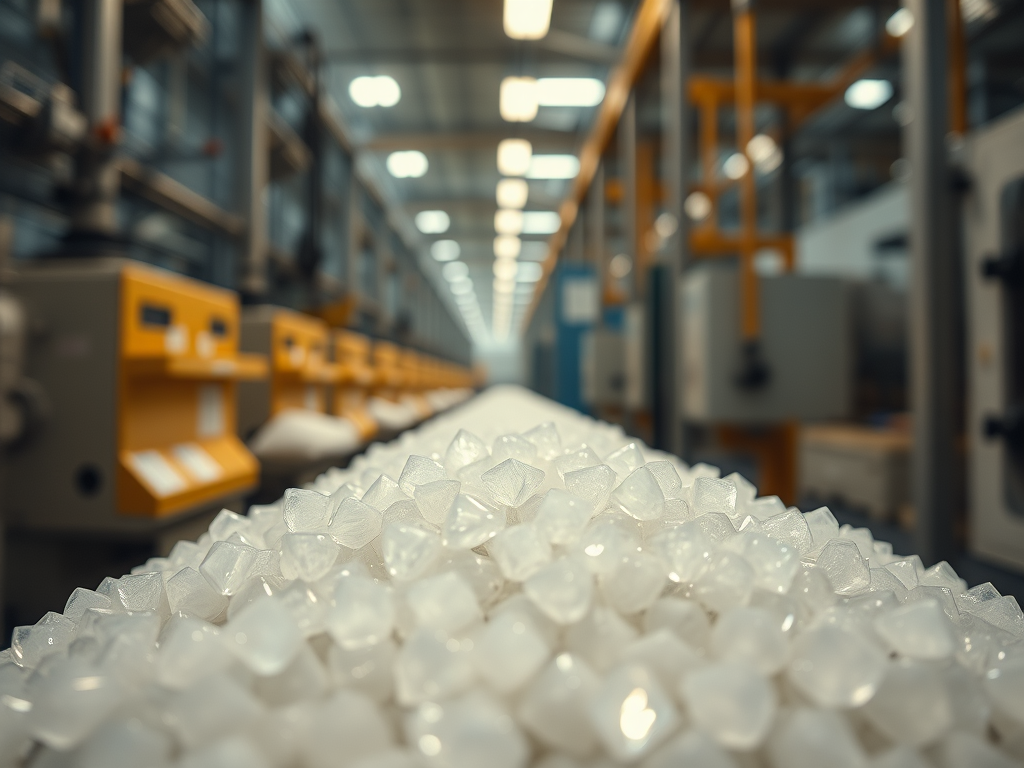
What is TPU?
Thermoplastic Polyurethane (TPU) is a highly versatile polymer that bridges the gap between rubber and plastic. It offers the elasticity and flexibility of rubber while retaining the processability of thermoplastics, making it one of the most popular choices for applications requiring durability, resilience, and performance.
TPU belongs to the thermoplastic elastomer (TPE) family. Unlike thermosetting rubber, TPU can be heated, melted, and reprocessed multiple times, which makes it recyclable and easy to fabricate.
Key Properties of TPU
- High Elasticity: Provides rubber-like flexibility and stretchability.
- Abrasion Resistance: Outperforms most plastics in high-wear environments.
- Chemical Resistance: Resistant to oils, greases, and many solvents.
- Transparency: Available in clear grades for aesthetic or functional use.
- Wide Hardness Range: Shore hardness from 70A (soft) to 85D (rigid).
- Temperature Stability: Performs well in -40°C to 80°C environments.
- Impact Resistance: Great for shock-absorbing components.
How is TPU Fabricated?
TPU is incredibly adaptable and can be shaped using a variety of manufacturing techniques. Here are the most common methods:
1. Injection Molding
One of the most widely used fabrication methods for TPU.
How It Works:
- TPU pellets are melted and injected into a mold under high pressure.
- After cooling, the mold releases a solid TPU part.
Why Use Injection Molding for TPU?
- High Precision: Great for complex, detailed parts.
- Mass Production: Fast cycle times for large-scale manufacturing.
- Consistent Quality: Produces uniform dimensions and smooth finishes.
Common Products:
Footwear soles, medical components, automotive seals, cable connectors.
2. Extrusion
Extrusion turns TPU into continuous profiles like tubing, films, and sheets.
How It Works:
- TPU pellets are melted and forced through a die to create a specific shape.
- The extrudate is cooled and cut to length.
Applications:
- Hydraulic and pneumatic hoses
- Protective cable jacketing
- Conveyor belts
- TPU films for laminates and coatings
3. Blow Molding
Used to produce hollow TPU products.
Process:
- Extruded TPU tubing is inflated inside a mold to create hollow shapes.
Applications:
Flexible containers, bellows, and inflatable products.
4. Compression Molding
Less common for TPU but still useful for thicker, solid parts.
Process:
- TPU is placed into a heated mold, compressed under pressure, and cooled.
Applications:
Thick pads, bumpers, and impact-absorbing components.
5. Film Casting & Calendering
TPU films are produced by casting molten TPU onto a substrate or rolling it into thin sheets.
Applications:
Coatings for fabrics, waterproof membranes, protective films for electronics.
6. 3D Printing (Additive Manufacturing)
TPU has become a favorite in the 3D printing community for its flexibility and strength.
FDM/FFF Printing with TPU:
- TPU filaments are used in Fused Deposition Modeling (FDM) printers.
- Requires careful tuning: slow speeds, heated bed, and direct-drive extruder for best results.
Benefits of 3D Printing TPU:
- Rapid Prototyping: Perfect for functional prototypes and custom parts.
- Complex Geometries: Design intricate lattice structures for flexibility and cushioning.
- Low-Volume Production: Cost-effective for custom or limited-run items.
Common 3D Printed TPU Products:
- Gaskets, seals, and vibration dampeners
- Phone cases and protective gear
- Footwear midsoles and cushioning components
- Flexible hinges and grips
7. Overmolding
TPU can be overmolded onto rigid plastics like ABS or PC for soft-touch grips and ergonomic designs.
Applications:
Tool handles, electronics housings, consumer goods.
Innovations in TPU Processing
- Color & Transparency Control: TPU can be dyed or kept crystal-clear.
- Biodegradable TPU: Eco-friendly formulations for sustainable manufacturing.
- Reinforced TPU: Blends with glass fiber or carbon for higher stiffness.
- Smart TPU: TPU integrated with sensors for wearables and medical devices.
Applications Across Industries
- Automotive: Protective boots, hoses, interior trim
- Footwear: Flexible, shock-absorbing midsoles and outsoles
- Medical: Catheters, tubing, prosthetics
- Consumer Electronics: Protective cases, cable insulation
- Industrial: Belts, rollers, seals
- Sports Equipment: Protective padding, gear, and grips
Why TPU is a Game-Changer
Unlike many rigid plastics, TPU combines:
- Rubber-like flexibility
- Thermoplastic processing ease
- Durability in extreme conditions
Its adaptability makes it one of the most important modern materials for engineering, design, and additive manufacturing.
Conclusion
Thermoplastic Polyurethane (TPU) stands at the intersection of strength and flexibility, giving engineers, designers, and manufacturers a material that can bend without breaking. With multiple fabrication methods—from injection molding to 3D printing—TPU offers infinite design possibilities for industries across the globe.
At Custom Fiberglass Products, we specialize in advanced material solutions, including TPU fabrication for industrial and custom applications. Whether you need high-performance tubing, flexible components, or additive manufacturing expertise, we’re here to help you innovate.
✅ Contact us today to explore TPU options for your next big idea!
This post was created using Generative AI; information may be inaccurate.