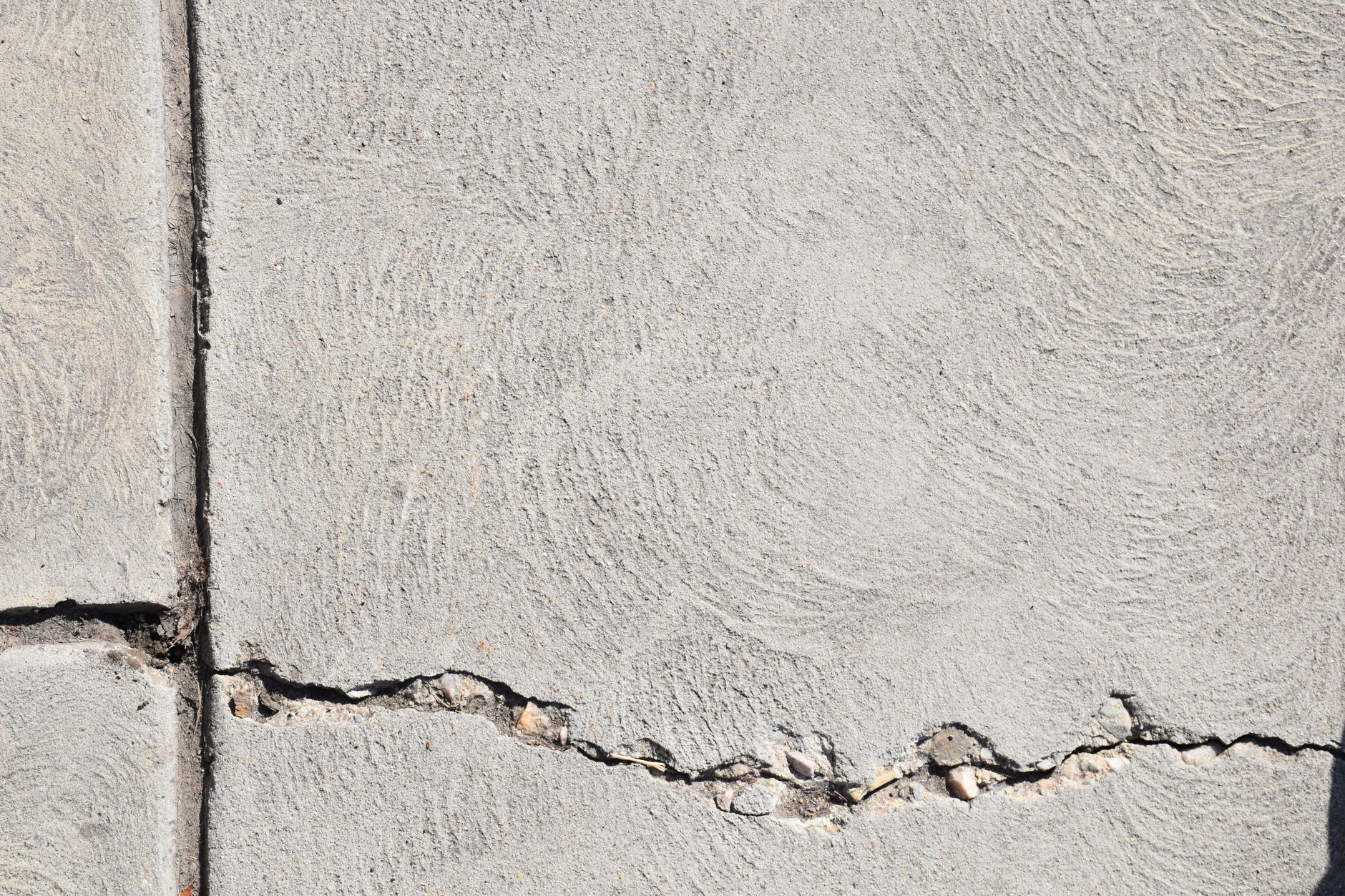
Concrete is exceptionally strong under compression, which makes it ideal for foundations, floors, bridges, tunnels, and countless other structures. Its weakness is tension: when concrete is pulled, bent, struck, or subjected to repeated movement, cracks can begin to form.
Fiber-reinforced concrete, commonly shortened to FRC, addresses this weakness by distributing small fibers throughout the concrete mixture. These fibers help bridge developing cracks, hold cracked sections together, and allow the concrete to absorb more energy before it fails. Depending on the fiber material, shape, dosage, and concrete mixture, FRC can provide better crack control, toughness, impact resistance, and post-cracking performance than conventional concrete alone.
FRC is already used in industrial floors, pavements, precast products, tunnels, bridge components, shotcrete, and repair materials. However, recent innovations are expanding what fiber-reinforced concrete may be able to do—and which materials can be used to make it.
How Fiber-Reinforced Concrete Works
In most FRC mixtures, short fibers are dispersed throughout the concrete rather than installed as long bars or sheets. When a crack begins to open, fibers crossing that crack can continue transferring force from one side to the other.
This does not necessarily prevent every crack from forming. Instead, the fibers can encourage the formation of smaller, more closely spaced cracks rather than allowing one large crack to grow unchecked. They may also give the concrete useful strength and toughness after cracking has begun.
The result depends heavily on fiber distribution and orientation. Fibers that clump together or fail to cross the critical cracks will provide less benefit. For that reason, proper mixture design, batching, placement, and finishing are just as important as selecting the fiber itself. ACI guidance recognizes that fiber material, geometry, dosage, and interaction with the concrete matrix all influence performance.
Fibers can sometimes supplement or replace certain forms of conventional reinforcement, particularly reinforcement intended to control shrinkage and temperature cracking. However, simply adding fibers does not automatically eliminate the need for reinforcing bars. Structural replacement must be supported by engineering calculations, testing, specifications, and applicable codes.
Materials Used in Fiber-Reinforced Concrete
One of the most interesting features of FRC is the variety of fibers now available. Each material changes the concrete in a different way.
Steel Fibers
Steel remains one of the most established choices for structural FRC. Steel fibers may be straight, crimped, twisted, or manufactured with hooked ends that improve their grip within the concrete.
They are especially useful where toughness, impact resistance, fatigue performance, or post-cracking load capacity is important. Common applications include industrial floors, tunnel linings, precast components, pavements, and ultra-high-performance concrete.
Steel fibers can provide substantial reinforcement, but they also add weight and may affect workability. Fibers exposed near the surface can develop rust staining, although this does not always indicate significant internal deterioration.
Synthetic Fibers
Synthetic fibers are commonly manufactured from polypropylene, polyethylene, nylon, or polyvinyl alcohol.
Very fine synthetic microfibers are often used to reduce plastic shrinkage cracking while concrete is still young. Larger structural synthetic fibers, sometimes called macrofibers, can provide greater post-cracking performance and may replace welded-wire reinforcement or other secondary reinforcement in properly designed applications. ACI has noted the growing use of macrofibers where secondary steel reinforcement would traditionally have been considered.
Synthetic fibers do not corrode, are comparatively lightweight, and can be easier to handle than steel. Their stiffness, bond behavior, long-term deformation, and temperature resistance differ from those of steel, so the fibers must be selected for the actual service conditions.
Glass Fibers
Glass fibers can improve tensile and flexural behavior without introducing steel corrosion. In cement-based products, alkali-resistant glass is generally used because ordinary glass can be attacked by the highly alkaline concrete environment.
Glass-fiber-reinforced concrete is frequently associated with thin architectural panels, decorative features, façade elements, and lightweight precast components. Researchers are also studying glass fibers in newer applications such as 3D-printed mortar, where fiber length must be balanced against pumpability, extrusion, layer bonding, and mechanical performance.
Basalt Fibers
Basalt fibers are produced from melted volcanic rock. They are attracting attention because they offer high tensile strength, relatively low weight, resistance to corrosion, and the potential to occupy a middle ground between conventional glass and higher-cost carbon fibers.
Recent studies have examined basalt in self-compacting concrete and in hybrid mixtures containing multiple fiber types. Research published in 2025, for example, investigated combinations of basalt and carbon fibers to determine whether they could produce complementary mechanical and environmental benefits.
Basalt is promising, but performance still depends on fiber treatment, manufacturing quality, concrete chemistry, and long-term exposure conditions.
Carbon Fibers
Carbon fibers are lightweight, strong, stiff, corrosion-resistant, and electrically conductive. Their cost generally limits their use in ordinary concrete, but their conductivity creates opportunities that other fibers cannot easily provide.
Carbon-fiber cementitious materials are being developed not only for reinforcement but also for self-sensing concrete. When the material is strained or damaged, changes within its conductive network can alter its electrical resistance. In principle, this allows a structure to provide information about loading or cracking without relying entirely on separate embedded sensors. Recent transportation research has demonstrated significant sensing responses in mixtures containing small quantities of carbon fiber.
Natural and Plant-Based Fibers
Researchers are also studying cellulose, hemp, flax, jute, sisal, coconut, bamboo, and other plant-derived fibers. These materials may reduce reliance on energy-intensive manufactured fibers while creating useful applications for agricultural byproducts.
The difficulty is consistency and durability. Natural fibers can absorb water, vary from one source to another, and degrade or lose effectiveness in an alkaline cement environment. Recent research is therefore focused on chemical treatments, coatings, mineralization, and alternative binders that improve the bond between the fiber and the surrounding matrix.
Natural-fiber concrete remains an active research area rather than a universal replacement for established structural fibers.
Recycled Fibers
Waste materials are becoming another important source of reinforcement. Researchers have tested steel recovered from discarded tires, recycled plastic fibers, textile waste, and fibers reclaimed from other industrial products.
Recycled tire steel is particularly interesting because tires contain high-strength wire that would otherwise require recycling or disposal. A 2024 California Department of Transportation review examined opportunities for recycled fibers in concrete pavements and bridge decks, while newer studies have investigated replacing part of the manufactured steel-fiber content with fibers recovered from tires.
The challenge is quality control. Recycled fibers may have irregular lengths, shapes, contamination levels, or surface conditions. Processing and classification must become reliable before these materials can be specified as consistently as purpose-made fibers.
Current Innovations Shaping Fiber-Reinforced Concrete
Fiber-reinforced concrete is no longer limited to adding a single type of fiber to a conventional mixture. Much of today’s research treats the fiber, binder, manufacturing method, and monitoring system as parts of one engineered material.
Ultra-High-Performance Fiber-Reinforced Concrete
One of the most mature innovations is ultra-high-performance concrete, or UHPC. UHPC combines a very dense cementitious matrix with high-strength fibers, commonly steel, to produce exceptional compressive strength, durability, and sustained tensile resistance after cracking.
UHPC is increasingly used for bridge connections, repairs, joint replacements, and protective overlays. An FHWA technical note published in December 2024 reported that UHPC overlays had been installed on more than 30 U.S. bridges by 2023. These overlays are intended to extend service life by adding a thin, durable, fiber-reinforced layer to an existing bridge deck.
Current work is also aimed at developing nonproprietary UHPC mixtures that can use more locally available materials and reduce cost barriers.
Hybrid Fiber Systems
A single fiber does not have to perform every job. Hybrid FRC combines two or more fiber types or sizes.
Microfibers may control early shrinkage and very small cracks, while longer steel or synthetic fibers manage larger cracks after the concrete hardens. Other combinations—such as steel and polypropylene or basalt and carbon—are being studied to balance strength, toughness, durability, workability, conductivity, and cost.
This multiscale approach is one of the clearest directions in current FRC development because cracking occurs at several different sizes and stages.
Fiber-Reinforced 3D-Printed Concrete
Concrete printing creates a new reinforcement problem. Traditional reinforcing bars are difficult to place continuously through material deposited layer by layer, and printed components can be weaker along the boundaries between layers.
Short fibers can be mixed directly into printable mortar, helping control cracking and improve flexural performance. However, fibers also change how the mixture flows through pumps and nozzles. They may align with the printing direction, creating better performance in one direction than another.
Recent studies have compared polypropylene, basalt, steel, and glass fibers in printable mixtures. Current research is focused on fiber length, nozzle geometry, layer bonding, print direction, and automated placement methods that can create more predictable reinforcement.
Smart and Self-Monitoring Concrete
Conductive carbon, steel, graphite, graphene-related materials, and other additives may allow concrete to act as part of a structural monitoring system.
As cracks form or loads change, the electrical pathways through the material also change. Engineers may eventually use these signals to monitor bridges, pavements, industrial floors, or critical structures in real time.
The concept is promising, but self-sensing concrete still requires reliable calibration, durable electrical connections, standardized testing, and methods for distinguishing structural damage from changes caused by moisture or temperature. Reviews published in 2025 found that sensing performance can vary substantially with filler type, concentration, matrix composition, electrode arrangement, and testing method.
Lower-Carbon Binders and Recycled Reinforcement
Researchers are pairing fibers with lower-carbon cementitious systems, including mixtures containing supplementary cementitious materials and geopolymer binders.
The goal is not merely to make concrete stronger. It is to extend service life while reducing the environmental impact of both the binder and reinforcement. Fiber-reinforced geopolymer concrete, natural fibers, recycled tire fibers, and digitally optimized mixtures are all part of this effort.
However, a material is not automatically sustainable because it includes a recycled fiber. Processing requirements, transportation, durability, cement content, service life, and end-of-life options must all be considered.
Fiber-Reinforced Concrete vs. FRP
Fiber-reinforced concrete is sometimes confused with fiber-reinforced polymer, or FRP. Both materials use fibers, but the similarities largely end there.
In FRC, the matrix surrounding the fibers is cementitious concrete or mortar. The fibers are usually short and dispersed throughout the mixture.
In FRP, the matrix is a polymer resin, reinforced with glass, carbon, basalt, or other fibers. The fibers may be continuous and carefully oriented to provide strength in specific directions. FRP can be manufactured as tanks, piping, ducts, grating, platforms, panels, bridge decks, structural shapes, reinforcing bars, or strengthening wraps.
Weight and Strength
FRC retains the weight of concrete. It can be extremely strong and tough, but it remains a relatively heavy construction material.
FRP is much lighter and offers a high strength-to-weight ratio. Its directional fiber arrangement allows a component to be engineered around specific loads. FHWA identifies light weight and corrosion resistance as major advantages of FRP bridge decks, GFRP reinforcing bars, CFRP prestressing materials, and pultruded structural members.
Corrosion and Chemical Exposure
FRC made with nonmetallic fibers avoids fiber corrosion, but the concrete matrix itself can still be affected by acids, chlorides, freeze-thaw exposure, abrasion, and other aggressive conditions. Steel-fiber systems require additional consideration where exposed fibers or severe chemical conditions are expected.
Properly selected FRP systems provide excellent resistance to corrosion and many chemicals. The resin, fiber, protective surface, fabrication method, and operating temperature must still be matched to the environment; FRP is corrosion-resistant, not universally immune to every chemical.
Fire and High Temperatures
Concrete is noncombustible and generally provides useful fire protection, although high temperatures can still cause cracking, spalling, and strength loss.
FRP requires different fire and temperature considerations because its polymer matrix can soften or degrade as temperature rises. Fire-retardant resins, protective systems, insulation, and project-specific testing may be needed where fire exposure is credible. Recent reviews continue to identify temperature sensitivity and resin glass-transition behavior as central issues in the fire design of structural FRP systems.
Fabrication and Installation
FRC is normally mixed, pumped, cast, sprayed, or printed using modified concrete construction methods. This makes it familiar to much of the construction industry, although fiber dosing can affect mixing and finishing.
FRP components are typically manufactured before installation through processes such as pultrusion, molding, filament winding, or laminate fabrication. Their low weight can reduce lifting requirements and allow large components to be installed more quickly.
Typical Applications
FRC is often the stronger candidate for slabs, pavements, tunnel linings, precast concrete, shotcrete, structural connections, and wear-resistant overlays.
FRP may be preferable for corrosion-resistant tanks, piping, grating, walkways, platforms, ducts, bridge decks, structural profiles, and strengthening systems. It can also be used inside concrete as GFRP reinforcing bar. The publication of ACI CODE 440.11-22 established code requirements for structural concrete reinforced with GFRP bars, representing an important step toward broader adoption in corrosion-sensitive and nonmagnetic applications.
Complementary Materials, Not Direct Replacements
The most useful comparison between FRC and FRP is not simply which material is stronger. Each solves a different group of problems.
FRC preserves the mass, rigidity, fire performance, and familiarity of concrete while improving crack control and toughness. FRP offers low weight, corrosion resistance, design flexibility, and the ability to manufacture complete components with fibers positioned in deliberate directions.
In many projects, the two materials can work together. A structure might use fiber-reinforced concrete for its deck or foundation, GFRP bars in corrosion-sensitive areas, FRP panels or grating above the concrete, and externally bonded FRP laminates to strengthen aging structural members. ACI’s publication of separate design provisions for FRC, GFRP-reinforced concrete, and FRP strengthening systems reflects the growing maturity of these related but distinct technologies.
The Future of Fiber-Reinforced Construction
The future of FRC will likely involve more than stronger concrete. Researchers and manufacturers are developing materials that use recycled resources, monitor their own condition, work with automated construction equipment, and achieve high performance with less material.
Some innovations—particularly steel and synthetic FRC, UHPC, and GFRP reinforcing bars—are already supported by substantial field experience and engineering guidance. Others, including widespread self-sensing concrete, natural structural fibers, and automatically reinforced 3D-printed buildings, still require further testing and standardization.
What is clear is that fibers are giving engineers more control over how concrete cracks, carries loads, and survives demanding environments. At the same time, FRP continues to provide a lightweight and corrosion-resistant option where conventional concrete or steel may not be the best fit.
Rather than competing for every application, FRC and FRP are expanding the range of materials available for longer-lasting, more efficient, and more adaptable construction.
This post was created using Generative AI; information may be inaccurate.