Posted on Leave a comment

AI and Skilled Trades: Why Custom Fiberglass Jobs Are Here to Stay

black and white quote print

Everywhere you look lately, the conversation seems to be the same: AI is coming for jobs. Automation, robots, smart systems, and machine learning are all changing the way we work. But when it comes to AI and skilled trades, the conversation often misses something important: not every job can be replaced by a machine — and not every craft should be.

And while there’s no doubt technology is changing the way we work, there’s an important side of the conversation that gets missed:

Not every industry can be replaced by a machine.
And not every craft should be.

Custom fiberglass fabrication is one of those fields.

The Difference Between Mass Production and Custom Craftsmanship

When people think of automation, they often picture assembly lines making the same product over and over again. In those environments, machines can be incredibly effective.

But custom fiberglass work is different.

Our work often involves:

  • One-off parts
  • Repairs in the field
  • Unique dimensions and specs
  • Problem-solving around existing equipment
  • Hand-laid fabrication techniques
  • Real-world fitment challenges that don’t show up on paper

That kind of work takes more than a program or a robot arm. It takes experience. It takes judgment. It takes skilled hands.

A machine can repeat a process.
A craftsman can adapt one.

And in custom fiberglass, adaptation is everything.

Why Hand-Laid Products Still Matter

Hand-laid fiberglass products aren’t just “made” — they’re built with attention, technique, and know-how.

A skilled worker understands things like:

  • How materials behave in real conditions
  • How to work around irregular surfaces
  • How to maintain quality across complex shapes
  • How to make adjustments on the fly when a job changes
  • How to balance durability, fit, and finish in a way that meets the customer’s needs

That level of craftsmanship doesn’t come from automation alone. It comes from people who have spent time learning the trade.

In industries where reliability matters — especially industrial and chemical environments — that expertise is not optional. It’s essential.

Technology Isn’t the Enemy — It’s a Tool

Being realistic about the future doesn’t mean rejecting technology. In fact, the companies that will thrive are the ones that know how to use it wisely.

At a custom fiberglass company, technology can help us:

  • Improve estimating and quoting speed
  • Organize drawings and job records
  • Enhance design and drafting workflows
  • Support precision with measurements and planning
  • Improve communication and scheduling
  • Reduce repetitive office tasks
  • Assist with training and documentation
  • Speed up prototyping with tools like 3D printing

These tools can make us faster, more organized, and more efficient.

But they don’t replace the person laminating a part.
They don’t replace the technician making a field repair.
They don’t replace the knowledge built from years of hands-on work.

They support the people doing the work.

The Future of Custom Fiberglass Is Skilled + Smart

The real future isn’t “humans vs. machines.”

It’s skilled workers using better tools.

That means combining craftsmanship with technology:

  • Traditional hand-laid expertise
  • Modern design tools
  • Better planning systems
  • Smarter workflows
  • Faster communication
  • Higher consistency and quality control

That combination is powerful.

As technology keeps advancing, custom fabrication shops have an opportunity to become stronger than ever — not by replacing workers, but by giving them better ways to do what they already do best.

Craftsmanship Still Has a Place — and Always Will

There will always be industries where custom work matters. Where no two jobs are exactly the same. Where quality depends on experience. Where the final product is shaped not just by materials, but by the people who build it.

Custom fiberglass is one of those industries.

So yes, the future will bring AI, automation, and new tools.

And we’ll use the best of them.

The future of AI and skilled trades isn’t about replacing craftsmanship — it’s about strengthening it with better tools.

If you’re looking for a job where your hands, skills, and work ethic truly matter, take a look at our careers page — we’re always interested in people who want to build something that lasts.

Posted on Leave a comment

Fiberglass Metal Detector Conveyor Sections: Why They Exist and When They’re Worth Using

Fiberglass metal detector conveyor sections

If you’ve ever worked around industrial conveying systems, you’ve probably heard the phrase “metal detector conveyor section” (or “metal-free conveyor section”). It sounds simple, but it solves a very specific problem: metal detectors can be overly sensitive to nearby metal parts of the conveyor, which can cause nuisance trips, inconsistent performance, or reduced sensitivity.

That’s where fiberglass composite (FRP) conveyor sections come in. They’re not a “cool material trend” — they’re a practical way to make inspection equipment behave the way it’s supposed to.


What is a “metal detector conveyor section”?

A metal detector conveyor section is a portion of a conveyor — usually the frame, side rails, guards, and sometimes bed supports — that’s intentionally built from non-metallic, non-magnetic materials so the detector can operate with:

  • fewer false positives (“nuisance rejects”)
  • more stable calibration
  • improved sensitivity (especially when chasing very small contaminants)

In most plants, it’s not that the entire conveyor is a problem. It’s the conveyor components inside or near the detector’s field that can interfere.


Why fiberglass composites are a good fit

Fiberglass reinforced polymer (FRP) is commonly used here because it hits a rare combo of traits:

1) Non-metallic and non-magnetic

That’s the whole point — it reduces the “background noise” the detector has to fight through.

2) Corrosion resistance

Conveyors often live in harsh places: washdown areas, food plants, chemical environments, humid rooms, outdoor exposure. FRP handles corrosion well compared with carbon steel and avoids rust-related maintenance.

3) Strength-to-weight

FRP can be plenty strong while staying relatively lightweight, which helps in installations where you’re swapping sections or adding inspection equipment.

4) Electrical insulation

In certain environments, insulation is a helpful safety and reliability feature (though grounding and ESD considerations still matter depending on the process).


Where these sections show up most often

You’ll most commonly see FRP metal detector conveyor sections in:

  • Food processing & packaging (where detection and sanitation are major priorities)
  • Bulk material handling where product purity matters
  • Plastics, rubber, or composites manufacturing
  • Chemical plants where corrosion resistance is a constant concern
  • Recycling sorting lines (sometimes paired with other sensing equipment)

What’s typically included in an FRP detector section

This varies by line and detector type, but common components are:

  • Conveyor frame / side rails
  • Stringers / supports
  • Guarding and covers
  • Mounting brackets or transition plates (often designed carefully to avoid metal inside the detection zone)

Some setups keep the belt and rollers standard while making the surrounding structure metal-free; others go further depending on sensitivity requirements.


“How do we make sure it actually works with our detector?”

This is the part people sometimes underestimate: metal detectors aren’t all the same, and the detector’s field geometry matters.

A good detector section design starts with:

  • detector make/model and aperture size (or tunnel dimensions)
  • how the detector is mounted relative to the conveyor
  • target sensitivity and product type (wet/salty products behave differently than dry ones)
  • where metal must be avoided (the detector’s “keep-out zone”)

That’s why “metal-free” usually means metal-free in the right places, not necessarily zero metal anywhere on the machine.


Maintenance and durability considerations

FRP holds up well, but smart design choices help a lot:

  • Wear points: areas that rub (guides, bed supports) may need wear strips or replaceable parts.
  • Fasteners: sometimes you can use non-metal fasteners; sometimes you’ll still use metal fasteners but keep them outside the detector zone.
  • Cleaning: for washdown, edge sealing and smooth surfaces can reduce grime traps.
  • Impact protection: if the line sees pallet hits or forklift traffic, consider guards or sacrificial bumpers.

Practical takeaways

If you’re fighting metal detector nuisance trips or need higher sensitivity, a fiberglass detector section is often one of the cleanest mechanical fixes. It’s not about “upgrading materials” — it’s about making the inspection equipment’s environment predictable.

We at Custom Fiberglass Products Inc. build fiberglass metal detector conveyor sections—frames, rails, guarding, and the odd custom transition pieces that make the install behave the way it should. Typically, it’s not about replacing an entire conveyor; it’s about creating a stable, low-interference zone around the detector so sensitivity and uptime are easier to maintain.

Posted on Leave a comment

Fiberglass Composites in Cold-Weather Emergencies: Where FRP Makes a Real Difference

wooden electric post and power line

Late-January cold snaps in the South don’t just feel unusual — they stress systems that were never built for prolonged ice and subfreezing temperatures. In the recent event across parts of the southern U.S., ice-laden trees and lines helped drive widespread outages, leaving many communities dealing with dangerous cold without reliable heat or power.

When the grid, roads, and water systems are strained at the same time, the big question becomes: How do we harden critical infrastructure so it fails less often — and recovers faster when it does? One of the most practical answers is fiberglass composites, often called FRP (fiber-reinforced polymer): lightweight, corrosion-resistant, nonconductive, and highly designable for harsh environments.

Below are high-impact ways FRP shows up before, during, and after cold-weather events.


1) Keeping power on: composite poles & crossarms that support grid resilience

Ice storms are brutal on overhead lines. When freezing rain builds up, the weight and wind loading can snap limbs, pull down conductors, and overload poles — and restoration becomes slow when access is limited.

Composite (FRP) utility poles and crossarms are increasingly used as part of “grid hardening” because they can be engineered for high loads, are lightweight for faster installation, and avoid common degradation issues like rot and corrosion.

  • Oak Ridge National Laboratory notes utility poles must endure extreme conditions including wind and ice, and highlights composites as an emerging material option.
  • An EPRI overview points out that FRP poles/crossarms are gaining acceptance and can be ideal in recovery efforts from hurricanes, ice storms, and other extreme weather events, partly due to easier transportation and installation.

Why that matters in a Southern ice event: if a system is already stretched thin, anything that speeds up replacement (lighter components, faster handling, fewer long-term maintenance issues) improves outage duration and safety — especially for medically vulnerable residents.


2) Water & wastewater: FRP pressure pipe and rehab options for critical lines

Cold-weather emergencies don’t just impact electricity. When power is down, pumping and treatment are stressed; when temperatures plunge, lines and joints are put at risk (and repairs can be hard when roads are iced over).

FRP piping has become mainstream in many water applications, supported by established standards:

  • AWWA C950 describes fabrication/testing for fiberglass pressure pipe and joining systems for aboveground and belowground water systems (including pressure classes up to 450 psi).
  • ASTM D3517 covers machine-made fiberglass pressure pipe for water conveyance applications (also up to 450 psi).

Where FRP helps during cold events:

  • Corrosion resistance is huge for long-term reliability, especially in wastewater and chemical exposure zones.
  • Rehabilitation and repair: FRP systems are frequently used for slip-lining and other rehab approaches covered in the scope language of standards like ASTM D3517, which explicitly mentions applications such as slip-lining rehabilitation of existing pipelines.

Important reality check: FRP isn’t a “freeze-proof” magic wand. Freeze protection still depends on burial depth, insulation, heat tracing, circulation plans, and operational readiness. But FRP can be part of making the system more durable and maintainable year-round.


3) Protecting critical equipment: FRP shelters and enclosures for utilities & telecom

A cold snap becomes a crisis when critical equipment is exposed or inaccessible:

  • telecom gear and backup power
  • lift stations and pump controls
  • valve stations and instrumentation
  • field electrical components

Prefab FRP shelters/enclosures are commonly used to protect sensitive infrastructure because they’re corrosion resistant, durable, and can be deployed as modular units.

In practical terms, FRP shelters can help keep:

  • electrical gear dry and protected when ice brings down branches and debris
  • maintenance access safer (better organized, protected work areas)
  • recovery faster (swap/replace modules, standardize footprints)

4) Safer access: FRP grating, stairs, platforms, and walkways for icy conditions

During cold weather, a lot of injuries happen on the way to the fix: icy steps, slick platforms, and wet industrial walkways.

FRP grating and stair treads are widely used because they can provide textured slip-resistant surfaces, low maintenance, and excellent performance in outdoor environments.

  • OSHA notes that slip-resistant flooring materials (textured/serrated/punched surfaces and grating) can offer additional slip resistance in generally slippery work areas.
  • A Fibergrate market overview describes FRP product features such as slip resistance and the ability to stand up to extreme and varying temperatures.

If you’re planning for rare-but-severe cold events, this is one of the lowest-effort, highest-payoff upgrades for industrial sites and municipal facilities.


5) Faster field response: composite-friendly design that speeds repairs

In the South, restoration is often slowed by:

  • blocked roads and downed trees
  • limited specialized equipment for deep-freeze operations
  • constrained crew availability
  • dangerous conditions for bucket trucks and line crews

FRP supports faster response in two main ways:

  1. lighter components (poles/crossarms, panels, modular platforms) that are easier to stage and install
  2. modular systems (enclosures, walkways, panels) that reduce on-site fabrication time in harsh conditions

A simple “cold event” FRP checklist (for facilities & municipalities)

If you want to turn last week’s pain into next year’s plan:

  • Grid hardening targets: identify the worst outage corridors and critical feeders; evaluate composite poles/crossarms for high-failure zones.
  • Water continuity: confirm pump station backup power, and prioritize rehab options for the most failure-prone runs (especially older lines).
  • Critical equipment protection: add FRP shelters or enclosure upgrades where exposure or access is a recurring issue.
  • Worker safety upgrades: install/retrofit FRP grating and slip-resistant stairs where winter access becomes hazardous.

Closing thought

What made this recent Southern cold event so dangerous wasn’t just the temperature — it was the cascade: ice → downed lines → outages → loss of heat/medical equipment → blocked roads → slow restoration.

Fiberglass composites won’t prevent winter storms, but they can reduce failure rates, improve safety, and speed recovery — exactly the combination that matters when conditions turn rare and severe.

Posted on Leave a comment

The Advantages of Fiberglass in Automotive Manufacturing

a yellow corvette parked on the street in front of a building

The automotive industry has always been driven by innovation — from engine technology to materials science. One material that continues to play an important role in modern vehicle design is fiberglass. Known for its strength, versatility, and cost-effectiveness, fiberglass has become a valuable solution in both performance vehicles and everyday transportation.

At Custom Fiberglass Products Inc., we work with fiberglass across demanding applications, and many of the same benefits that make it ideal for industrial use translate directly into automotive manufacturing.


Why Fiberglass Matters in Automotive Design

Today’s vehicles must balance performance, safety, efficiency, and cost. Fiberglass offers a unique combination of properties that help manufacturers meet those goals.

Key advantages include:

  • High strength-to-weight ratio
  • Design flexibility
  • Corrosion resistance
  • Cost-effective production
  • Long-term durability

These traits make fiberglass especially attractive for components that require both structural integrity and aesthetic appeal.


Lightweight Strength for Better Performance

One of the biggest advantages of fiberglass is its lightweight strength. Compared to steel and some aluminum components, fiberglass provides excellent structural performance at a fraction of the weight.

This helps manufacturers:

  • Improve fuel efficiency
  • Enhance acceleration and handling
  • Reduce overall vehicle weight
  • Support better electric vehicle range

For performance vehicles and efficiency-focused designs alike, reducing weight without sacrificing strength is a major win.


Design Freedom and Customization

Fiberglass can be molded into complex shapes that would be difficult or expensive to produce using metal. This gives automotive designers greater freedom to create:

  • Aerodynamic body panels
  • Custom dashboards and interiors
  • Unique trim pieces
  • Specialized enclosures and housings

Whether for mass production or specialty vehicles, fiberglass enables creative, functional design without excessive tooling costs.


Corrosion Resistance and Longevity

Unlike steel, fiberglass does not rust. This makes it ideal for exterior components and underbody parts that are exposed to moisture, road salt, and harsh weather conditions.

Corrosion resistance helps:

  • Extend vehicle lifespan
  • Reduce long-term maintenance
  • Preserve appearance over time
  • Improve reliability in tough environments

For vehicles used in coastal, industrial, or winter-heavy regions, this durability is especially valuable.


Cost-Effective Manufacturing

Fiberglass offers a balance between performance and affordability. Tooling and production costs for fiberglass components are often lower than for stamped metal parts, particularly for low- to mid-volume manufacturing.

This makes fiberglass ideal for:

  • Specialty vehicles
  • Fleet applications
  • Custom builds
  • Aftermarket components

Manufacturers can achieve high-quality results without the expense of large-scale metal tooling.


Safety and Impact Performance

Fiberglass also contributes to vehicle safety. While it behaves differently than metal in a collision, fiberglass can be engineered to:

  • Absorb and distribute impact energy
  • Reduce sharp fragmentation
  • Maintain structural integrity in non-crash-critical components

This makes it well-suited for body panels, housings, and protective structures that complement a vehicle’s primary safety systems.


Common Automotive Applications for Fiberglass

Fiberglass is widely used throughout the automotive industry in components such as:

  • Body panels and hoods
  • Fenders and spoilers
  • Dashboards and interior panels
  • Headlight and taillight housings
  • Engine covers and shrouds
  • Custom enclosures and trim

From production vehicles to race cars and restoration projects, fiberglass continues to be a trusted material choice.


Supporting Innovation Through Fabrication Expertise

At Custom Fiberglass Products Inc., we understand how fabrication methods, reinforcement strategies, and material selection impact real-world performance. Whether supporting prototype development, custom automotive components, or specialty fabrication, our experience helps turn design concepts into durable, functional parts.


Driving the Future with Proven Materials

As automotive technology evolves — from electric vehicles to advanced aerodynamics — materials like fiberglass remain essential. Its combination of strength, flexibility, durability, and cost-effectiveness ensures that fiberglass will continue to support innovation across the automotive industry.

For manufacturers and builders alike, fiberglass offers a practical path forward — blending modern performance with proven reliability.

Posted on Leave a comment

Fiberglass in the Medical Field: Uses and Benefits

white hospital beds

When people think of fiberglass, they often associate it with industrial or construction uses. However, fiberglass also plays an important — and often overlooked — role in the medical and healthcare field. Its strength, durability, and design flexibility make it a valuable material in environments where cleanliness, reliability, and performance are critical.

At Custom Fiberglass Products Inc., we understand how material properties translate into real-world performance. Many of the same characteristics that make fiberglass ideal for chemical and industrial applications also make it well-suited for medical-related uses.


Why Fiberglass Is Used in Medical Environments

Medical facilities demand materials that are strong, stable, easy to maintain, and resistant to wear. Fiberglass meets these needs in several important ways.

Key advantages include:

  • High strength-to-weight ratio
  • Corrosion and moisture resistance
  • Durability under repeated cleaning and disinfecting
  • Design flexibility for custom shapes and enclosures
  • Electrical insulation properties

These traits make fiberglass a reliable choice for both direct medical use and supporting infrastructure within healthcare facilities.


Common Medical and Healthcare Applications of Fiberglass

Medical Equipment Housings and Enclosures

Fiberglass is frequently used for equipment housings, protective covers, and structural enclosures for medical devices. These components must protect sensitive electronics while remaining lightweight and easy to clean.

Fiberglass allows for:

  • Custom-molded shapes
  • Smooth, cleanable surfaces
  • Structural strength without excessive weight

Imaging and Diagnostic Equipment

In imaging environments such as MRI and X-ray rooms, materials must meet strict performance and safety requirements. Fiberglass is often used for non-metallic structural components because it:

  • Does not interfere with imaging signals
  • Provides electrical insulation
  • Maintains dimensional stability

This makes fiberglass an excellent choice for panels, frames, and support structures in diagnostic areas.


Medical Carts, Trays, and Support Structures

Fiberglass is commonly used in medical carts, trays, and support components where durability and mobility are important. Its resistance to dents, corrosion, and repeated cleaning helps extend service life in busy clinical environments.


Cleanroom and Laboratory Applications

In laboratories and cleanroom settings, fiberglass is valued for its:

  • Resistance to chemicals and cleaning agents
  • Non-porous surface finishes
  • Ability to be fabricated into custom configurations

These properties help maintain controlled environments where contamination must be minimized.


Rehabilitation and Assistive Devices

Fiberglass is also used in prosthetics, orthotics, and rehabilitation equipment. Its combination of strength and flexibility allows for supportive yet lightweight components that improve comfort and functionality for patients.


Hygiene, Safety, and Longevity

Medical environments require materials that can withstand frequent sanitization without degrading. Fiberglass performs well under repeated exposure to disinfectants and cleaning cycles, making it suitable for long-term use in healthcare facilities.

Additionally, fiberglass does not rust or corrode, helping maintain structural integrity and appearance over time.


Custom Fabrication Matters in Healthcare Applications

Many medical and healthcare applications require custom solutions rather than off-the-shelf products. Fiberglass can be molded, reinforced, and finished to meet specific size, strength, and performance requirements.

At Custom Fiberglass Products Inc., our fabrication expertise allows us to support custom projects that demand precision, durability, and consistency — qualities that are essential in medical-related environments.


A Material That Supports Modern Healthcare

Fiberglass may not always be visible to patients, but it plays a vital role behind the scenes in keeping medical facilities running smoothly. From equipment protection to laboratory infrastructure, fiberglass contributes to safer, more efficient healthcare environments.

As medical technology continues to evolve, materials like fiberglass will remain essential due to their adaptability, reliability, and performance.

Posted on Leave a comment

Looking Ahead to the New Year at Custom Fiberglass Products Inc.

photography of fireworks display

As the year comes to a close, it’s a natural time to reflect on where we’ve been — and to look forward to what lies ahead. At Custom Fiberglass Products Inc., the end of the year isn’t just about closing the calendar. It’s about preparing for new challenges, new ideas, and new opportunities.

The work we do is built around long-term performance, reliability, and trust, and those values carry forward into the new year.


A Foundation Built on Experience

Every project completed throughout the year adds to the experience and knowledge that allows us to serve our customers better. From custom fiberglass fabrication and repairs to thermoplastic and dual laminate solutions — and even specialized 3D printing work — each job reinforces our commitment to quality and problem-solving.

As we move into the new year, that experience becomes the foundation for tackling even more complex and demanding projects.


Ready for New Challenges

No two projects are exactly alike, and that’s especially true in the industries we serve. Changing conditions, evolving requirements, and unexpected needs are all part of the work.

Going into the new year, Custom Fiberglass Products Inc. remains ready to:

  • Evaluate new applications and material challenges
  • Design custom solutions tailored to real-world conditions
  • Support both planned projects and unexpected repairs
  • Deliver dependable results that stand the test of time

We believe preparation and adaptability are just as important as the materials we work with.


Looking Forward with Purpose

The start of a new year brings fresh ideas and renewed focus. Whether it’s improving existing systems, planning future upgrades, or exploring alternative materials and fabrication methods, we look forward to working alongside our customers to find practical, long-lasting solutions.

Our goal remains the same: to help customers move forward with confidence, knowing their systems are built to perform.


Thank You for Being Part of Our Journey

As we close out the year, we want to extend a sincere thank you to our customers, partners, and community for their continued trust and support. Every relationship plays a role in shaping the work we do and the standards we hold ourselves to.

We’re excited for what the new year will bring and look forward to working with you in the months ahead.


Wishing You a Safe and Successful New Year

From all of us at Custom Fiberglass Products Inc., we wish you a safe, successful, and productive New Year. When the next project arises — planned or unexpected — we’re ready to help.

Posted on Leave a comment

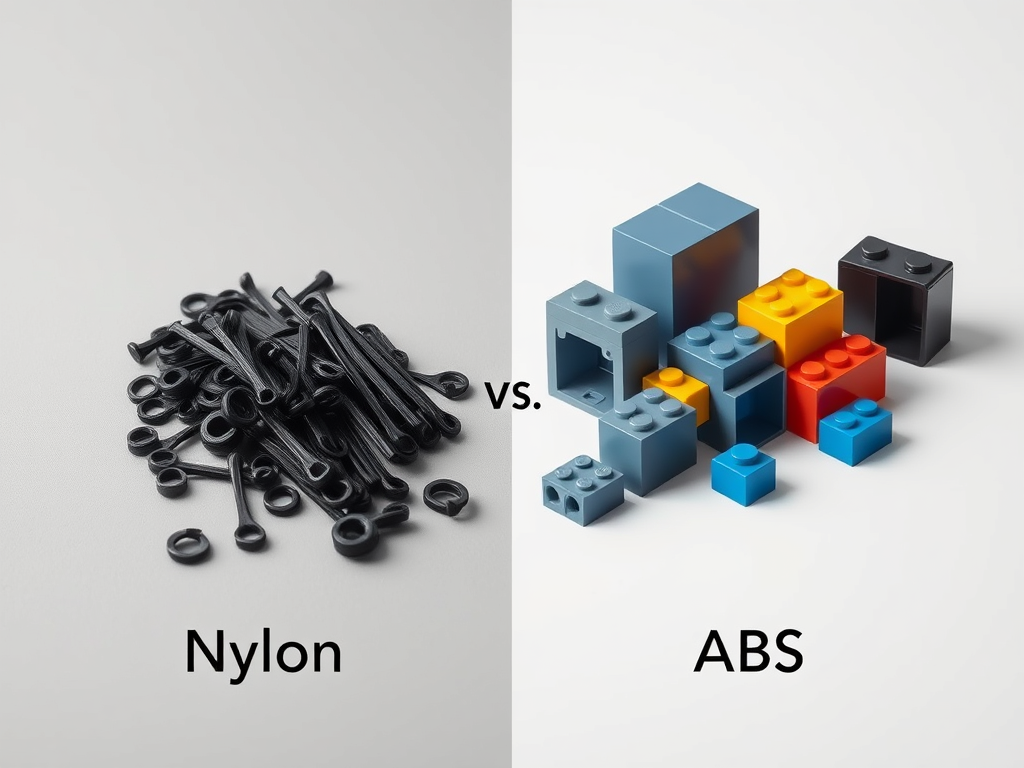
Nylon vs. ABS for 3D Printing: Which Material Is Right?

3D printing has become a powerful tool for creating functional parts, fixtures, and custom components. However, the success of a printed part depends heavily on material selection. Two commonly used engineering plastics in 3D printing are Nylon and ABS.

While both materials are capable and widely used, they offer very different performance characteristics. Understanding those differences is key to choosing the right material for strength, durability, and long-term reliability.

At Custom Fiberglass Products Inc., we regularly work with Nylon, ABS, and other engineering plastics to produce custom 3D printed parts for real-world use. Here’s how these two materials compare.


What Is Nylon in 3D Printing?

Nylon (typically Nylon 6, Nylon 6/6, or blends) is a strong, flexible engineering thermoplastic known for its toughness and wear resistance. In 3D printing, Nylon is often chosen for parts that must withstand mechanical stress, friction, or repeated movement.

Key Characteristics of Nylon

  • High strength and toughness
  • Excellent wear and abrasion resistance
  • Good chemical resistance
  • Slight flexibility that resists cracking
  • Higher printing temperatures required

Because of these properties, Nylon is often used for functional, load-bearing parts rather than purely cosmetic prints.


What Is ABS in 3D Printing?

ABS (Acrylonitrile Butadiene Styrene) is one of the most commonly used plastics in traditional manufacturing and 3D printing. It offers a good balance of strength, impact resistance, and ease of post-processing.

Key Characteristics of ABS

  • Good impact resistance
  • Moderate strength and rigidity
  • Easier to print than Nylon
  • Sands and machines well
  • Requires heated bed and enclosure to reduce warping

ABS is frequently used for prototypes, housings, and general-purpose parts.


Key Differences Between Nylon and ABS

1. Strength & Durability

  • Nylon is significantly stronger and more fatigue-resistant than ABS.
  • ABS is durable but can crack under repeated stress.

For parts that experience movement or load, Nylon is usually the better choice.


2. Flexibility vs. Rigidity

  • Nylon has natural flexibility, helping it absorb shock without breaking.
  • ABS is more rigid and may fracture under impact.

This makes Nylon better suited for clips, hinges, and mechanical components.


3. Heat Resistance

  • ABS maintains shape better at moderate temperatures.
  • Nylon can soften sooner but performs well in mechanically demanding environments.

Material choice often depends on whether heat or mechanical stress is the primary concern.


4. Print Difficulty

  • Nylon is more challenging to print, requiring higher temperatures and careful moisture control.
  • ABS is easier but still benefits from an enclosed printer.

Professional equipment and experience make a significant difference when printing Nylon reliably.


5. Surface Finish & Appearance

  • ABS typically produces a smoother surface and is easier to sand, glue, or paint.
  • Nylon has a more textured appearance and is harder to post-process.

For cosmetic parts, ABS is often preferred.


Common Applications: Nylon vs. ABS

ApplicationBetter Choice
Gears and bushingsNylon
Clips and snap-fit partsNylon
Functional fixturesNylon
PrototypesABS
Enclosures and housingsABS
Decorative partsABS

Which Material Should You Choose?

Choose Nylon if your part needs:

  • High strength and wear resistance
  • Flexibility without cracking
  • Long-term durability

Choose ABS if your part needs:

  • Moderate strength with good impact resistance
  • A clean, finished appearance
  • Easier post-processing

In many cases, material selection comes down to how the part will be used — not just how it looks.


Professional 3D Printing at Custom Fiberglass Products Inc.

At Custom Fiberglass Products Inc., we help customers choose the right 3D printing material based on real-world performance, not just convenience. Whether you need a strong Nylon component or an ABS prototype, our in-house capabilities allow us to deliver dependable, functional parts.

If you’re unsure which material is best for your project, our team is happy to help evaluate your application and recommend the right solution.

The right material choice makes all the difference.

Posted on Leave a comment

Dual Laminate Pipes vs. Lined Pipes

When designing piping systems for corrosive or demanding environments, material selection is critical. Two common solutions used in chemical processing and industrial applications are dual laminate pipes and lined pipes. While these systems may appear similar at first glance, they differ significantly in construction, performance, and long-term reliability.

At Custom Fiberglass Products Inc., we work with both systems and help customers choose the best option based on real-world operating conditions. Here’s a breakdown of how dual laminate and lined pipes compare — and when each makes sense.


What Are Dual Laminate Pipes?

Dual laminate pipe systems combine two materials into a single, integrated structure:

  • An inner corrosion-resistant liner (such as PVDF, PP, PVC, CPVC, or ECTFE/Halar)
  • An outer structural layer, typically fiberglass-reinforced plastic (FRP)

Unlike simple liners, the thermoplastic liner in a dual laminate system is chemically bonded and mechanically integrated with the fiberglass structure during fabrication. This creates a unified pipe system where each material performs a specific role.

Key Characteristics of Dual Laminate Pipes

  • Excellent chemical resistance from the thermoplastic liner
  • High structural strength from the FRP exterior
  • Strong bond between liner and structure
  • Designed as a single engineered system

What Are Lined Pipes?

Lined pipes typically consist of:

  • A structural pipe (often steel or FRP)
  • A loose or bonded liner made from a corrosion-resistant material such as PTFE, rubber, or thermoplastic

In many lined systems, the liner is inserted, mechanically held in place, or bonded after the structural pipe is manufactured. The liner and pipe are often treated as separate components rather than a single integrated system.

Key Characteristics of Lined Pipes

  • Structural support provided by the outer pipe
  • Corrosion protection provided by the liner
  • Liner may not be fully bonded or load-sharing
  • Often used for retrofits or standardized piping

Key Differences Between Dual Laminate and Lined Pipes

1. Structural Integration

  • Dual laminate pipes are engineered as a single unit, with the liner and fiberglass structure working together.
  • Lined pipes typically rely on the outer pipe for strength, while the liner serves only as a corrosion barrier.

This integration gives dual laminate systems a major advantage in demanding environments.


2. Liner Attachment & Reliability

  • In dual laminate systems, the liner is fused and mechanically locked into the fiberglass, reducing the risk of separation.
  • In lined pipes, liners can blister, wrinkle, or detach over time due to thermal cycling or pressure changes.

For long-term reliability, liner bonding is a critical factor.


3. Pressure & Vacuum Performance

  • Dual laminate pipes perform well under both pressure and vacuum conditions because the liner is supported by the FRP.
  • Lined pipes may struggle under vacuum or rapid pressure changes if the liner is not fully supported.

This makes dual laminate systems well-suited for scrubbers, exhaust systems, and chemical transfer lines.


4. Fabrication & Customization

  • Dual laminate pipes allow for highly customizable designs, including complex fittings, elbows, reducers, and flanges.
  • Lined pipes are often limited to standard sizes and configurations.

For custom or non-standard applications, dual laminate is typically the preferred option.


5. Maintenance & Lifecycle Cost

  • Dual laminate systems generally offer longer service life with less maintenance.
  • Lined pipes may require periodic liner inspections, repairs, or replacements.

While lined pipes may have a lower upfront cost, dual laminate systems often provide lower total lifecycle cost.


When to Choose Dual Laminate Pipes

Dual laminate pipes are often the best choice when:

  • Handling highly corrosive chemicals
  • Operating under pressure or vacuum
  • Long service life is critical
  • Custom fabrication is required
  • Downtime or failure carries high risk

When Lined Pipes May Be Appropriate

Lined pipes can be a good option when:

  • The application is relatively standardized
  • Operating conditions are less severe
  • Cost constraints are a primary concern
  • Retrofitting an existing system

Choosing the Right System for Your Application

There is no one-size-fits-all answer. The right choice depends on:

  • Chemical exposure
  • Temperature and pressure
  • Mechanical stresses
  • Installation environment
  • Long-term maintenance expectations

At Custom Fiberglass Products Inc., we evaluate these factors to help customers select a piping system that performs reliably — not just on day one, but for years to come.


Trusted Dual Laminate & Lined Pipe Solutions

With experience in fiberglass fabrication, thermoplastics, and dual laminate systems, Custom Fiberglass Products Inc. provides custom-built solutions for demanding industrial environments.

If you’re comparing dual laminate pipes and lined pipes — or need help evaluating your existing system — contact our team. We’re here to help you make the right material choice.

Posted on Leave a comment

Halar® vs. Teflon®: Understanding the Differences in High-Performance Fluoropolymers

When it comes to handling corrosive chemicals, extreme environments, and demanding industrial processes, fluoropolymers are often the materials of choice. Two of the most commonly discussed options are Halar® (ECTFE) and Teflon® (PTFE).

While both materials offer excellent chemical resistance, they are not interchangeable. Each has unique strengths, limitations, and ideal use cases. Understanding these differences is key to selecting the right material for your application.

At Custom Fiberglass Products Inc., we regularly work with both materials in custom and dual-laminate systems. Here’s a breakdown of how Halar and Teflon compare.


What Is Halar® (ECTFE)?

Halar® is Solvay’s trade name for ECTFE (ethylene chlorotrifluoroethylene), a melt-processable fluoropolymer known for its excellent chemical resistance, mechanical strength, and abrasion resistance.

Halar is commonly used as:

  • A liner material in pipes, tanks, and ducting
  • A coating for steel or FRP components
  • A corrosion barrier in dual-laminate systems

Because it can be thermally processed and bonded, Halar is especially well-suited for custom-fabricated components.


What Is Teflon® (PTFE)?

Teflon® is a brand name most commonly associated with PTFE (polytetrafluoroethylene). PTFE is one of the most chemically inert materials available and is widely known for its extremely low coefficient of friction.

PTFE is typically used for:

  • Gaskets and seals
  • Liners and sheets
  • Bearings and wear components
  • High-temperature applications

Unlike Halar, PTFE is not melt-processable, which limits fabrication methods and makes complex custom shapes more difficult.


Key Differences Between Halar® and Teflon®

1. Chemical Resistance

Both materials offer outstanding chemical resistance, but there are differences:

  • PTFE (Teflon) is nearly universally inert and performs exceptionally well against aggressive chemicals.
  • ECTFE (Halar) provides excellent resistance to a wide range of acids, bases, and oxidizers, and performs especially well in real-world industrial environments.

For most chemical processing applications, both materials perform extremely well, but PTFE is often reserved for the most extreme cases.


2. Temperature Capability

  • PTFE has a higher continuous service temperature, typically up to 500°F (260°C).
  • Halar generally operates up to 300°F (150°C) depending on design and environment.

If temperature is the primary driver, PTFE often has the advantage.


3. Mechanical Strength & Durability

  • Halar offers better mechanical strength, abrasion resistance, and impact resistance.
  • PTFE is softer and can deform under load (cold flow).

In applications involving pressure, movement, or physical wear, Halar often outperforms PTFE.


4. Fabrication & Design Flexibility

This is one of the biggest differences:

  • Halar (ECTFE) is melt-processable and can be welded, formed, and bonded into complex shapes.
  • PTFE cannot be melt-processed and is typically machined or molded, limiting geometry options.

For custom pipes, fittings, liners, and dual-laminate systems, Halar is usually the more practical choice.


5. Cost & Practicality

  • PTFE is typically more expensive, both in material cost and fabrication.
  • Halar often provides a better balance of performance and cost for large-scale or custom systems.

Many engineers choose Halar when PTFE’s extreme properties are unnecessary.


Common Applications: Halar vs. Teflon

ApplicationBetter Choice
High-temperature chemical exposurePTFE
Dual-laminate piping systemsHalar
Abrasive or mechanical wearHalar
Gaskets and sealsPTFE
Complex custom fabricationsHalar
Ultra-low friction needsPTFE

Choosing the Right Material for Your Application

The decision between Halar and Teflon depends on several factors:

  • Chemical environment
  • Operating temperature
  • Mechanical stresses
  • Fabrication requirements
  • Budget and lifecycle cost

In many cases, Halar provides the note-worthy balance of chemical resistance, durability, and fabricability, especially for industrial piping and corrosion-resistant systems.


Custom Fluoropolymer Solutions at Custom Fiberglass Products Inc.

At Custom Fiberglass Products Inc., we help customers select and fabricate the right materials for their specific operating conditions. Whether that involves Halar-lined systems, PTFE components, or dual-laminate solutions, our focus is on long-term performance and reliability.

If you’re deciding between Halar and Teflon — or want to explore alternative materials — our team is here to help.

Choosing the right material today can prevent costly failures tomorrow.

Posted on Leave a comment

Holiday Fiberglass and 3D Printing Services for Custom Projects

When people think of the holiday season, they usually think of family gatherings, food, football, and time spent with friends. What they don’t always think about is how custom fabrication and 3D printing can quietly make those moments better — and that’s where Custom Fiberglass Products Inc. comes in.

While we’re known for our industrial and commercial work, many of the services we provide are just as useful during the holidays as they are the rest of the year.


Hosting for the Holidays? Custom Solutions Can Make a Difference

Holiday gatherings often mean more people, more food, and more activity than usual. That can lead to last-minute needs that weren’t on the original checklist.

We can help with:

  • Custom fiberglass tables, stands, or covers for outdoor or garage gatherings
  • Durable serving or display surfaces for heavier equipment or décor
  • Protective fiberglass panels or enclosures for heaters, grills, or outdoor setups
  • Quick repairs to existing fiberglass items that need to be ready before guests arrive

Fiberglass is strong, weather-resistant, and easy to clean — making it ideal for both indoor and outdoor holiday use.


Football Watch Parties & Game-Day Setups

Football season is in full swing, and watch parties often turn into all-day events. Whether you’re hosting at home, in a shop, or at a commercial space, we can help support game-day setups with custom-fabricated solutions.

Examples include:

  • Custom TV stands or mounts
  • Equipment stands for speakers, coolers, or electronics
  • Protective covers or housings for outdoor screens
  • 3D printed mounts, brackets, or cable organizers for clean, safe setups

If you have a game-day idea and need something custom-built to make it work, chances are we can fabricate it.


3D Printing for Last-Minute Holiday Needs

3D printing is especially useful during the holidays when time matters. Instead of waiting weeks for a replacement part, we can often design and print custom components quickly.

Common holiday-related uses include:

  • Replacement clips, brackets, or fasteners
  • Custom mounts or holders
  • Small custom gifts or novelty items
  • Functional parts that are no longer available off the shelf

If something breaks right before a gathering, 3D printing can be a fast and effective solution.


Indoor, Outdoor, and Everything in Between

Winter weather doesn’t stop projects from popping up. From garages and patios to workshops and commercial spaces, we regularly help customers with:

  • Repairs to existing fiberglass items
  • Custom-built components
  • Protective solutions for equipment
  • One-off fabrications that don’t fit a standard product mold

Even if your project isn’t industrial, it doesn’t mean it can’t benefit from professional fabrication.


Don’t Let the Season Slow You Down

At Custom Fiberglass Products Inc., we understand that needs don’t pause for the holidays. Whether you’re preparing for guests, setting up for a big game, or dealing with an unexpected repair, our team is here to help find a practical, durable solution.

If you have an idea — or a problem you’re trying to solve — reach out to us. You might be surprised how fiberglass or 3D printing can help make this season smoother and more enjoyable.