This post was created using Generative AI; information may be inaccurate.
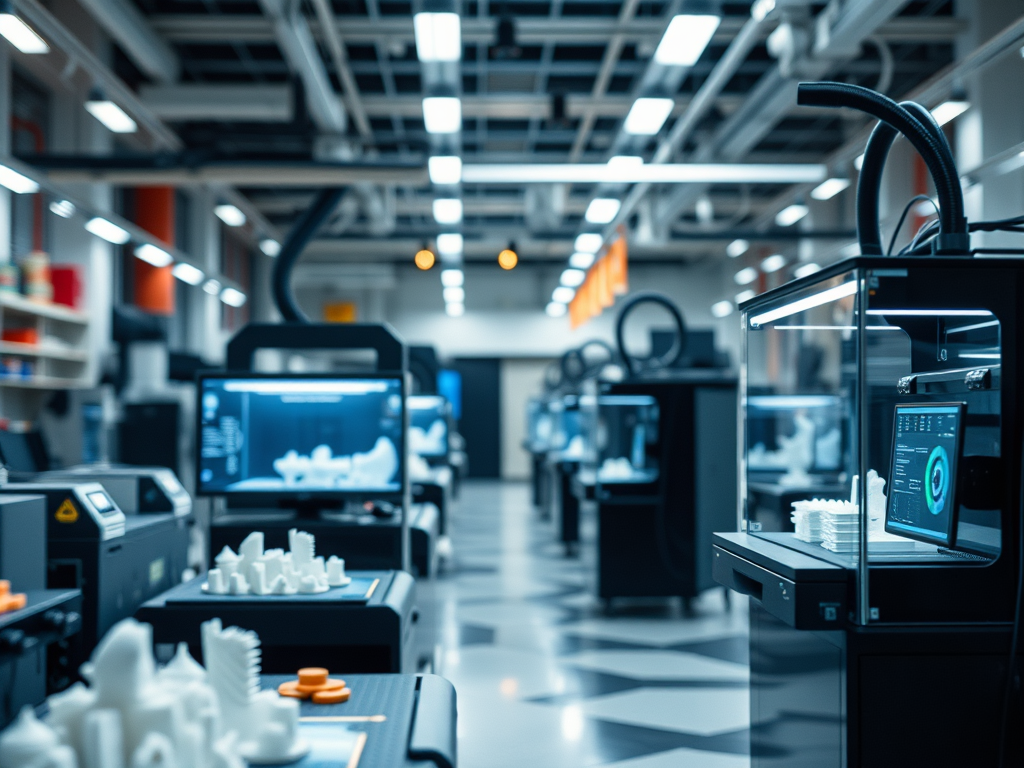
3D printing, also known as additive manufacturing, has evolved from a niche technology to a transformative force across various industries. As we approach 2025, several key trends and innovations are poised to redefine manufacturing, healthcare, and consumer products.
Integration of Artificial Intelligence (AI) and Machine Learning
The fusion of AI and machine learning with 3D printing is enhancing precision, reducing material waste, and optimizing production processes. AI algorithms analyze real-time data to adjust printing parameters, ensuring consistent quality and efficiency.
Expansion of Material Options
Advancements in material science are broadening the spectrum of 3D-printable materials, including high-performance composites, metals, and bio-based substances. This diversity enables the creation of parts with superior mechanical properties and specialized functionalities.
Sustainable Manufacturing Practices
3D printing is contributing to sustainability by minimizing waste and enabling the use of eco-friendly materials. The technology supports on-demand production, reducing overproduction and inventory surplus, thereby aligning with environmental conservation efforts.
Medical and Healthcare Innovations
In the medical field, 3D printing is facilitating the production of customized implants, prosthetics, and even bioprinted tissues. These advancements are leading to personalized patient care and more effective treatment outcomes.
Large-Scale and Construction Applications
The development of large-scale 3D printers is revolutionizing construction by enabling the fabrication of building components and even entire structures. This approach offers potential benefits in terms of speed, cost, and design flexibility.
Enhanced Accessibility and Affordability
The decreasing cost of 3D printing technology is making it more accessible to small businesses and hobbyists. This democratization fosters innovation and allows for rapid prototyping and small-batch production across various sectors.
As 3D printing continues to advance, it is set to play a pivotal role in shaping the future of manufacturing and product development. Staying abreast of these trends is essential for businesses and individuals aiming to leverage the full potential of this transformative technology.
For more insights into 3D printing and its applications, feel free to explore our other articles or contact us directly.