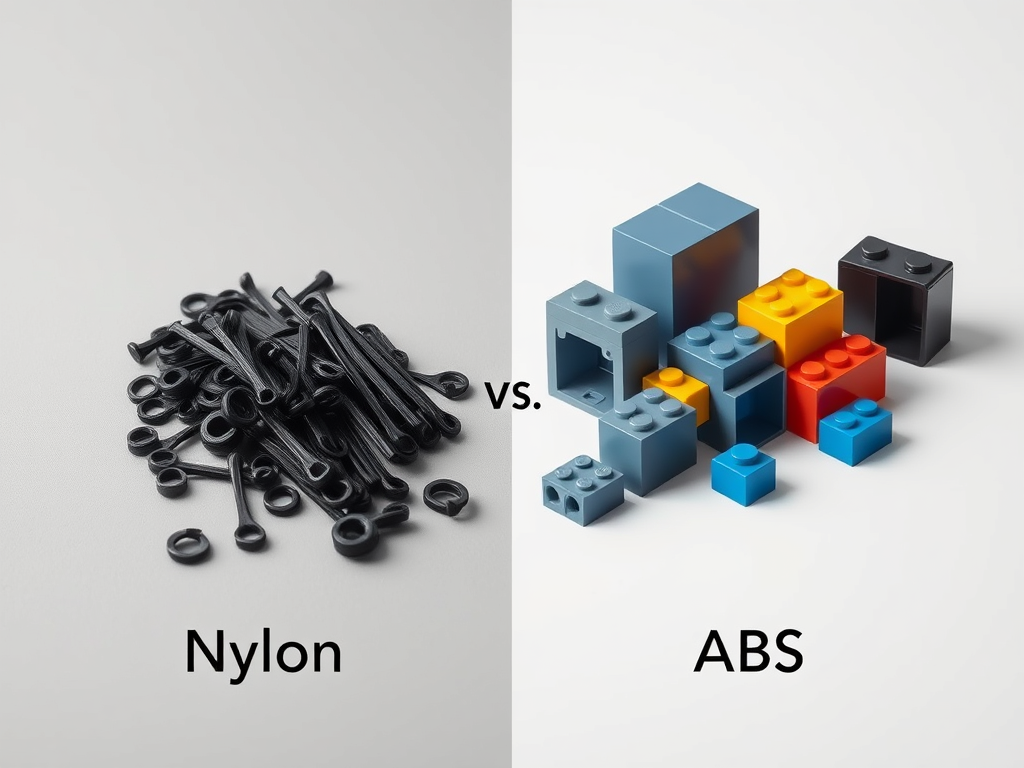
3D printing has become a powerful tool for creating functional parts, fixtures, and custom components. However, the success of a printed part depends heavily on material selection. Two commonly used engineering plastics in 3D printing are Nylon and ABS.
While both materials are capable and widely used, they offer very different performance characteristics. Understanding those differences is key to choosing the right material for strength, durability, and long-term reliability.
At Custom Fiberglass Products Inc., we regularly work with Nylon, ABS, and other engineering plastics to produce custom 3D printed parts for real-world use. Here’s how these two materials compare.
What Is Nylon in 3D Printing?
Nylon (typically Nylon 6, Nylon 6/6, or blends) is a strong, flexible engineering thermoplastic known for its toughness and wear resistance. In 3D printing, Nylon is often chosen for parts that must withstand mechanical stress, friction, or repeated movement.
Key Characteristics of Nylon
- High strength and toughness
- Excellent wear and abrasion resistance
- Good chemical resistance
- Slight flexibility that resists cracking
- Higher printing temperatures required
Because of these properties, Nylon is often used for functional, load-bearing parts rather than purely cosmetic prints.
What Is ABS in 3D Printing?
ABS (Acrylonitrile Butadiene Styrene) is one of the most commonly used plastics in traditional manufacturing and 3D printing. It offers a good balance of strength, impact resistance, and ease of post-processing.
Key Characteristics of ABS
- Good impact resistance
- Moderate strength and rigidity
- Easier to print than Nylon
- Sands and machines well
- Requires heated bed and enclosure to reduce warping
ABS is frequently used for prototypes, housings, and general-purpose parts.
Key Differences Between Nylon and ABS
1. Strength & Durability
- Nylon is significantly stronger and more fatigue-resistant than ABS.
- ABS is durable but can crack under repeated stress.
For parts that experience movement or load, Nylon is usually the better choice.
2. Flexibility vs. Rigidity
- Nylon has natural flexibility, helping it absorb shock without breaking.
- ABS is more rigid and may fracture under impact.
This makes Nylon better suited for clips, hinges, and mechanical components.
3. Heat Resistance
- ABS maintains shape better at moderate temperatures.
- Nylon can soften sooner but performs well in mechanically demanding environments.
Material choice often depends on whether heat or mechanical stress is the primary concern.
4. Print Difficulty
- Nylon is more challenging to print, requiring higher temperatures and careful moisture control.
- ABS is easier but still benefits from an enclosed printer.
Professional equipment and experience make a significant difference when printing Nylon reliably.
5. Surface Finish & Appearance
- ABS typically produces a smoother surface and is easier to sand, glue, or paint.
- Nylon has a more textured appearance and is harder to post-process.
For cosmetic parts, ABS is often preferred.
Common Applications: Nylon vs. ABS
| Application | Better Choice |
|---|---|
| Gears and bushings | Nylon |
| Clips and snap-fit parts | Nylon |
| Functional fixtures | Nylon |
| Prototypes | ABS |
| Enclosures and housings | ABS |
| Decorative parts | ABS |
Which Material Should You Choose?
Choose Nylon if your part needs:
- High strength and wear resistance
- Flexibility without cracking
- Long-term durability
Choose ABS if your part needs:
- Moderate strength with good impact resistance
- A clean, finished appearance
- Easier post-processing
In many cases, material selection comes down to how the part will be used — not just how it looks.
Professional 3D Printing at Custom Fiberglass Products Inc.
At Custom Fiberglass Products Inc., we help customers choose the right 3D printing material based on real-world performance, not just convenience. Whether you need a strong Nylon component or an ABS prototype, our in-house capabilities allow us to deliver dependable, functional parts.
If you’re unsure which material is best for your project, our team is happy to help evaluate your application and recommend the right solution.
The right material choice makes all the difference.